Carpet tiles are a versatile and durable flooring solution widely used in offices, hotels, schools, and commercial spaces. However, over time, even the most durable tiles can accumulate dirt, stains, and dust. Proper maintenance is essential to keep your flooring looking fresh and professional. In this guide, you’ll learn how to clean carpet tiles effectively, extend their lifespan, and maintain a hygienic environment.
With these 7 easy steps, you’ll have clean, vibrant clean carpet tiles without causing damage or reducing their durability.
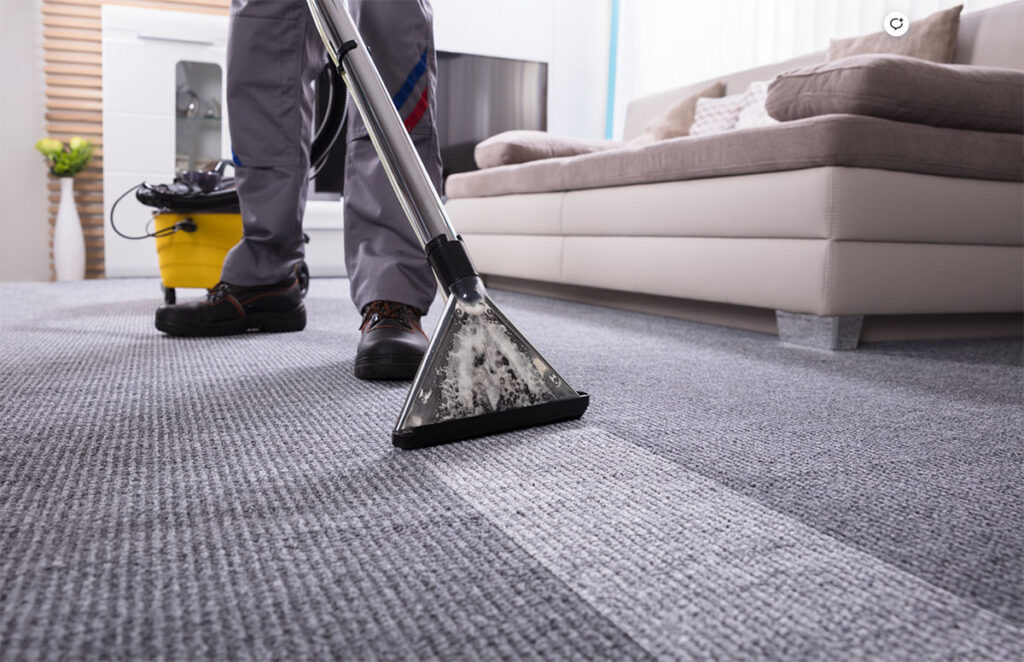
Step 1: Vacuum Carpet Tiles Regularly
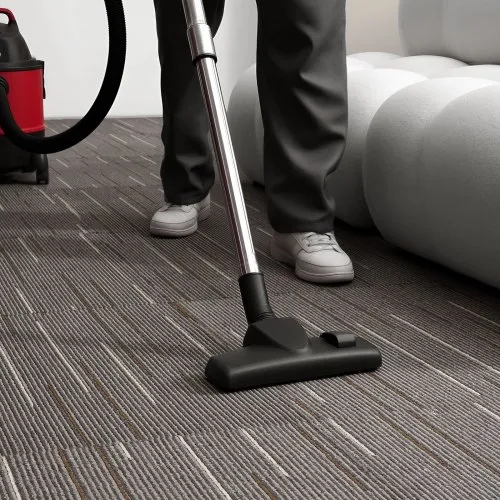
The foundation of any carpet tile cleaning routine is vacuuming. Regular vacuuming removes surface dirt and prevents dust and grit from embedding into fibers, which can cause premature wear.
Tips for effective vacuuming:
Vacuum high-traffic areas daily, and less busy areas at least twice a week.
Use a vacuum cleaner with a brush roll or beater bar for best results.
Move the vacuum slowly to lift dirt effectively without pulling on the carpet fibers.
Vacuum in multiple directions to capture dirt from all angles.
Scenario: In an office reception area with high foot traffic, daily vacuuming of entrances and hallways prevents visible dirt from spreading across the workspace. Regular vacuuming of carpet tiles in conference rooms ensures a professional look for client meetings.
By following these tips, you can clean carpet tiles efficiently and prevent dust from settling in the fibers.
Step 2: Treat Spills and Stains Immediately
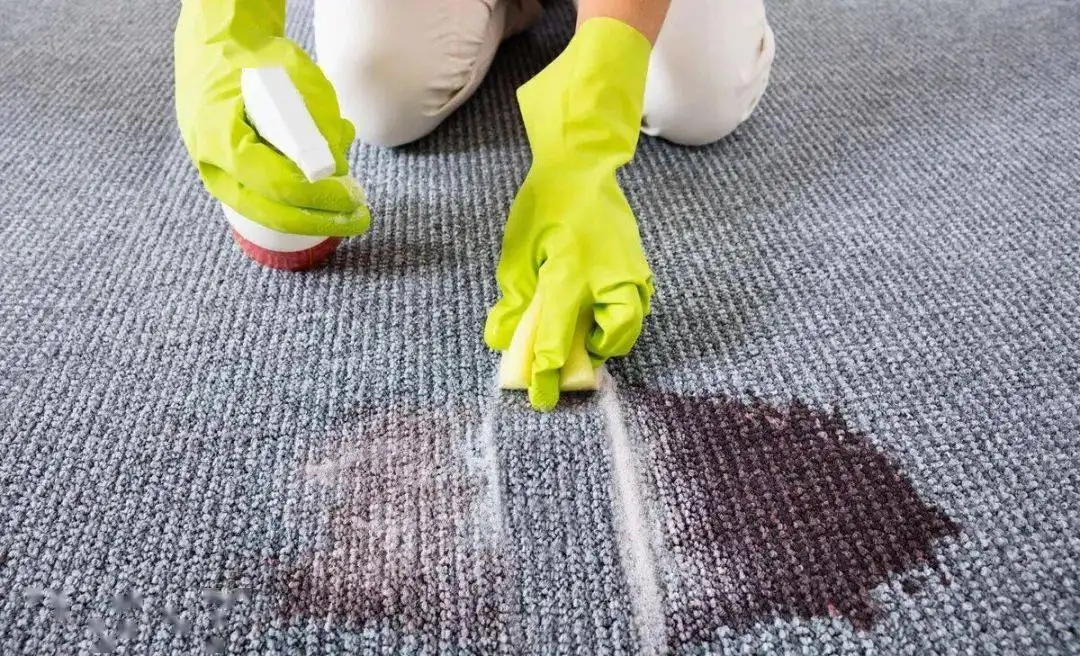
One of the most important steps to clean carpet tiles is to address spills right away. Quick action prevents stains from becoming permanent and reduces the need for deep cleaning.
How to handle spills:
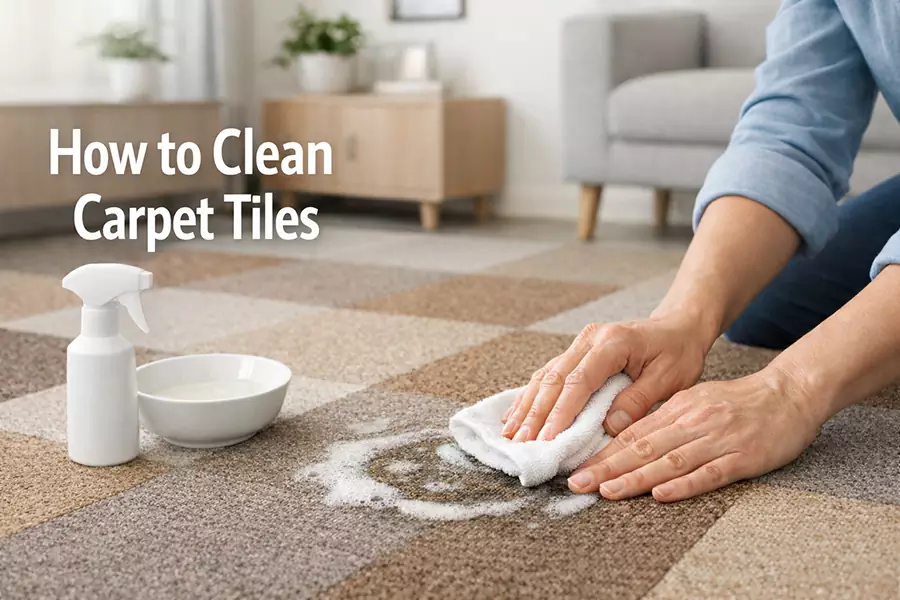
Blot the spill immediately with a clean cloth or paper towel.
Avoid rubbing the stain, as this spreads it and pushes it deeper into the fibers.
Apply a carpet-safe cleaning solution specifically designed for your type of tile.
Gently blot from the outside toward the center to contain the stain.
Rinse lightly with clean water and blot dry.
Scenario: In a hotel lobby, coffee spills on carpet tiles can become sticky if ignored. Quick blotting and cleaning maintain the appearance and hygiene of the space.
Tip: Keep a small cleaning kit with a microfiber cloth and neutral cleaner handy in offices and commercial areas to handle unexpected spills promptly.
Step 3: Use Low-Moisture Cleaning Methods
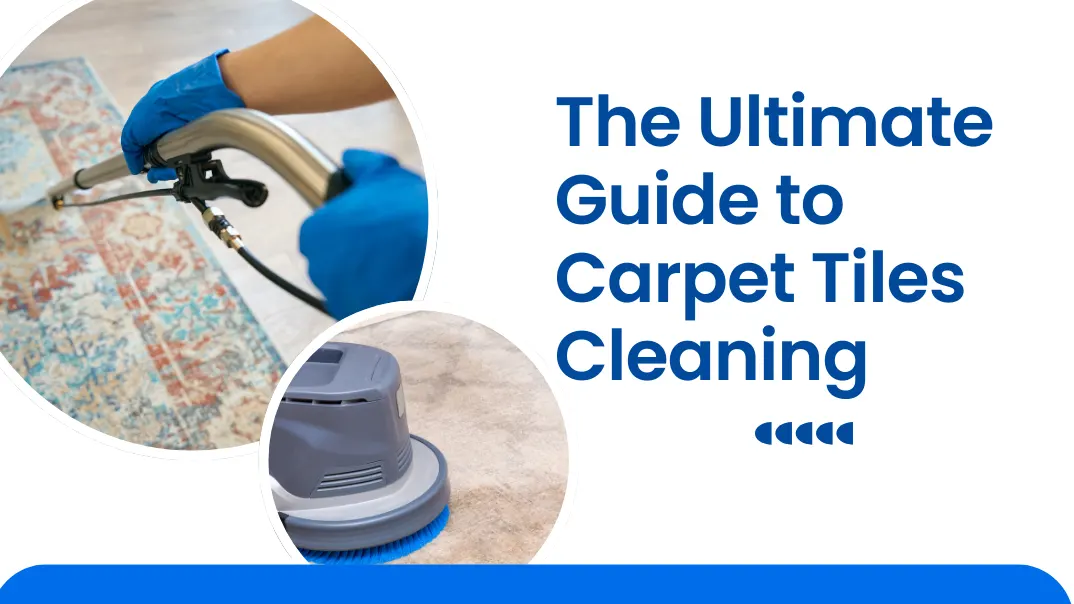
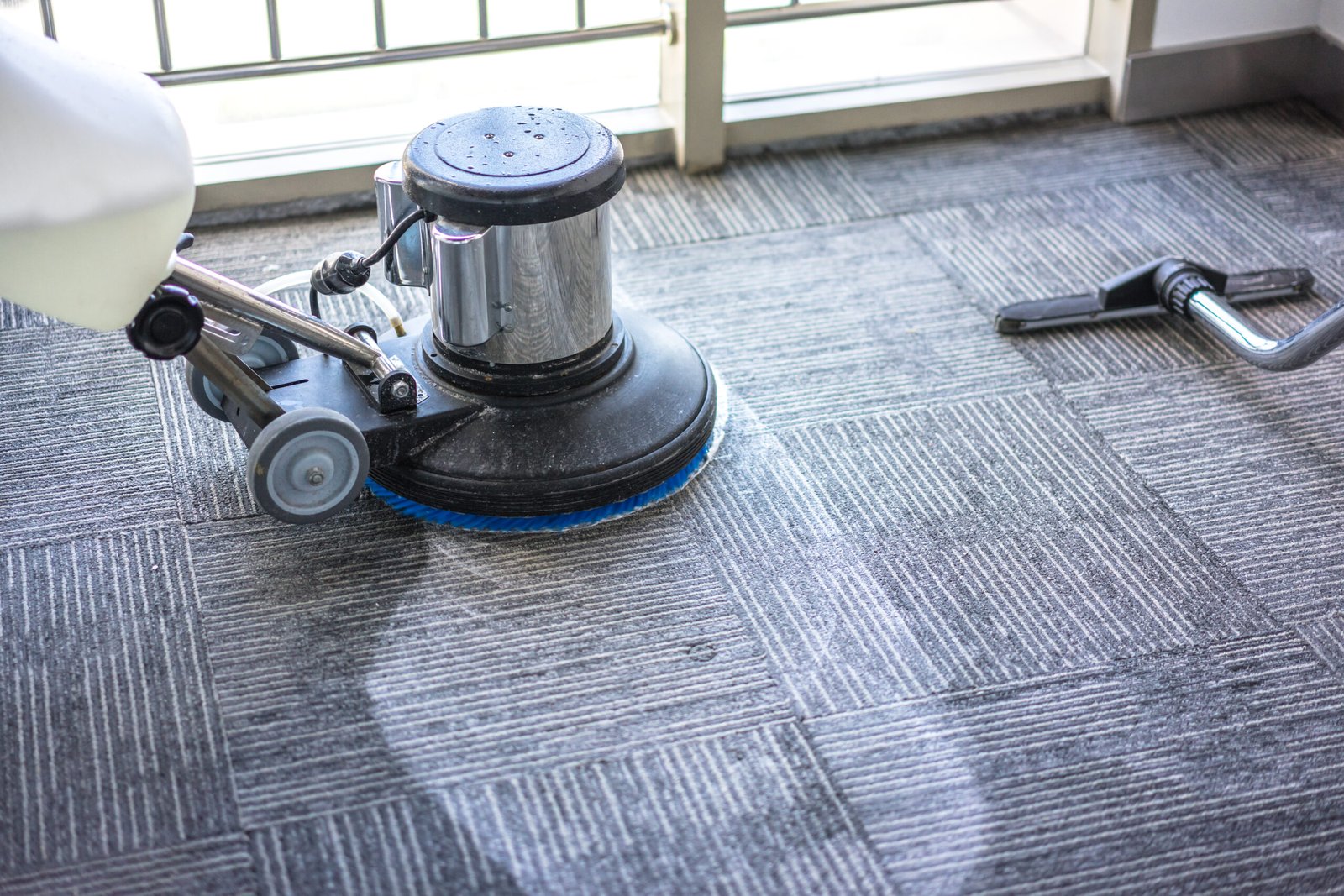
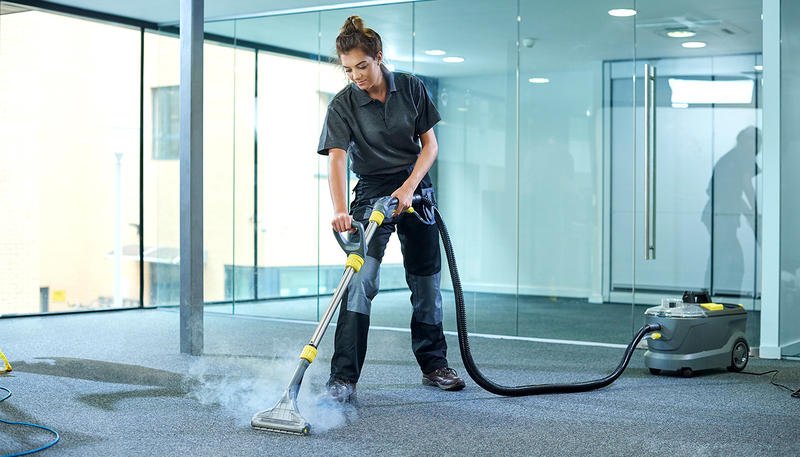
For routine maintenance or periodic deep cleaning, low-moisture methods are ideal for carpet tiles. They reduce drying time and help protect the adhesive under the tiles.
Recommended methods for clean carpet tiles:
Encapsulation cleaning
Dry powder carpet cleaning
Low-moisture steam cleaning
Tips:
Always follow the manufacturer’s instructions for chemical concentration and application.
Avoid saturating tiles with water, which may weaken the adhesive and cause tiles to lift.
Scenario: In a coworking space, low-moisture cleaning allows staff to return to their workstations quickly without waiting for tiles to dry.
By using low-moisture techniques, you can maintain cleanliness while minimizing disruption and extending the life of your carpet tiles.
Step 4: Avoid Harsh Chemicals and Over-Wetting
Improper cleaning products can damage carpet fibers or discolor the surface. When cleaning carpet tiles:
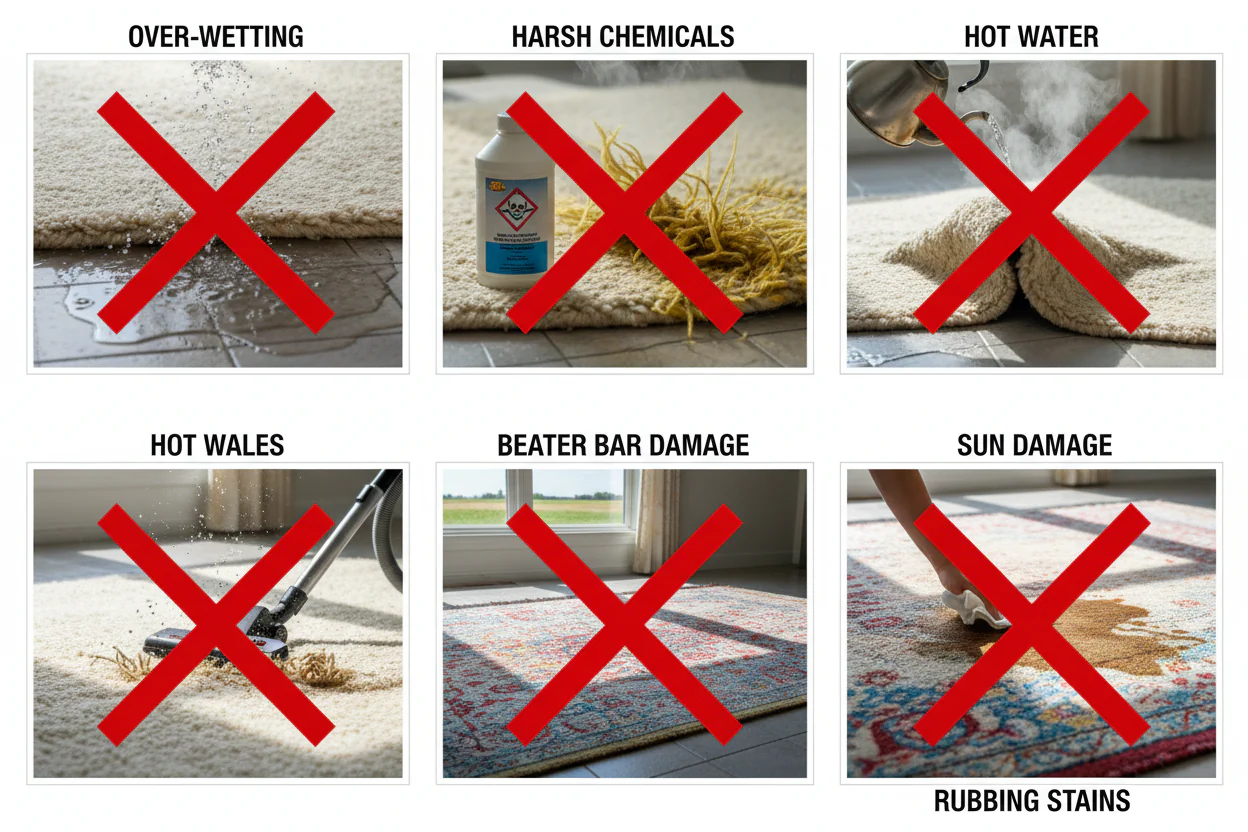
Avoid bleach, ammonia, or strong alkaline cleaners.
Never over-wet tiles, as water can seep into the adhesive.
Do not scrub aggressively, as this can fray fibers.
Tip: Always test a small, inconspicuous area before applying any new cleaning solution to the entire tile.
Scenario: In school classrooms, using safe and gentle cleaners ensures that clean carpet tiles remain safe for children and maintain their color for years.
Step 5: Dry Carpet Tiles Thoroughly
Proper drying is essential after any cleaning process. Moisture left on tiles can cause mold growth and make adhesive fail.
Steps to dry carpet tiles effectively:
Increase airflow with fans or open windows.
Avoid walking on the carpet until completely dry.
Use dehumidifiers in high-humidity areas.
Scenario: A gym’s locker room carpet tiles can stay damp from frequent cleaning. Using fans and keeping foot traffic off the area ensures tiles dry quickly and safely.
Step 6: Rotate and Replace Tiles as Needed
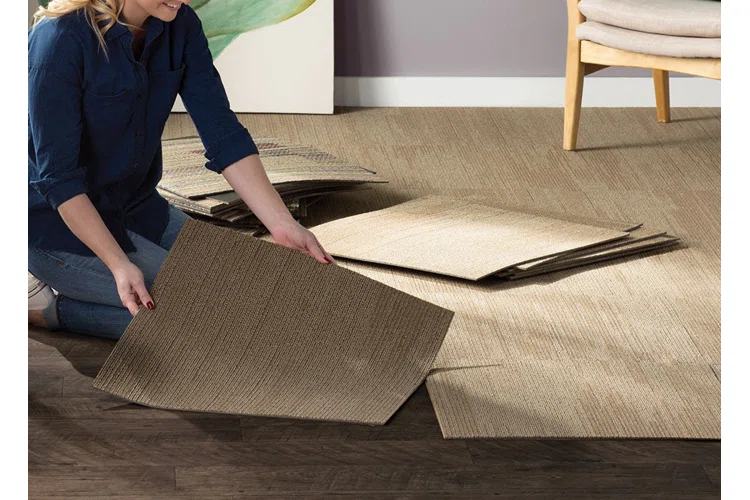
Carpet tiles offer a modular design, which allows for targeted maintenance. Rotating and replacing tiles in high-traffic areas can maintain uniform appearance.
Tips for modular maintenance:
Rotate tiles in areas where wear is concentrated, like hallways or entrances.
Replace heavily stained or damaged tiles rather than cleaning repeatedly.
Keep spare tiles from the original batch to ensure color consistency.
Scenario: In a hotel conference room, replacing just a few high-traffic tiles instead of the entire floor saves time and cost while maintaining aesthetics.
Step 7: Set a Regular Cleaning Schedule
Consistency is key to keeping carpet tiles looking their best. A structured maintenance schedule ensures long-term performance.
Recommended routine for commercial spaces:
Daily: vacuum high-traffic areas
Weekly: spot clean stains
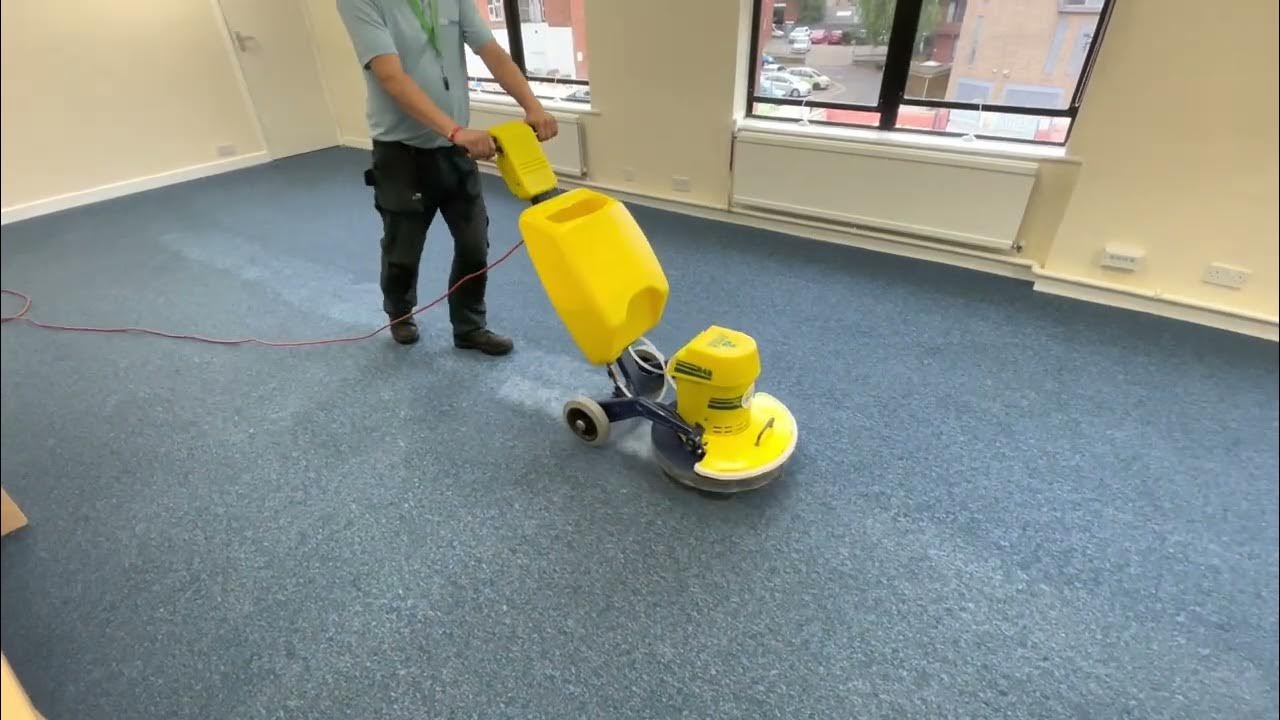
Monthly: low-moisture cleaning for all tiles
Quarterly: professional deep cleaning if needed
Scenario: Office buildings with shared spaces benefit from scheduled cleaning to keep carpets hygienic, reduce allergens, and maintain a professional look for visitors.
Tip: Incorporate cleaning reminders into facility management software for efficiency.
Additional Tips to Enhance Carpet Tile Cleaning
Use protective mats at entrances to reduce dirt accumulation.
Encourage employees or residents to remove shoes in certain areas.
Implement a “no food or drink” policy in specific zones to prevent stains.
For patterned tiles, align tiles properly when replacing or rotating.
Consider eco-friendly, non-toxic cleaners for green building certifications.
These small habits can significantly improve the lifespan and appearance of your carpet tiles.
Tools Needed to Clean Carpet Tiles
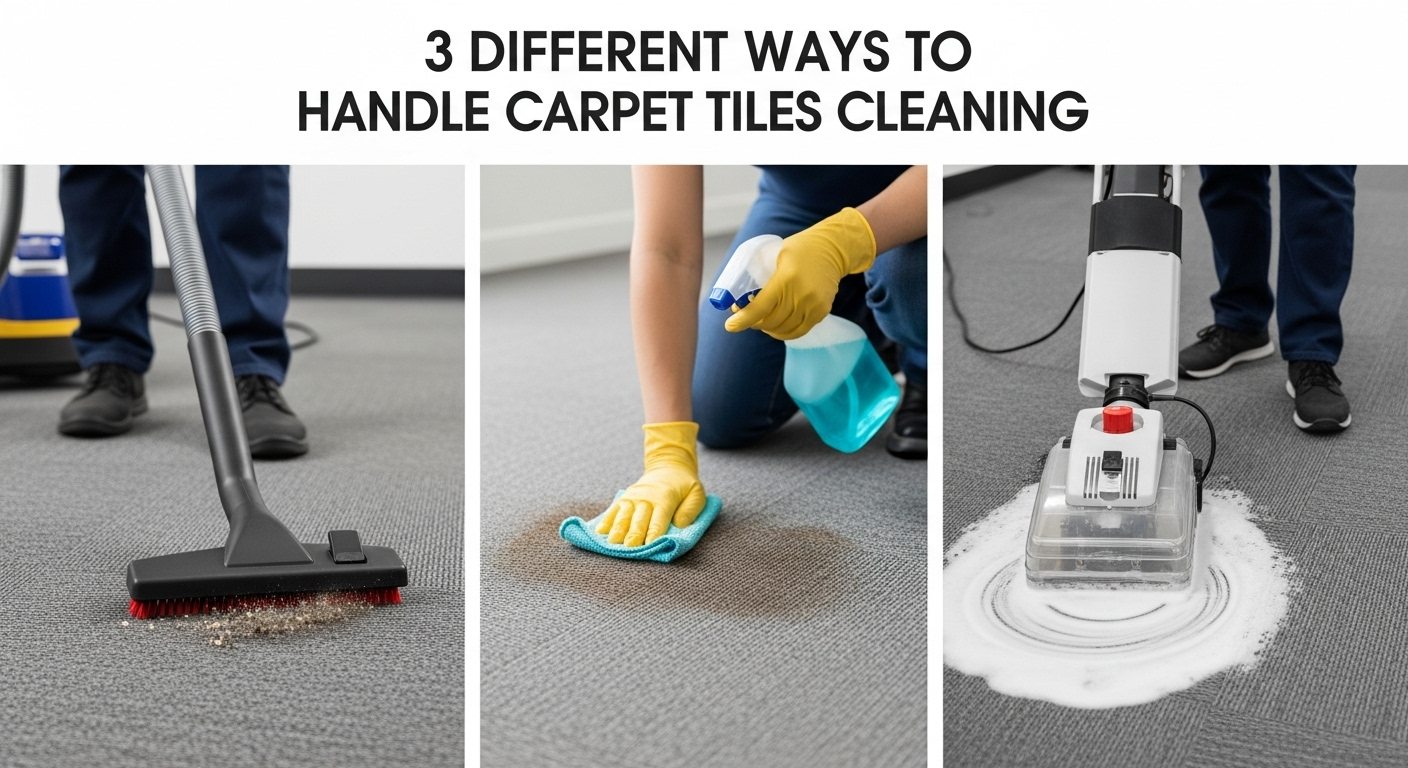
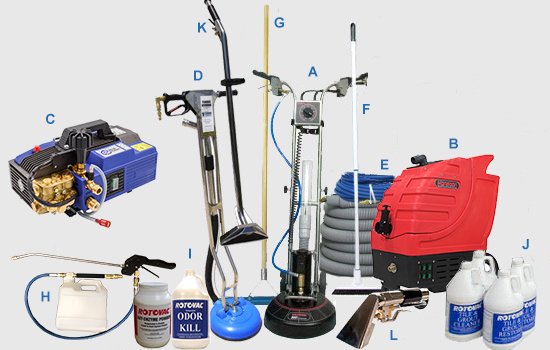
To clean carpet tiles effectively, make sure you have:
Vacuum cleaner with brush roll
Soft-bristled brush
Microfiber cloths or sponges
Carpet-safe neutral detergent
Spray bottle
Bucket of clean water
Protective gloves
Proper tools ensure that cleaning is efficient, safe, and preserves the integrity of the carpet tiles.
Common Mistakes When Clean Carpet Tiles
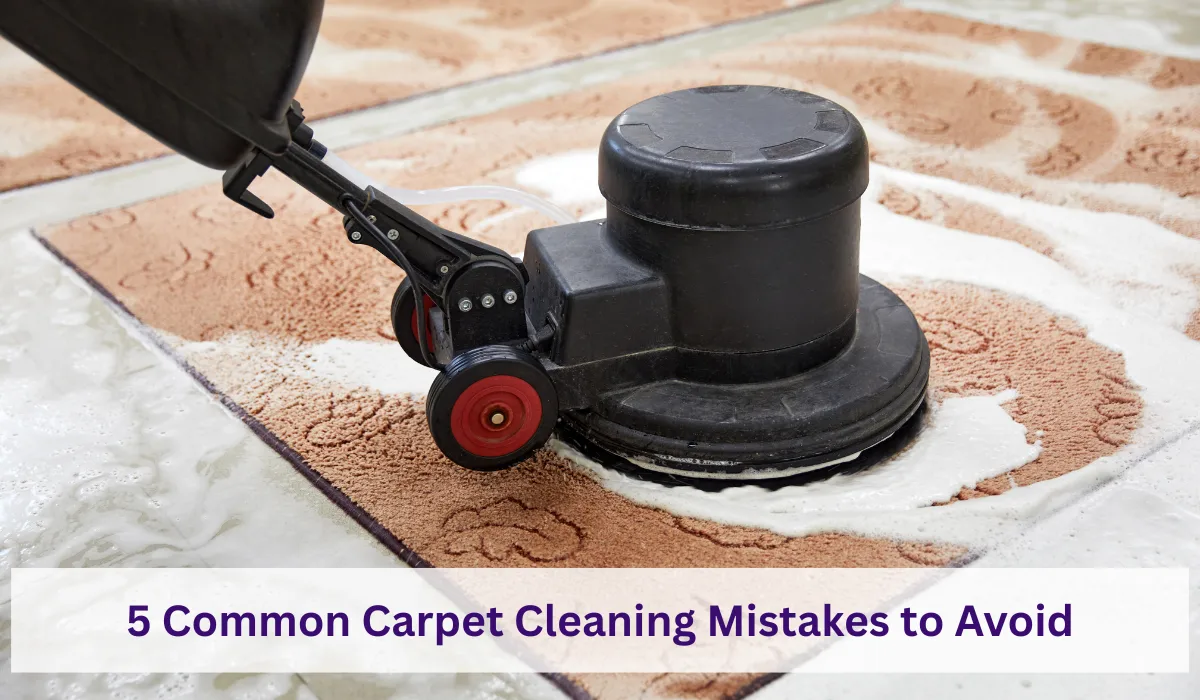
Avoid these pitfalls:
Using too much water
Applying bleach or harsh chemicals
Scrubbing aggressively
Ignoring manufacturer instructions
Leaving tiles wet for long periods
Making these mistakes for clean carpet tiles can damage fibers, cause discoloration, or weaken the adhesive.
Frequently Asked Questions (FAQ)
Q1: Can I use a steam cleaner on carpet tiles?
A: Yes, but use low-moisture steam cleaning to prevent damage to adhesive and fibers.
Q2: How often should I clean carpet tiles?
A: Vacuum daily in high-traffic areas, spot clean as needed, and deep clean carpet tiles every 3–6 months.
Q3: Can individual tiles be removed for cleaning?
A: Yes, modular tiles can be lifted, cleaned, and reinstalled without affecting adjacent tiles.
Q4: What cleaner is safe for carpet tiles?
A: A neutral, carpet-safe cleaning solution recommended by the manufacturer works best.
Q5: Will cleaning damage carpet tile backing?
A: No, if you follow recommended cleaning methods and avoid excessive moisture.
Conclusion
Knowing how to clean carpet tiles properly is essential for maintaining appearance, durability, and hygiene. By following these 7 easy steps—vacuuming, stain treatment, low-moisture cleaning, avoiding harsh chemicals, drying, rotating/replacing tiles, and scheduling regular maintenance—you can keep your carpet tiles looking vibrant for years.
Whether you manage offices, hotels, schools, or commercial buildings, a well-maintained modular carpet floor not only enhances aesthetics but also reduces long-term maintenance costs and ensures a safe, professional environment.
Call to Action
If you are looking for durable, easy-to-maintain carpet tiles for your commercial or office space, contact FAMALAI Carpet Tile Experts today to request samples, technical guidance, and professional solutions for your flooring projects.