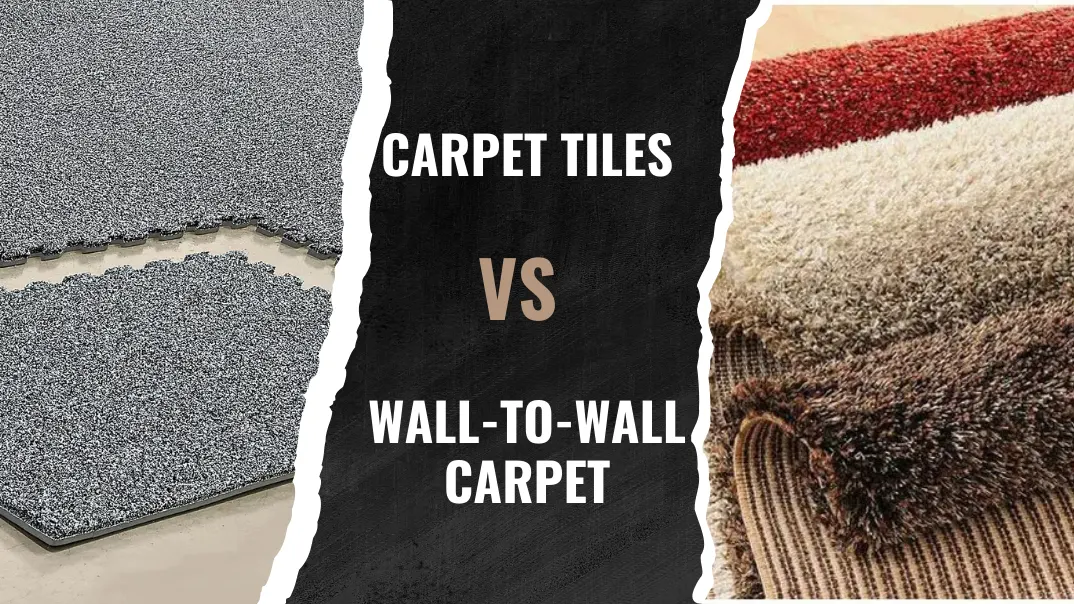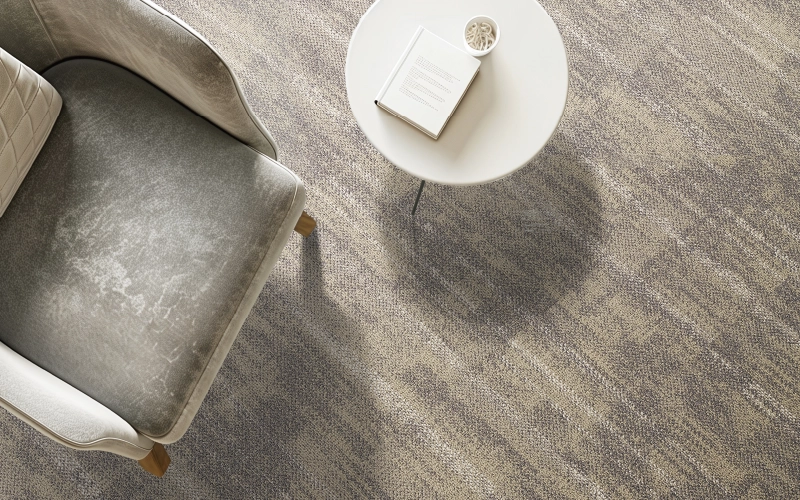
Choosing the best carpet tiles for classrooms is not simply about selecting an attractive color or the softest carpet. Classroom flooring must support daily learning activities while handling foot traffic, chair movement, spills, cleaning, and long-term maintenance.
For schools, architects, interior designers, contractors, and education project managers, carpet tiles offer an important advantage over traditional broadloom carpet: individual tiles can be removed and replaced when damaged or heavily stained.
But not every carpet tile is suitable for a classroom.
The right specification depends on several factors, including fiber type, construction, backing, traffic level, maintenance requirements, acoustic performance, color, installation method, and replacement strategy.
This guide explains how to select the best carpet tiles for classrooms and what education projects should check before placing an order.
What Are the Best Carpet Tiles for Classrooms?
The best carpet tiles for classrooms should provide a practical balance of:
-
Durability
-
Easy maintenance
-
Stain resistance
-
Comfortable underfoot performance
-
Noise reduction
-
Modular replacement
-
Appropriate appearance
-
Reliable backing
-
Suitable fire and indoor-air-quality performance
-
Reasonable lifecycle cost
There is no single carpet tile specification that is ideal for every classroom.
A kindergarten classroom, science laboratory, computer room, and university lecture room may have completely different flooring requirements.
Therefore, instead of asking only “What is the best carpet tile?”, a better question is:
Which carpet tile specification is appropriate for this classroom environment?
1. Why Use Carpet Tiles in Classrooms?
Carpet tiles are widely considered for educational interiors because they combine the visual and acoustic benefits of carpet with the flexibility of modular flooring.
Easier replacement
One of the biggest advantages is localized replacement.
If a student spills paint, food, ink, or another difficult substance on a small area, the school does not necessarily need to replace the entire floor.
A damaged tile can potentially be removed and replaced with a spare tile.
This makes carpet tile particularly useful in environments where occasional localized damage is unavoidable.
Better zoning possibilities
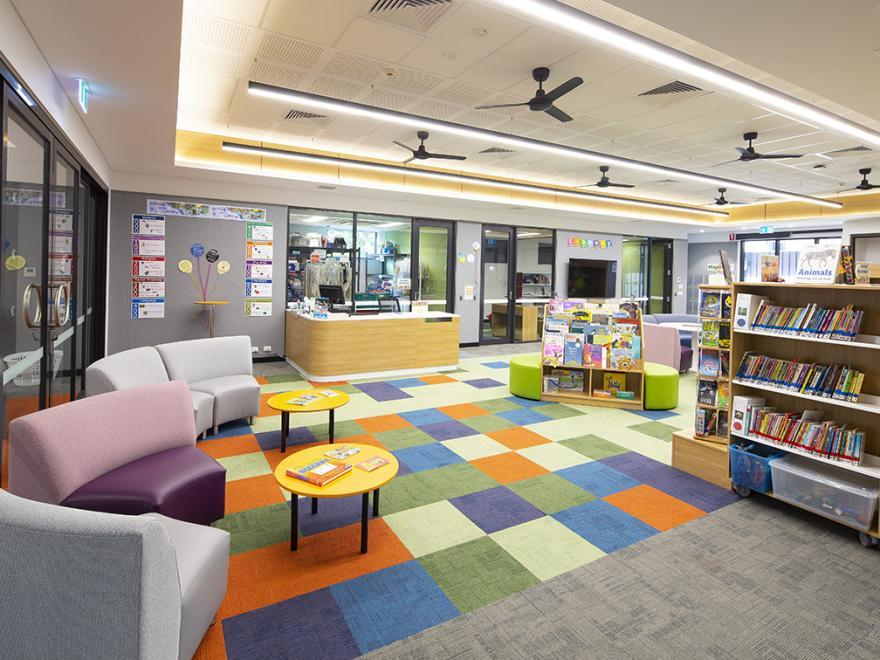
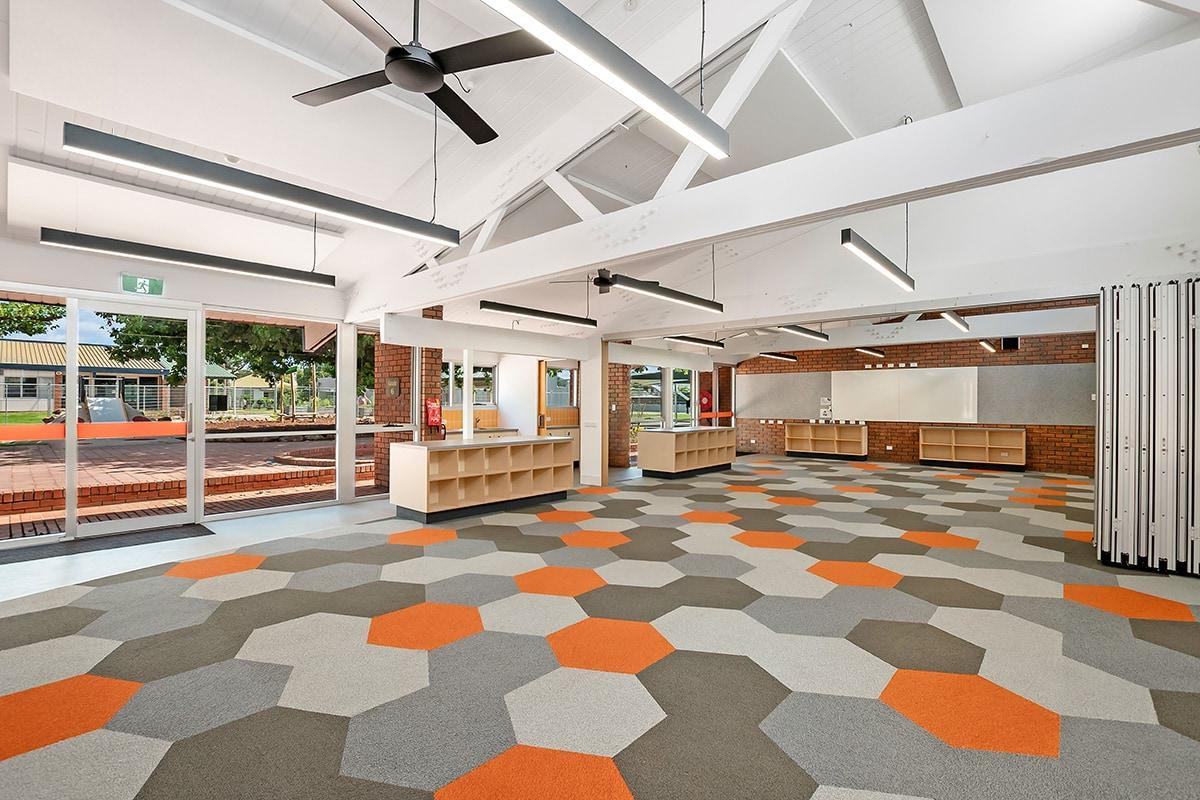
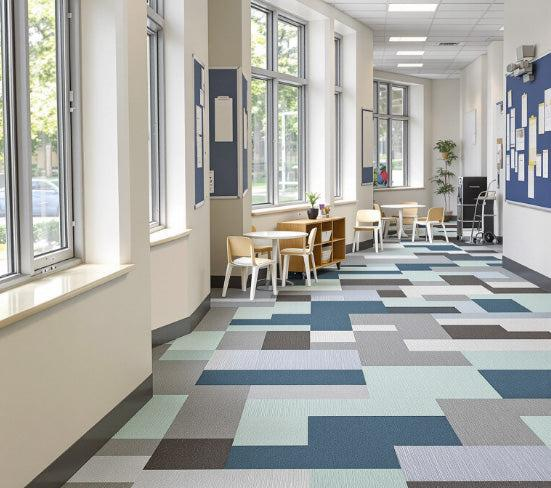
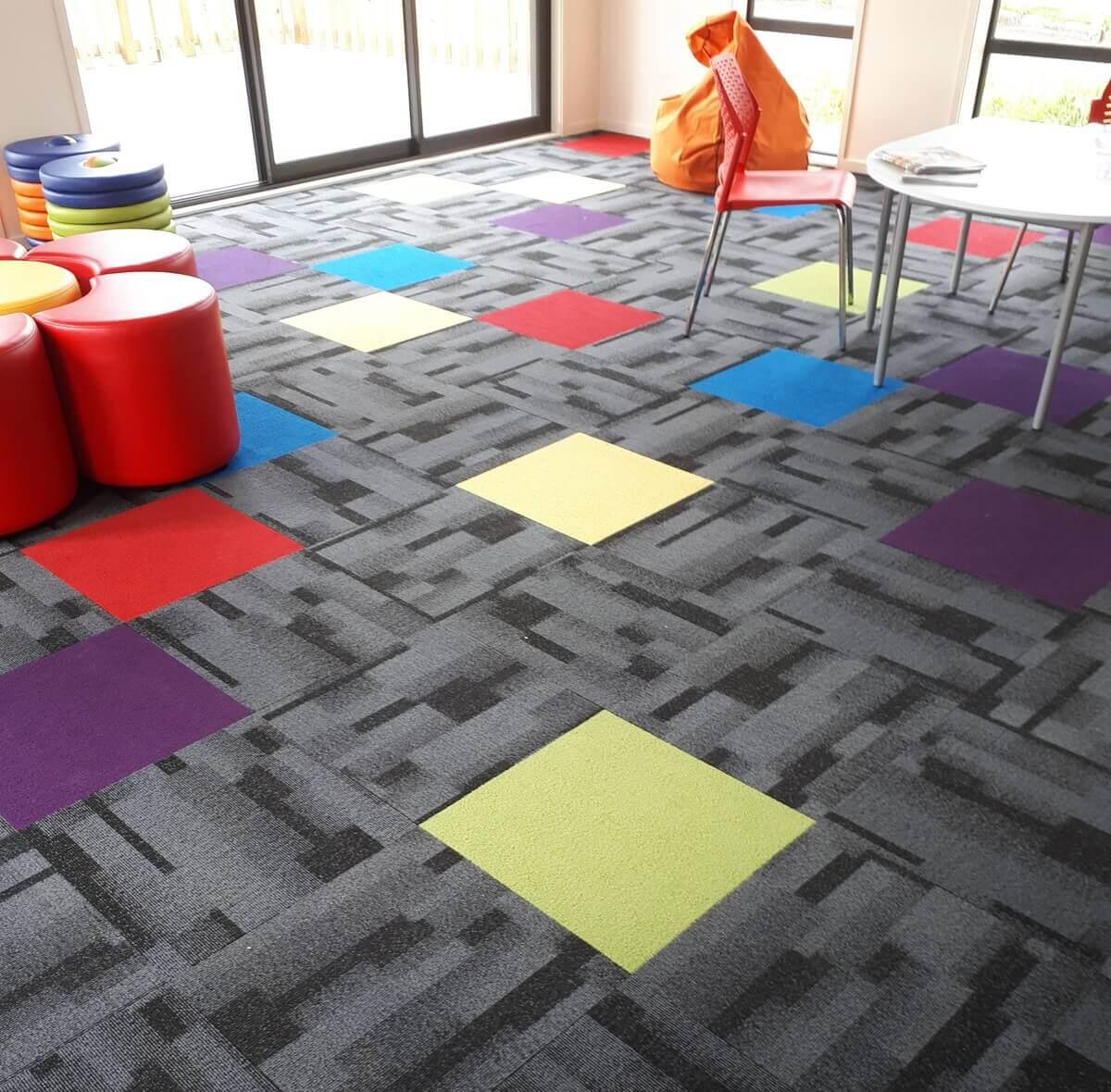
Different colors and installation patterns can help visually divide a large classroom or learning environment.
For example:
-
Reading area
-
Group discussion area
-
Teacher area
-
Computer zone
-
Activity zone
-
Quiet learning area
Color does not replace architectural planning, but it can support spatial organization.
Acoustic benefits
Classrooms can contain many simultaneous sounds:
-
Student conversations
-
Chairs moving
-
Footsteps
-
Equipment
-
Group activities
-
Teachers speaking
Carpeted flooring can help reduce some impact noise and contribute to a more comfortable acoustic environment when used as part of an overall acoustic strategy.
Easier project logistics
Carpet tiles are modular products.
For renovation projects, this can simplify:
-
Transportation
-
Storage
-
Cutting
-
Installation
-
Partial replacement
-
Future maintenance
These advantages are especially relevant for schools operating under maintenance budgets.
2. What Should You Look for in the Best Carpet Tiles for Classrooms?
Before comparing products, establish the actual classroom requirements.
A professional specification should normally consider at least eight factors:
| Factor | What to Check |
|---|---|
| Fiber | Nylon, polypropylene, polyester or blend |
| Construction | Tufted, loop, cut pile, etc. |
| Traffic | Expected daily classroom traffic |
| Backing | PVC, bitumen, polyolefin, cushion or other system |
| Stain resistance | Response to food, drinks and classroom spills |
| Maintenance | Cleaning frequency and method |
| Acoustics | Impact sound and room comfort |
| Design | Color, pattern and zoning requirements |
| Replacement | Availability of spare tiles |
| Certification | Fire, VOC, environmental and quality documentation |
The best product is therefore the one that satisfies the project’s technical and operational requirements rather than simply having the highest price or most attractive appearance.
3. Choose the Right Carpet Fiber
Fiber is one of the first specifications to compare when selecting carpet tiles for classrooms.
Common options include:
-
Nylon
-
Polypropylene
-
Polyester
-
Fiber blends
Each has different characteristics.
Nylon Carpet Tiles for Classrooms
Nylon is commonly specified for commercial environments where durability and resilience are important.
For high-use educational areas, nylon carpet tiles may be considered when the project requires:
-
Strong wear resistance
-
Good resilience
-
Frequent use
-
Long service expectations
-
Commercial-grade performance
Nylon can be particularly relevant for classrooms that experience heavy daily activity.
However, fiber selection should never be made based on fiber name alone.
The actual construction, yarn system, pile density, backing, face weight, and manufacturing quality also influence performance.
Polypropylene Carpet Tiles for Classrooms
Polypropylene is another common option in carpet products.
Potential advantages include:
-
Cost efficiency
-
Stain resistance characteristics
-
Suitable performance for many general-use environments
-
Wide range of colors and patterns
For classrooms with moderate traffic or projects with strong budget requirements, polypropylene carpet tiles may be considered.
However, the specification should be evaluated against the expected traffic and maintenance conditions.
Polyester Carpet Tiles
Polyester can provide attractive color possibilities and is used in various commercial flooring applications.
It may be appropriate for classrooms where:
-
Design flexibility is important
-
Traffic is moderate
-
Budget considerations are significant
-
The product’s complete technical specification meets the project requirements
Again, fiber type alone should not determine the final decision.
4. Nylon vs Polypropylene vs Polyester for Classrooms
There is no universal winner between these fibers.
Instead, compare them according to the classroom’s actual requirements.
| Requirement | Nylon | Polypropylene | Polyester |
|---|---|---|---|
| Heavy traffic | Often suitable | Product-dependent | Product-dependent |
| Resilience | Generally strong | Moderate to good depending on construction | Product-dependent |
| Stain resistance | Good with appropriate treatment | Often a key advantage | Good depending on product |
| Design flexibility | High | High | High |
| Budget positioning | Often higher | Often economical | Often economical to mid-range |
| Classroom suitability | High when correctly specified | Suitable for many applications | Suitable for selected applications |
For a professional project, request the manufacturer’s technical data rather than selecting solely from a fiber label.
5. Consider Classroom Traffic
Not every classroom experiences the same amount of traffic.
A primary-school classroom may have students constantly moving between desks, activity areas, storage spaces, and doors.
A university lecture room may have a different traffic pattern.
A language classroom may experience moderate traffic, while a laboratory may have additional spill and maintenance considerations.
Before selecting carpet tiles, classify the room.
Low-to-moderate traffic
Examples:
-
Small meeting classrooms
-
Specialist teaching rooms
-
Some administrative learning areas
The project may have greater flexibility in design and construction.
Moderate traffic
Examples:
-
Standard classrooms
-
Training rooms
-
University teaching rooms
Durability and maintenance should become more important selection criteria.
High traffic
Examples:
-
Shared teaching spaces
-
Large learning commons
-
Rooms connected directly to busy circulation areas
Consider stronger commercial specifications and more robust maintenance planning.
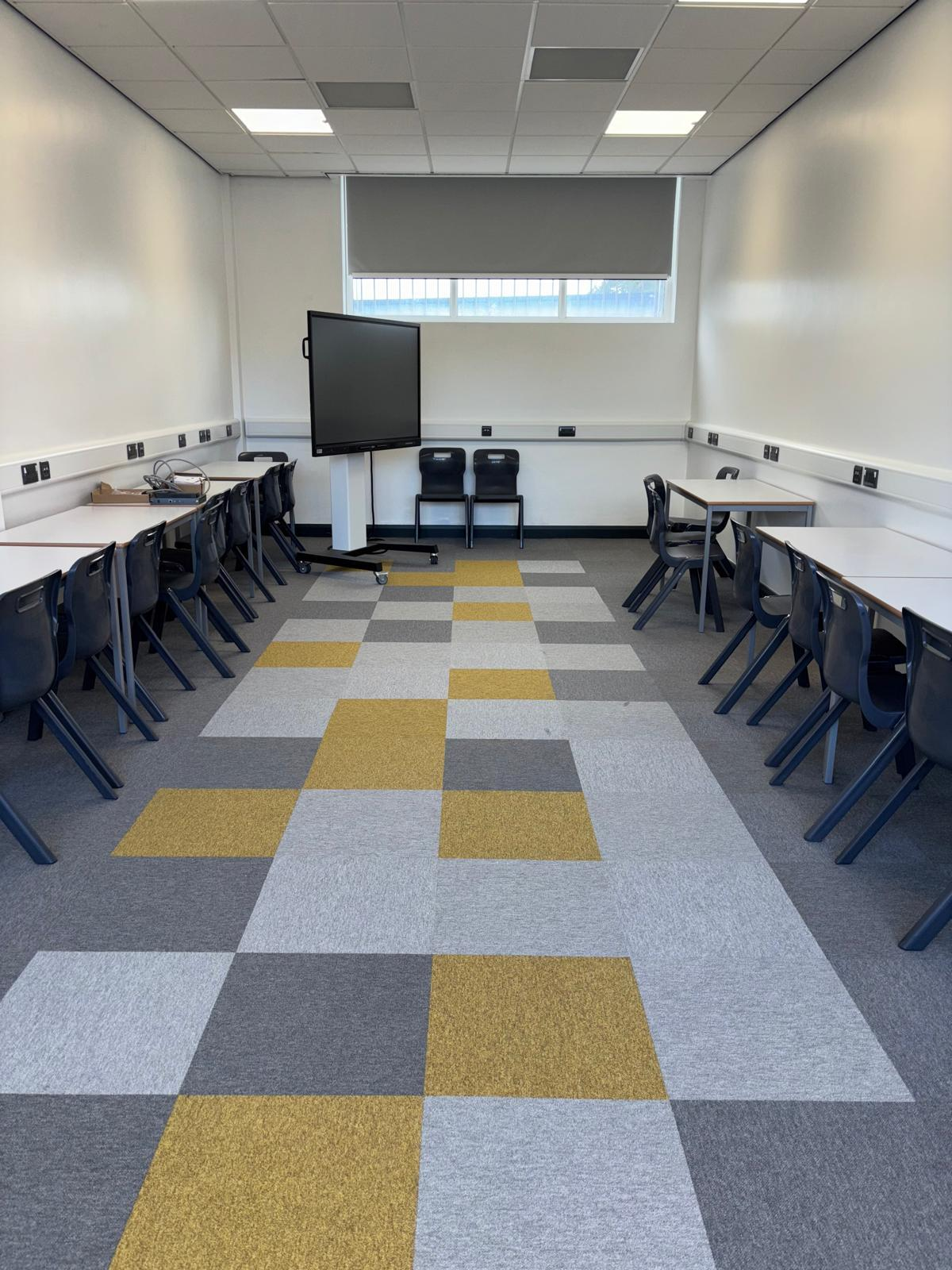
6. Classroom Carpet Tiles Should Be Easy to Maintain
Classrooms are not controlled environments.
Common sources of stains include:
-
Coffee
-
Juice
-
Milk
-
Food
-
Pens
-
Markers
-
Mud
-
Dust
-
Craft materials
-
Adhesives
-
Outdoor contaminants
For this reason, easy maintenance is one of the most important characteristics of the best carpet tiles for classrooms.
A school should understand:
-
What routine vacuuming is required?
-
Which stains require immediate treatment?
-
What cleaning chemicals are permitted?
-
Can wet cleaning be used?
-
How often should deep cleaning be performed?
-
How should damaged tiles be replaced?
A carpet tile that looks excellent on installation day may become difficult to manage if the maintenance procedure is unclear.
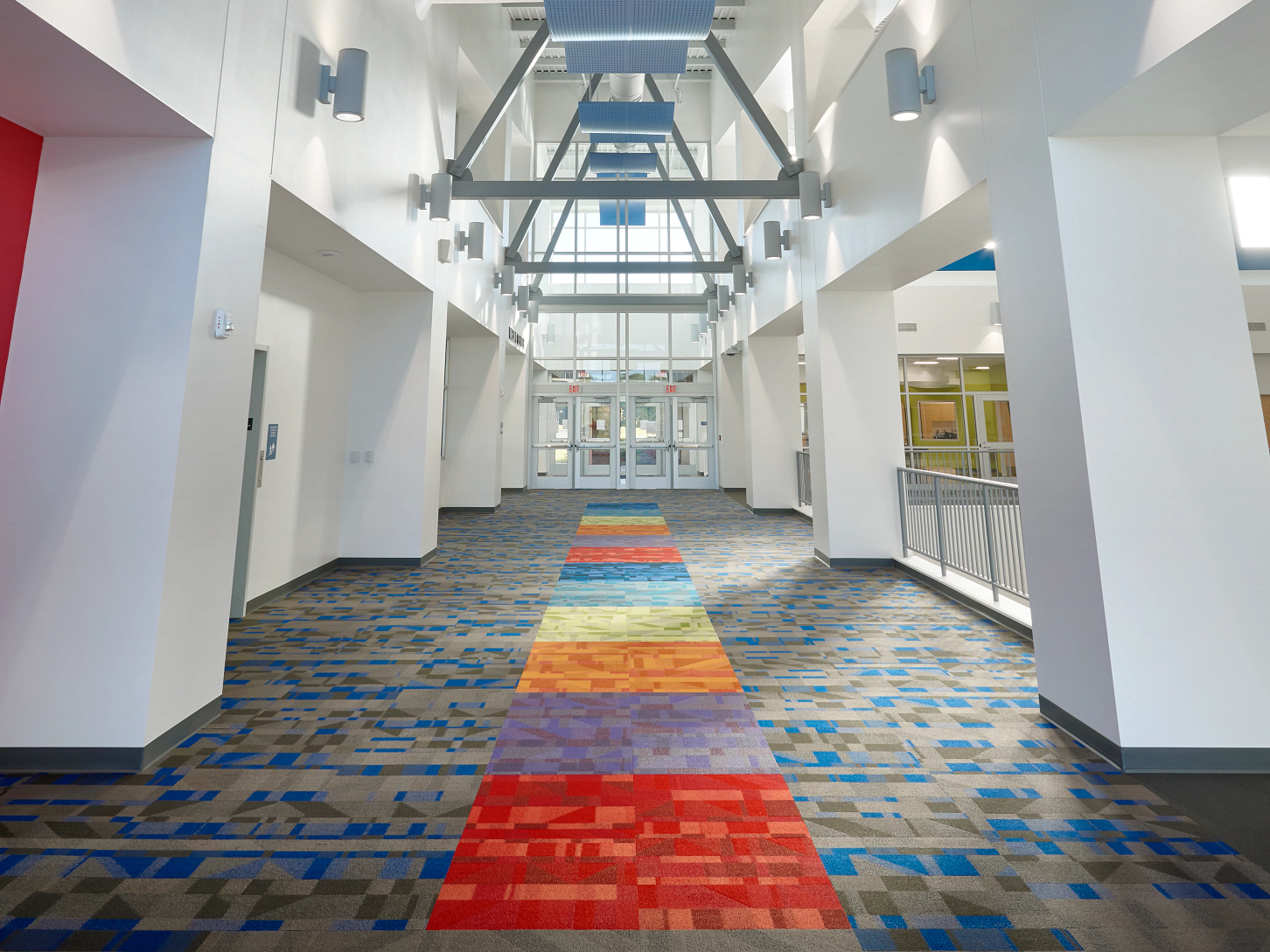
7. Choose Colors That Hide Everyday Dirt
Purely aesthetic decisions can create maintenance problems.
Very light, solid-colored carpet may show:
-
Dust
-
Dirt
-
Footprints
-
Small stains
Very dark carpet can also reveal:
-
Lint
-
Dust
-
Light-colored debris
-
Abrasion patterns
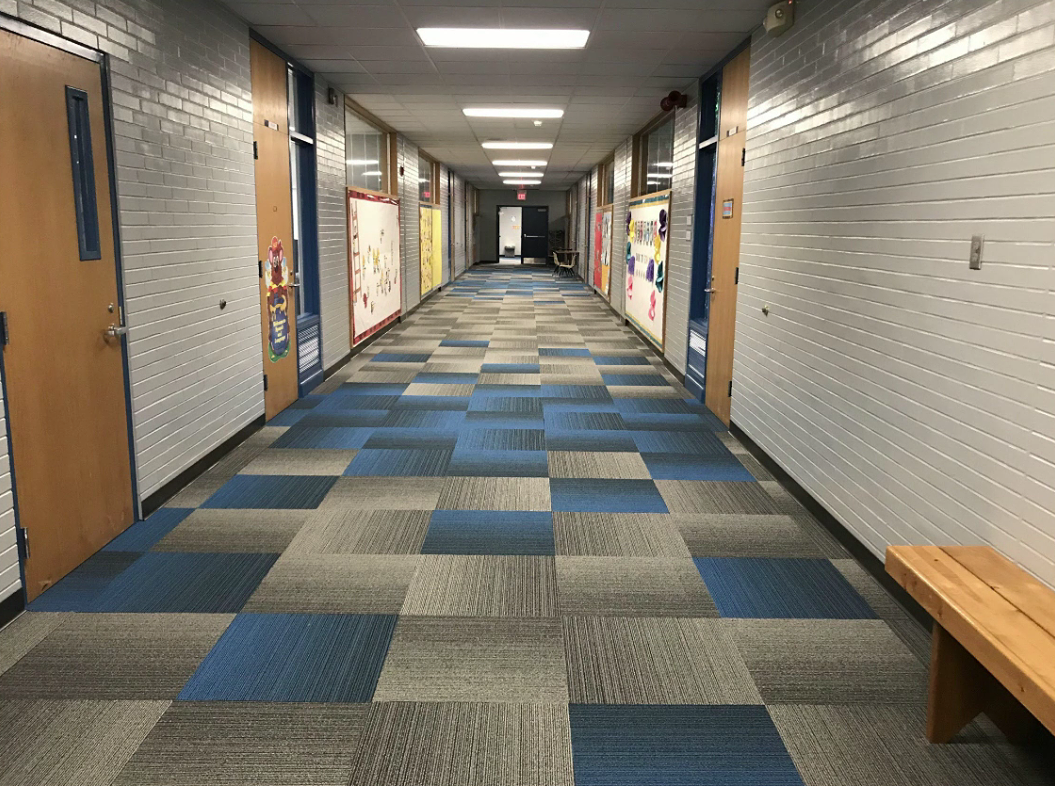
For classrooms, patterned or multi-tone designs can sometimes provide better visual tolerance for everyday use.
Practical classroom colors
Depending on the design concept, schools may consider:
-
Mid-tone gray
-
Blue
-
Green
-
Neutral mixed patterns
-
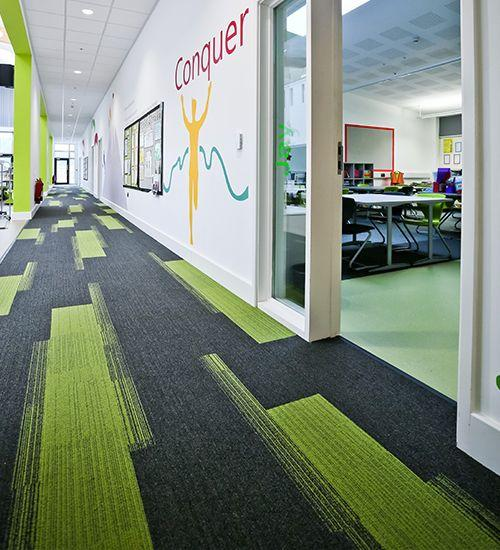
Multicolor modular patterns
The objective is not simply to hide dirt.
The floor should still fit the school’s interior design, furniture, lighting, and educational environment.
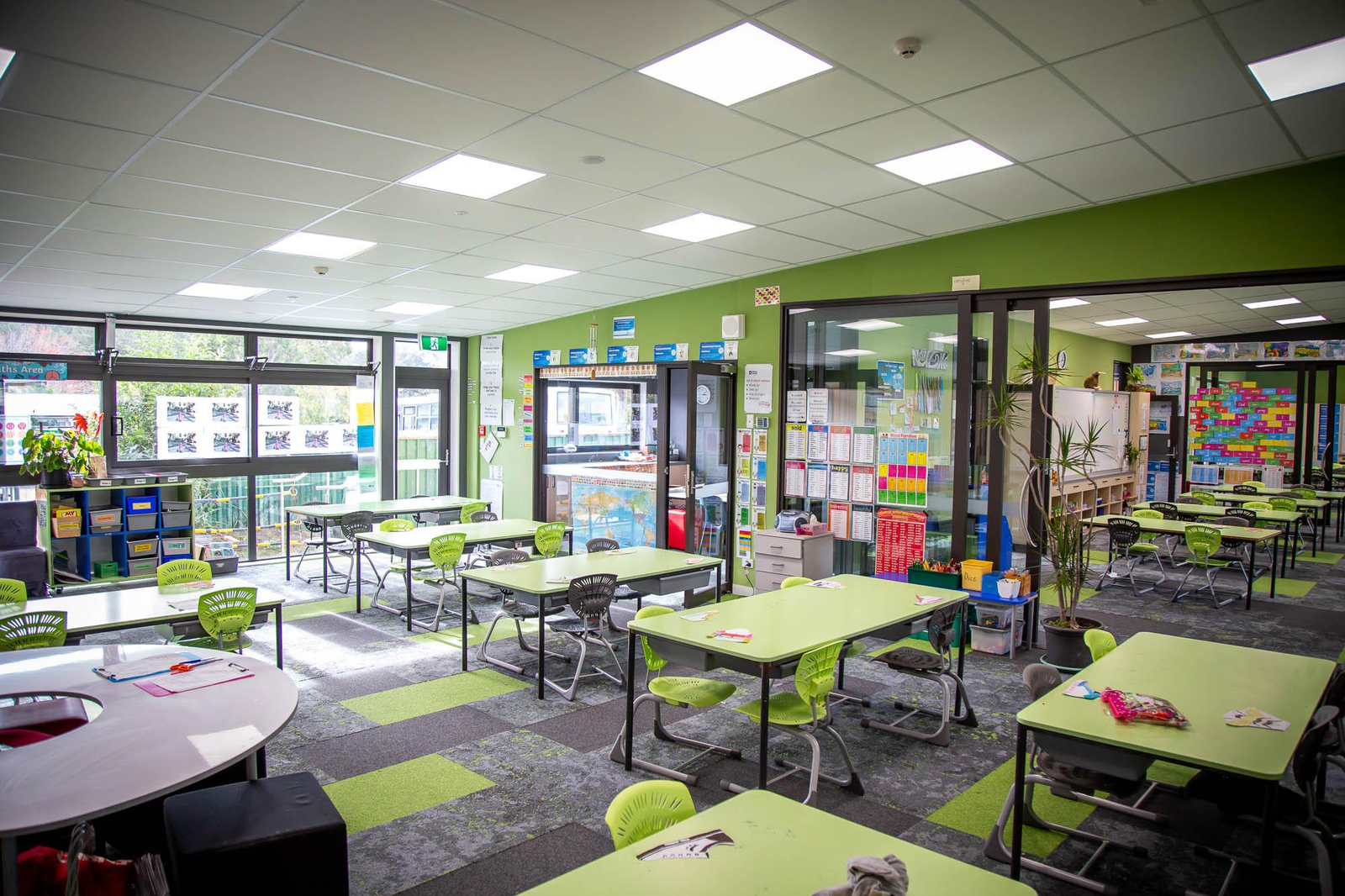
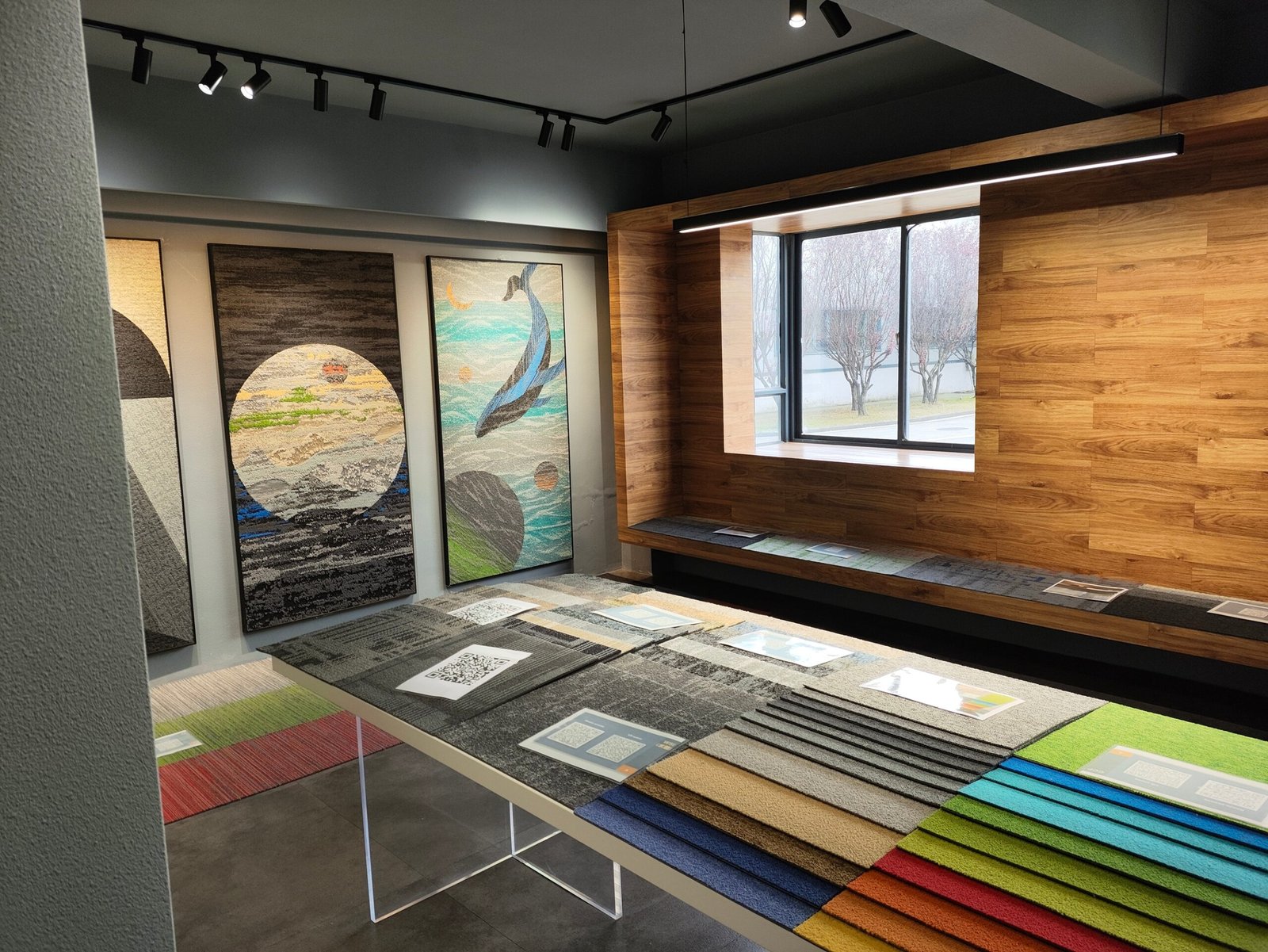
8. Use Carpet Tile Patterns to Create Learning Zones
One advantage of modular flooring is the ability to combine different colors or patterns.
For example:
Classroom entrance → neutral pattern
Desk area → durable mid-tone pattern
Reading corner → softer visual tone
Collaborative zone → contrasting color
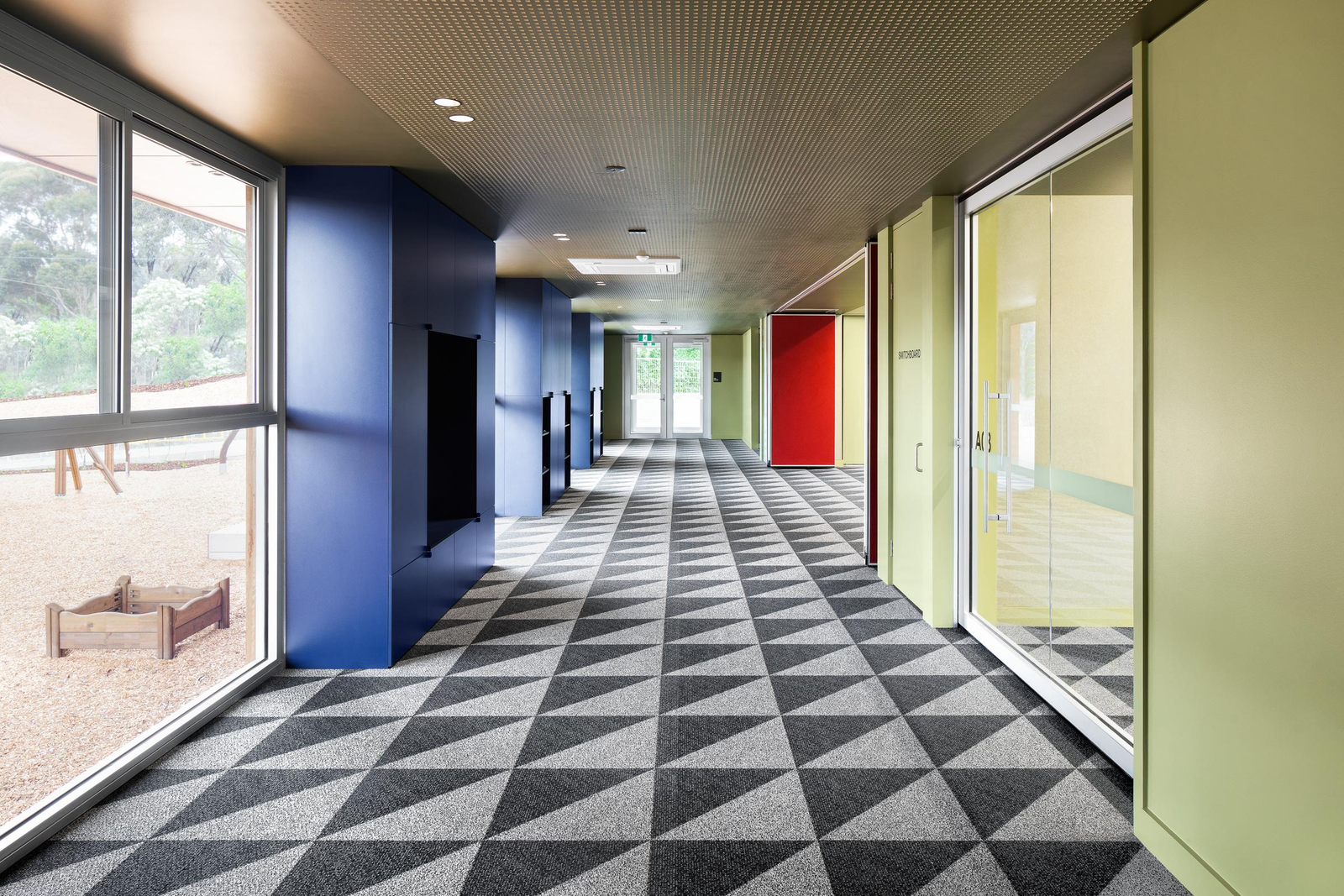
This approach can create visual zoning without installing completely different flooring systems.
For large educational projects, the same tile collection can sometimes be used across multiple rooms with different installation patterns.
This can simplify procurement while maintaining design variation.
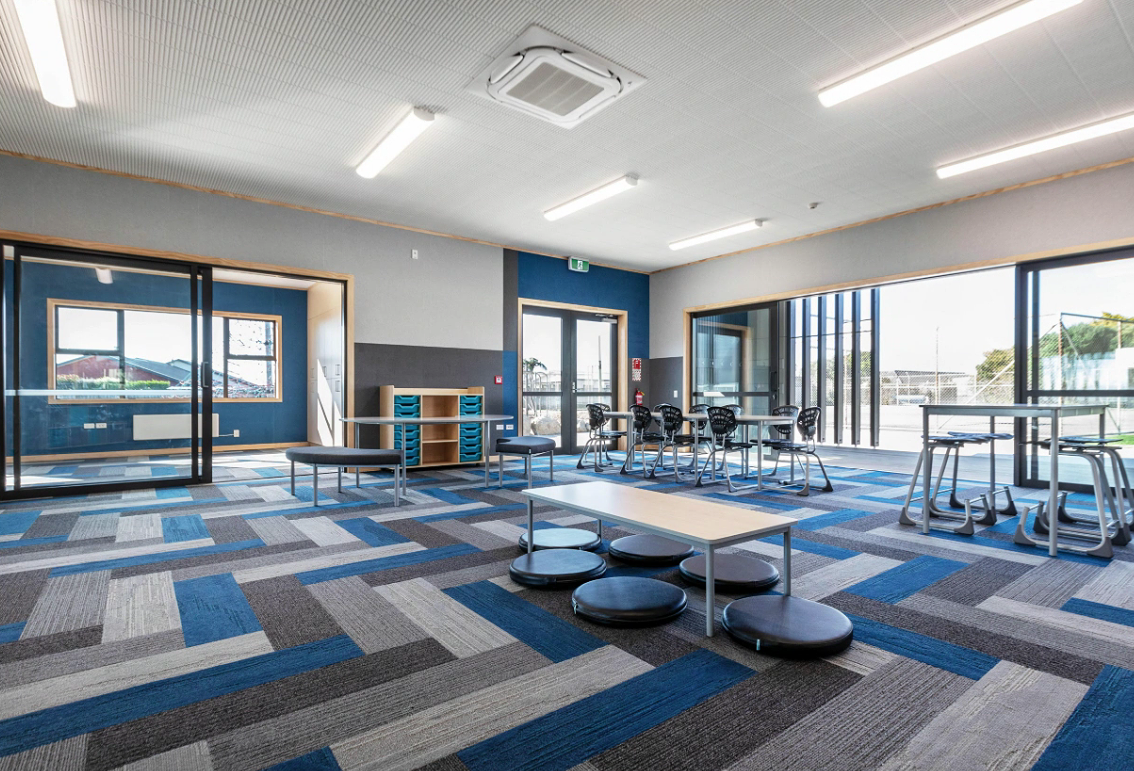
9. Consider the Backing System
The backing is an important but frequently overlooked specification.
Different carpet tiles may use different backing systems, including:
-
PVC backing
-
Bitumen backing
-
Polyolefin backing
-
Cushion backing
-
Other engineered backing systems
Backing can influence:
-
Dimensional stability
-
Installation
-
Moisture considerations
-
Weight
-
Handling
-
Floor feel
-
Long-term performance
-
Recycling considerations
For school projects, do not evaluate the face fiber without understanding the complete tile construction.
10. Why PVC-Backed Carpet Tiles Can Be Considered for Classrooms
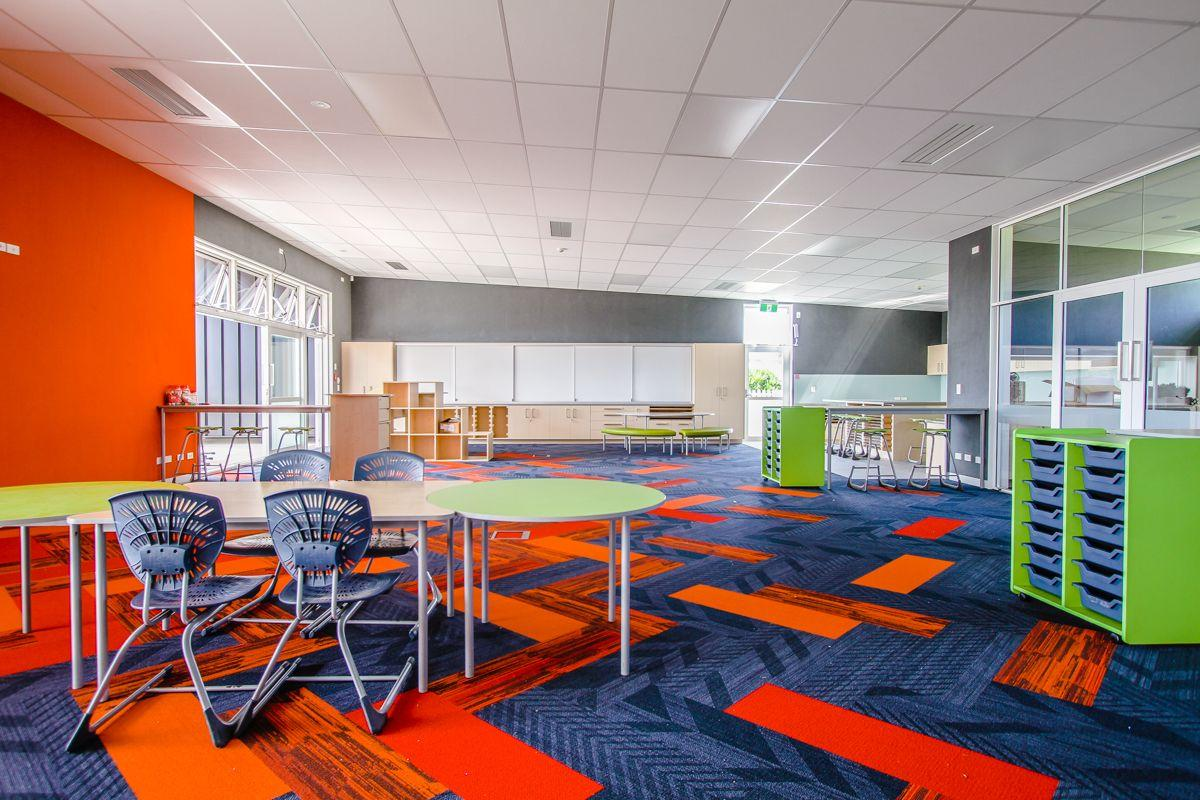
PVC-backed carpet tiles are used in many commercial modular flooring applications.
Potential practical advantages include:
-
Stable tile structure
-
Good dimensional consistency when properly manufactured
-
Easy modular handling
-
Compatibility with common carpet tile installation systems
-
Convenient replacement of individual tiles
For projects specifying PVC backing, buyers should still request complete technical documentation and installation requirements.
The backing specification should match:
-
Subfloor conditions
-
Adhesive system
-
Installation method
-
Moisture requirements
-
Project standards
11. Carpet Tile Construction Matters
Two carpet tiles can use the same fiber but perform differently.
Important construction specifications can include:
-
Pile type
-
Tuft density
-
Face weight
-
Pile height
-
Stitch rate
-
Gauge
-
Yarn characteristics
-
Tile dimensions
-
Total thickness
For commercial classrooms, comparing only the price per square meter can be misleading.
A lower-cost tile may have a different construction that affects durability or lifecycle performance.
12. Loop Pile vs Cut Pile for Classrooms
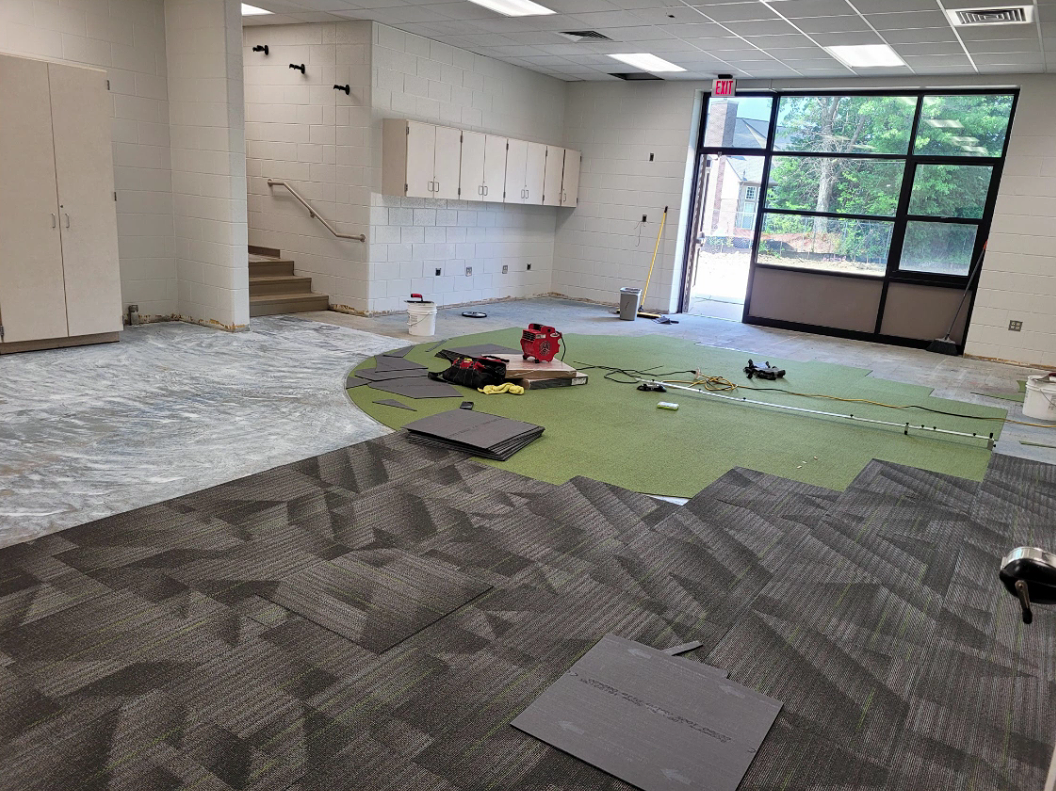
Loop pile is commonly considered for commercial environments because its construction can provide a practical balance between durability and appearance.
Cut pile can provide a different visual and tactile effect.
For classrooms, consider:
Loop pile
Potential advantages:
-
Commercial appearance
-
Suitable for many high-use environments
-
Structured surface
-
Good design flexibility
Cut pile
Potential advantages:
-
Softer visual appearance
-
Different texture
-
Suitable for selected learning or administrative spaces
The right choice depends on the project specification rather than a universal rule.
13. Acoustic Performance Is Important in Classrooms
Flooring is only one component of classroom acoustics, but it can contribute to the overall environment.
A classroom may need to control:
-
Footstep noise
-
Chair movement
-
Impact noise
-
General activity noise
Carpet tiles can contribute to a softer acoustic environment compared with some hard flooring systems.
For projects where acoustic performance is critical, ask suppliers for actual test data rather than relying on phrases such as:
“Excellent sound absorption.”
Look for documented acoustic performance and understand the test conditions.
14. Safety and Certification Should Be Part of the Specification
For educational projects, product documentation is important.
Depending on the country and project requirements, buyers may need information related to:
-
Fire performance
-
VOC emissions
-
Formaldehyde
-
Indoor air quality
-
Environmental requirements
-
Quality management
-
Slip-related considerations
-
Chemical compliance
Do not assume that a product is suitable for a school simply because a supplier describes it as “commercial grade.”
Ask for the actual report, certificate, standard, test method, and applicable product range.
15. Don’t Confuse “Commercial Grade” With a Complete Specification
“Commercial grade” is a marketing description, not a complete technical specification.
A professional buyer should ask:
-
What is the exact product series?
-
What is the fiber?
-
What is the construction?
-
What is the backing?
-
What is the face weight?
-
What are the dimensions?
-
What testing has been completed?
-
What installation method is required?
-
What cleaning procedure is recommended?
-
What warranty applies?
-
What certifications are available?
This information allows architects, designers, contractors, and purchasing teams to compare products objectively.
16. Sample Approval Is Essential
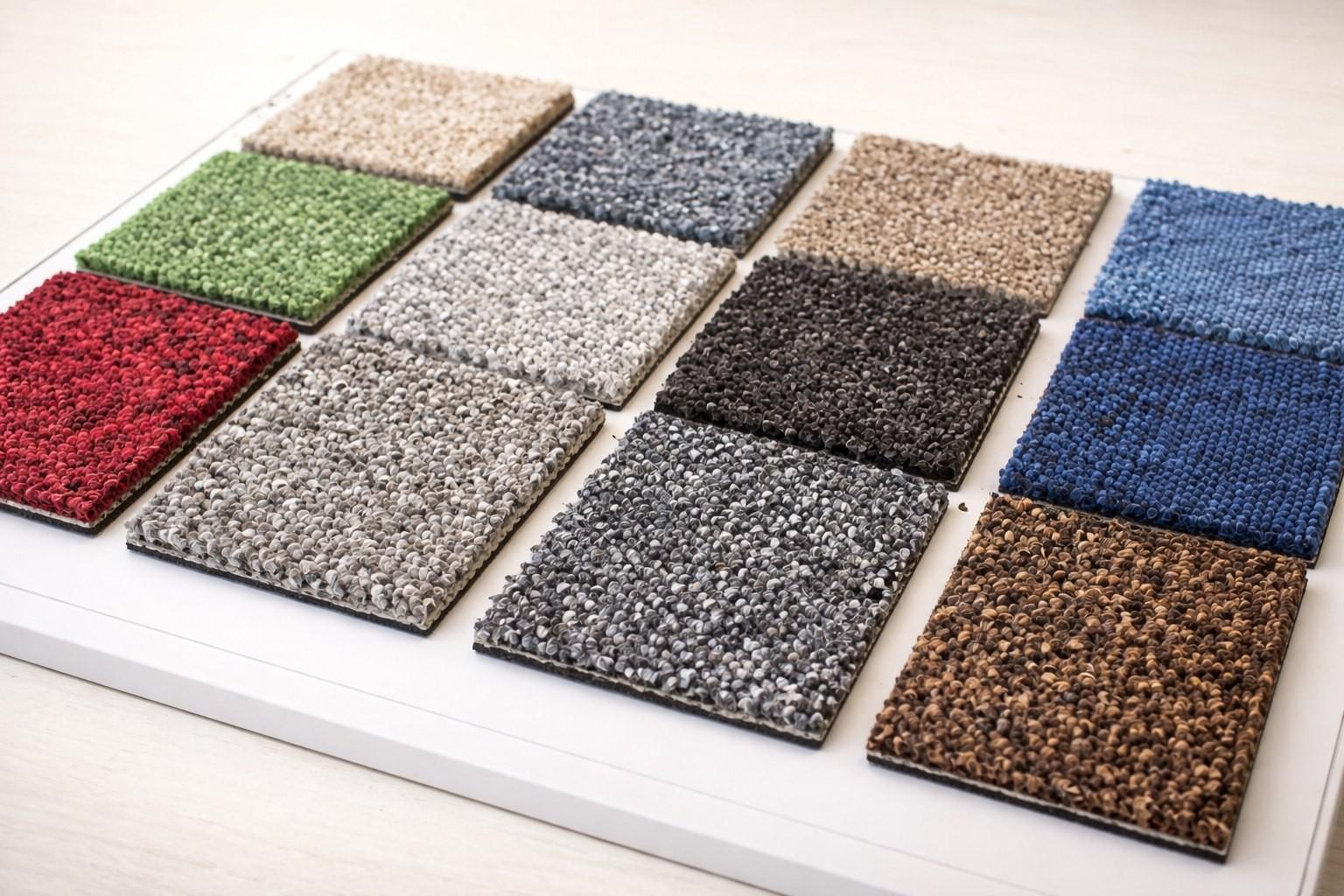
Never approve classroom carpet tiles based only on a website photograph.
Digital images can differ because of:
-
Screen settings
-
Photography
-
Lighting
-
Camera exposure
-
Installation direction
-
Surrounding colors
Request physical samples whenever possible.
A proper sample review should check:
Color
Does the actual tile match the design concept?
Texture
Is the surface appropriate for the classroom?
Construction
Does the physical product match the technical specification?
Backing
Is the backing consistent with the project requirement?
Tile dimensions
Are the actual dimensions within the required tolerance?
Pattern repeat
Will the installation create the expected visual effect?
17. Always Check the Installation Method
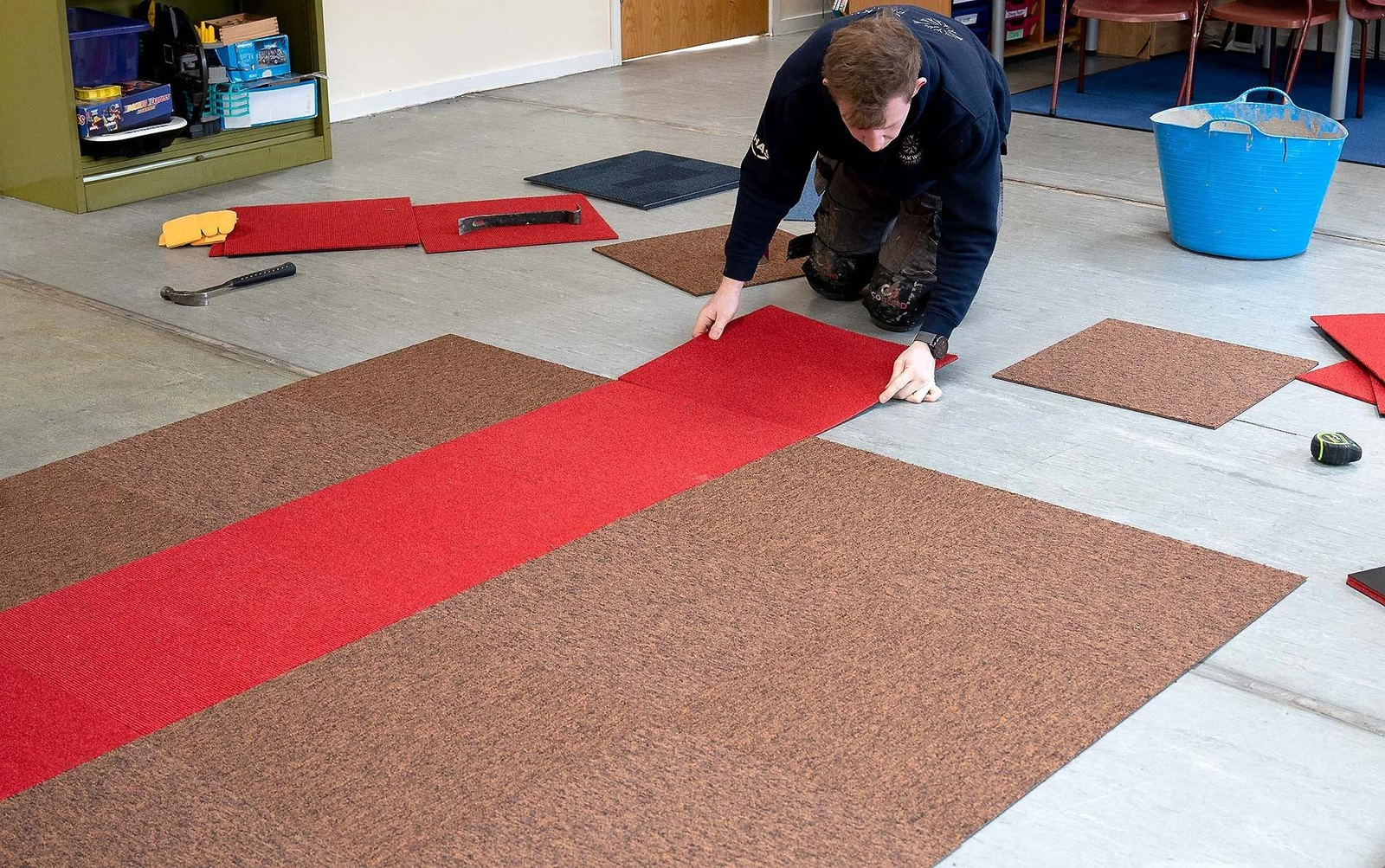
Carpet tiles are modular, but installation still requires professional planning.
Depending on the product, installation may involve:
-
Full adhesive
-
Pressure-sensitive adhesive
-
Tackifier
-
Loose lay
-
Other manufacturer-approved systems
The correct method depends on the specific product and subfloor.
Before installation, verify:
-
Subfloor flatness
-
Moisture condition
-
Cleanliness
-
Temperature
-
Adhesive compatibility
-
Tile orientation
-
Pattern direction
Incorrect installation can create problems even when the carpet tile itself is technically suitable.
18. Plan for Spare Carpet Tiles
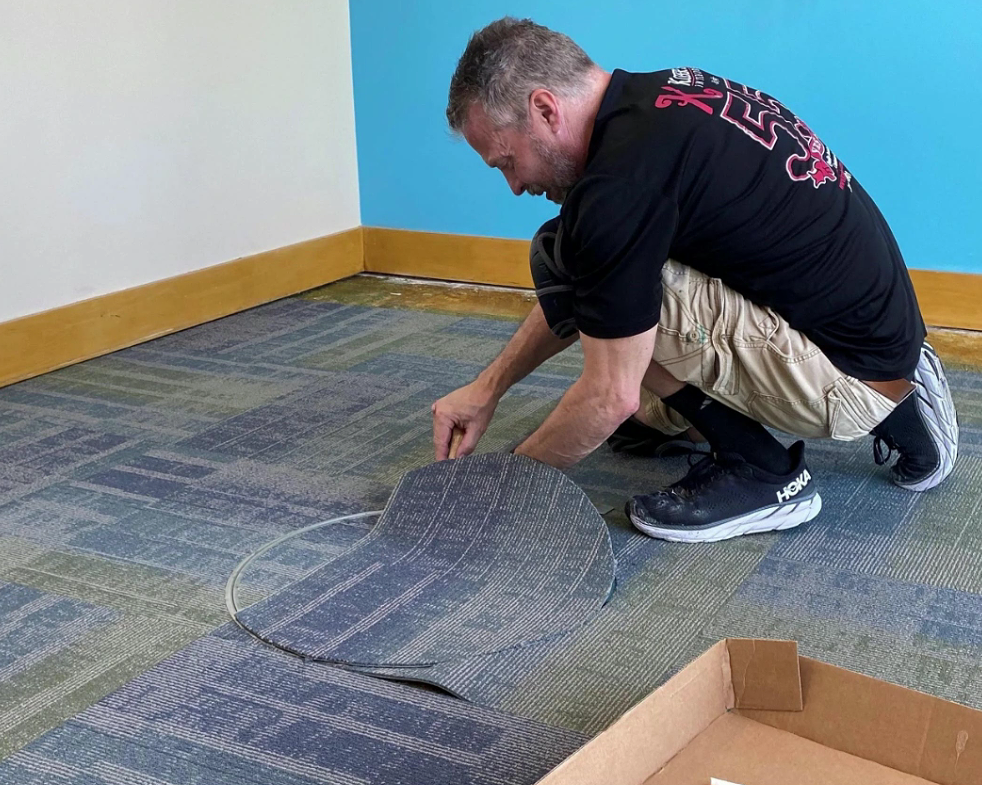
One of the strongest practical advantages of carpet tile is replacement.
But replacement only works efficiently if spare tiles are available.
For school projects, consider purchasing additional tiles for future maintenance.
Keep spare material:
-
Dry
-
Clean
-
Protected
-
Clearly labeled
-
From the same product batch when possible
Record:
-
Product code
-
Colorway
-
Dye lot/batch
-
Installation date
-
Installation pattern
This information can make future maintenance significantly easier.
19. What Carpet Tiles Are Best for Different Classroom Types?
Different educational environments require different priorities.
| Classroom Type | Main Considerations |
|---|---|
| Kindergarten | Stain resistance, comfort, cleaning, design |
| Primary classroom | Durability, maintenance, color, acoustic comfort |
| Secondary classroom | Durability, appearance, lifecycle cost |
| University classroom | Traffic, appearance, maintenance |
| Computer classroom | Chair movement, durability, maintenance |
| Art classroom | Stain exposure, cleaning, replacement |
| Science classroom | Maintenance, chemical considerations, safety requirements |
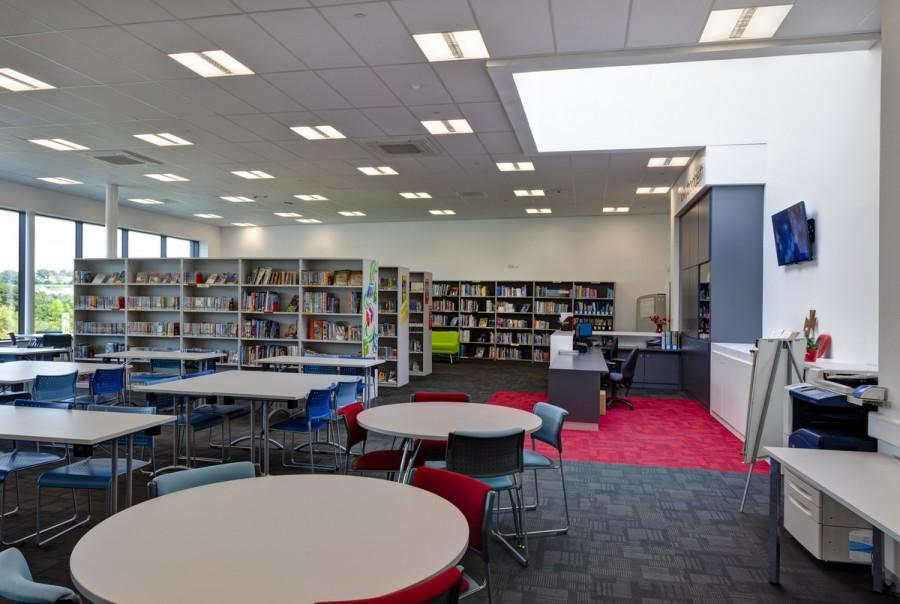
| Library classroom | Acoustic comfort, appearance, durability |
| Training room | Design, traffic, maintenance |
This is why the best carpet tiles for classrooms should be selected according to the room’s function.
20. Best Carpet Tiles for High-Use Classrooms
If the classroom experiences high daily traffic, prioritize:
1. Durable construction
Look beyond the fiber name and review the complete construction.
2. Appropriate backing
The backing should be compatible with the installation and expected use.
3. Easy maintenance
Select a surface that can be maintained using the school’s available cleaning system.
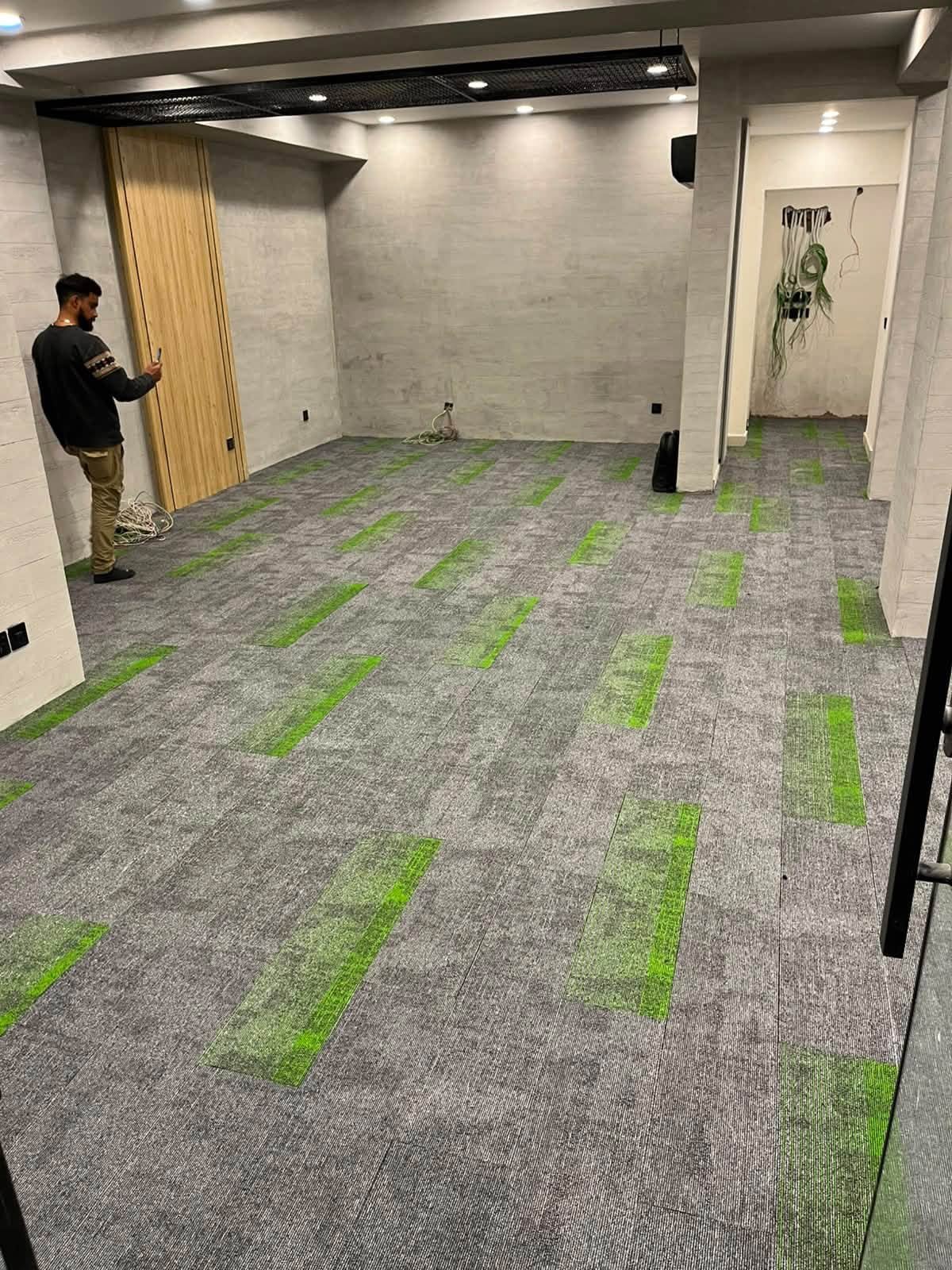
4. Patterned appearance
Moderate patterns can help manage the visual effect of everyday dirt and wear.
5. Replacement availability
Make sure replacement tiles can be obtained when necessary.
6. Technical documentation
Confirm that the product meets the applicable project requirements.
21. Common Mistakes When Choosing Classroom Carpet Tiles
Even experienced project teams can make specification mistakes.
Mistake 1: Choosing only by price
The cheapest tile may not have the required construction or lifecycle performance.
Compare the total specification rather than only the purchase price.
Mistake 2: Choosing only by color
An attractive sample does not prove technical suitability.
Mistake 3: Selecting fiber without reviewing construction
Nylon, polypropylene, and polyester can all be used in different applications.
The complete construction matters.
Mistake 4: Ignoring the backing
Backing affects installation and product performance.
Mistake 5: Using one specification everywhere
A corridor and classroom may have different requirements.
Mistake 6: Not keeping spare tiles
Future replacement becomes harder if the original product is discontinued.
Mistake 7: Trusting marketing claims without documentation
Terms such as “commercial,” “heavy duty,” and “school grade” should be supported by technical information.
22. A Practical Classroom Carpet Tile Specification Checklist
Before approving a carpet tile, ask the supplier for the following information.
Product
-
Product name
-
Product code
-
Tile size
-
Total thickness
-
Weight
Fiber
-
Fiber type
-
Yarn construction
-
Face weight
-
Pile construction
Backing
-
Backing material
-
Backing weight
-
Dimensional stability
-
Installation compatibility
Performance
-
Wear performance
-
Stain resistance
-
Colorfastness
-
Fire performance
-
Acoustic data where applicable
Environmental
-
VOC information
-
Formaldehyde information
-
Environmental certifications
-
Relevant chemical compliance
Installation
-
Recommended adhesive
-
Installation method
-
Subfloor requirements
-
Cleaning requirements
Project
-
Required quantity
-
Colorway
-
Pattern
-
Installation direction
-
Spare quantity
-
Delivery schedule
This checklist can help prevent specification gaps before ordering.
23. How to Compare Carpet Tile Suppliers for School Projects
For B2B buyers, supplier evaluation is as important as product evaluation.
Ask potential suppliers:
Can they provide samples?
Samples should represent the actual production specification.
Can they provide technical documents?
A professional supplier should be able to provide relevant product documentation.
Can they support custom colors?
Large school projects may require specific design concepts.
Can they supply project quantities?
Confirm production capacity and lead time.
Can they maintain consistent color?
For large projects, batch consistency matters.
Can they provide replacement stock?
This can become important years after installation.
Can they support installation questions?
The supplier should clearly explain installation requirements.
24. What Makes a Carpet Tile a Good Long-Term Classroom Flooring Solution?
A good classroom carpet tile is not necessarily the most expensive product.
Instead, it should provide a balanced combination of:
Performance + Maintenance + Design + Installation + Replacement + Cost
For example, a school may accept a slightly higher initial product cost if the flooring:
-
lasts longer,
-
is easier to maintain,
-
reduces replacement waste,
-
allows localized repair,
-
and remains visually acceptable for longer.
This is the principle of lifecycle thinking.
25. How to Select Carpet Tiles for a New School Project
For a new construction project, the recommended workflow is:
Step 1: Map the rooms
Identify:
-
Classrooms
-
Corridors
-
Libraries
-
Offices
-
Learning commons
-
Meeting rooms
-
Reception
-
Activity spaces
Step 2: Classify traffic
Determine which spaces receive the highest daily use.
Step 3: Establish technical requirements
Define:
-
Fiber
-
Construction
-
Backing
-
Fire requirements
-
Acoustic requirements
-
Environmental requirements
Step 4: Select design options
Choose colors, patterns, and installation layouts.
Step 5: Request samples
Review physical samples under actual project lighting.
Step 6: Review documentation
Confirm that the exact product meets project requirements.
Step 7: Calculate quantity
Include installation waste and maintenance stock.
Step 8: Confirm production and delivery
Large education projects should establish the production schedule before final approval.
26. How to Select Carpet Tiles for Classroom Renovation
Renovation projects have additional challenges.
The existing floor may have:
-
Uneven areas
-
Moisture issues
-
Old adhesive
-
Damaged subfloor
-
Different floor heights
Before ordering carpet tiles, inspect the existing substrate.
A professional installation plan should consider:
-
Existing floor condition
-
Removal requirements
-
Subfloor preparation
-
Moisture condition
-
New tile thickness
-
Door clearance
-
Transition details
-
Installation schedule
For schools operating during term time, installation logistics can be just as important as product selection.
27. Should Every Classroom Use the Same Carpet Tile?
Not necessarily.
Using one product family across a school can simplify procurement, but different areas may benefit from different specifications or patterns.
For example:
Classrooms: durable commercial carpet tile
Library: acoustic and design-focused carpet tile
Corridors: higher-traffic specification
Reception: stronger visual emphasis
Staff offices: more restrained design
However, too many product types can increase procurement complexity.
A practical strategy is often to create a small, coordinated product palette rather than specifying a completely different product for every room.
28. Why Modular Design Matters in Schools
Schools change over time.
Classrooms may be:
-
Reconfigured
-
Renovated
-
Repainted
-
Repurposed
-
Combined
-
Divided
Modular carpet tiles make it easier to adapt the flooring design.
Individual tiles can potentially be:
-
Removed
-
Replaced
-
Repositioned
-
Reconfigured
This flexibility is one of the main reasons carpet tiles continue to be considered for education environments.
29. Frequently Asked Questions About the Best Carpet Tiles for Classrooms
What are the best carpet tiles for classrooms?
The best carpet tiles for classrooms are products that match the room’s traffic, maintenance requirements, design goals, acoustic needs, backing requirements, and project standards. Fiber type alone should not determine the decision.
Is nylon or polypropylene better for classroom carpet tiles?
Both can be appropriate depending on the product specification and classroom environment. Nylon is often considered where durability and resilience are priorities, while polypropylene can provide an economical option with useful stain-resistance characteristics.
Are carpet tiles suitable for elementary school classrooms?
Yes. Carpet tiles can be suitable for elementary classrooms when the product is correctly specified for traffic, cleaning, safety, and installation requirements.
Are carpet tiles easy to clean in classrooms?
They can be practical to maintain because individual damaged tiles can be replaced. However, routine vacuuming and prompt stain treatment remain important.
Are carpet tiles good for classroom acoustics?
Carpet tiles can contribute to a softer acoustic environment by helping manage some impact and floor-related noise. Actual acoustic performance should be evaluated using product-specific test data.
What backing is best for classroom carpet tiles?
There is no universal best backing. PVC, bitumen, polyolefin, cushion and other systems have different characteristics. The backing should be selected according to the project, installation system, subfloor and performance requirements.
How many spare carpet tiles should a school keep?
The required amount depends on the project size, expected traffic, product availability, and maintenance strategy. The key principle is to retain enough original material for future localized replacement.
Can different carpet tile colors be used in one classroom?
Yes. Multiple colors can create visual zoning and design interest. The installation plan should be approved before installation to ensure the intended pattern is achieved.
What should I ask a carpet tile manufacturer before ordering?
Request product specifications, fiber information, construction data, backing details, performance test reports, certificates where applicable, installation instructions, cleaning recommendations, samples, production lead time, and replacement-stock information.
Conclusion: Choosing the Best Carpet Tiles for Classrooms
The best carpet tiles for classrooms are not defined by one fiber, one color, or one price point.
A successful school flooring specification considers the entire system:
Classroom use → Traffic → Fiber → Construction → Backing → Maintenance → Acoustics → Design → Installation → Replacement
For architects, interior designers, contractors, project managers, and school procurement teams, the most reliable approach is to start with the actual classroom requirements and then compare products using technical documentation and physical samples.
For large education projects, it is also important to confirm production capacity, color consistency, delivery schedules, packaging, and future replacement availability before placing the final order.
Looking for Carpet Tiles for Classroom Projects?
FAMILAI supplies carpet tile solutions for commercial and institutional applications, including PVC-backed carpet tiles with different fiber, color, pattern, and specification options.
We can support B2B buyers with:
-
Carpet tile samples
-
Product specifications
-
Fiber and backing options
-
Color and pattern selection
-
Project quantity calculation
-
OEM/ODM requirements
-
Packaging solutions
-
Production coordination
-
Delivery planning
Whether you are an architect, interior designer, contractor, distributor, project manager, or commercial flooring buyer, send us your classroom project requirements and we can help you compare suitable carpet tile specifications.
Website: www.hlyidacarpet.com