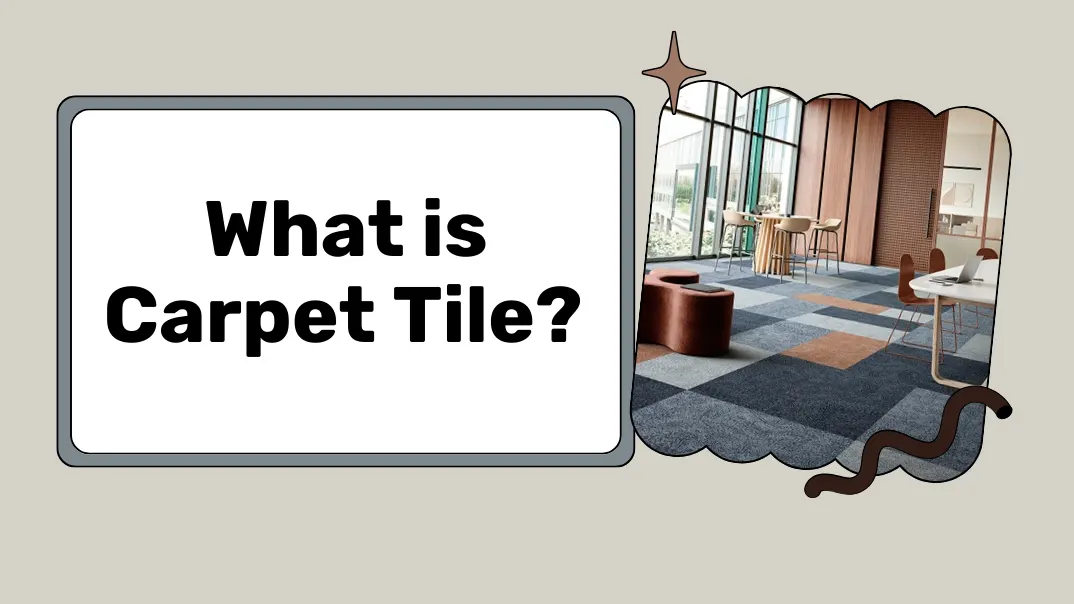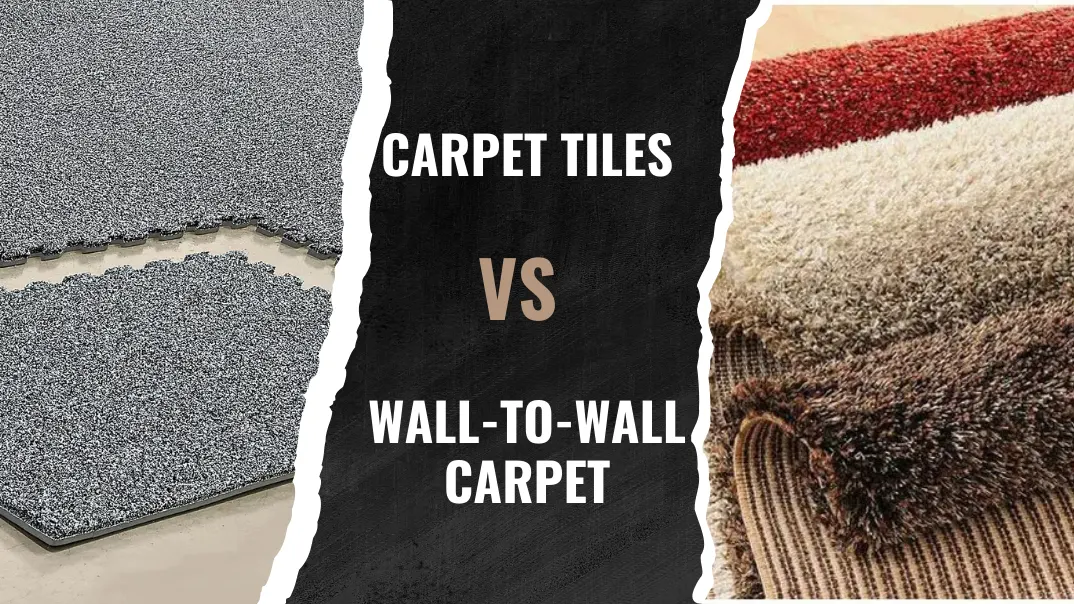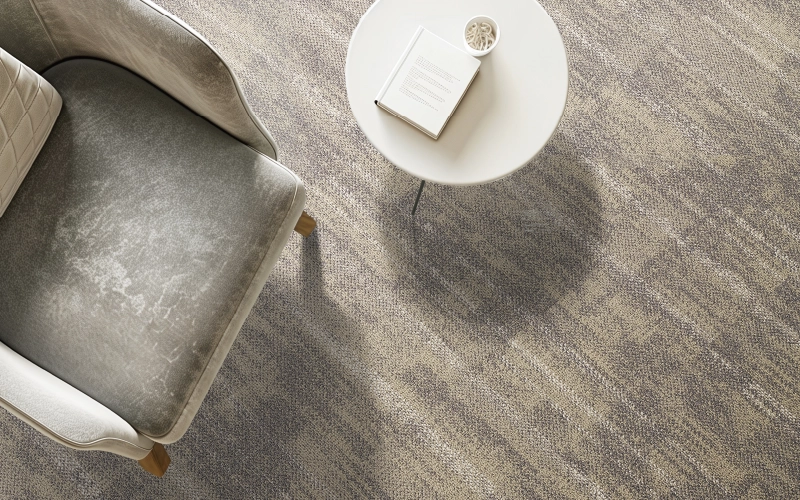
The commercial flooring market is changing in 2026.
For years, carpet tiles were often viewed primarily as a practical flooring solution for offices, schools, hotels, and other commercial buildings. Today, that role is expanding.
The latest carpet tile trends 2026 show a stronger connection between flooring design, workplace experience, acoustic comfort, space planning, sustainability, and long-term maintenance.
Recent industry coverage from NeoCon 2026 and major flooring manufacturers highlights growing interest in richer textures, refined geometric patterns, warmer color palettes, modular layouts, and flooring systems that can help define different zones within a commercial interior.
At the same time, modularity remains one of the fundamental reasons commercial buyers continue to specify carpet tiles. Individual tiles can be replaced when damaged or stained, while different colors and patterns can be combined to create flexible floor plans.
So what exactly is changing in 2026?
This guide examines the major carpet tile trends 2026 and explains what they mean for architects, interior designers, contractors, distributors, project managers, and commercial flooring buyers.
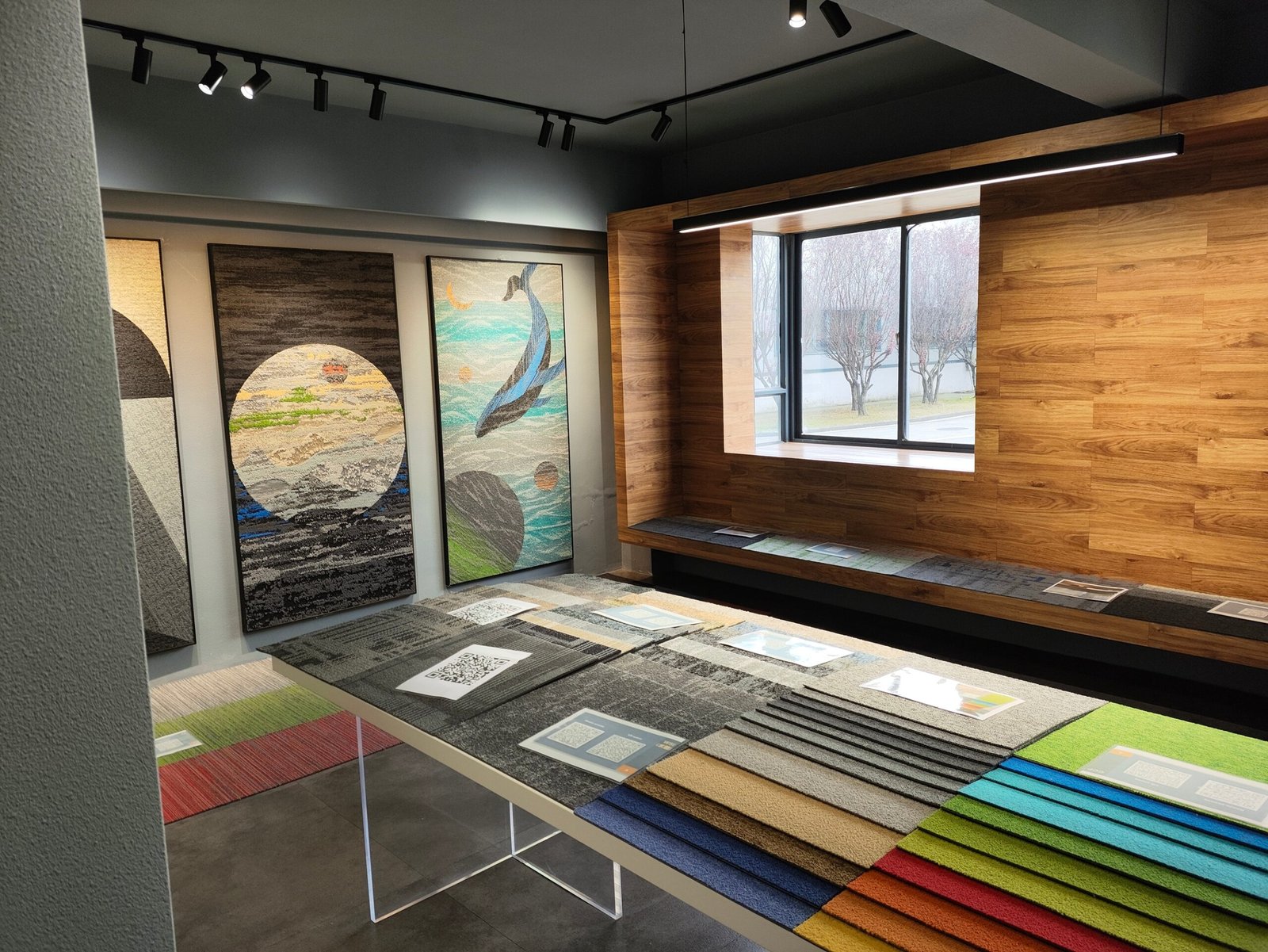
What Are the Biggest Carpet Tile Trends in 2026?
The most visible carpet tile trends 2026 can be summarized into eight major directions:
- Warmer and more natural colors
- Textured and layered surfaces
- Refined geometric patterns
- Carpet tiles as a space-zoning tool
- More attention to acoustic comfort
- Flexible modular installation
- Sustainability and environmental documentation
- Greater focus on lifecycle value
These trends are not completely separate.
Modern commercial carpet tiles increasingly need to solve several problems at the same time:
Design + Performance + Acoustics + Maintenance + Flexibility + Sustainability
That is changing how designers and buyers evaluate carpet tile products.
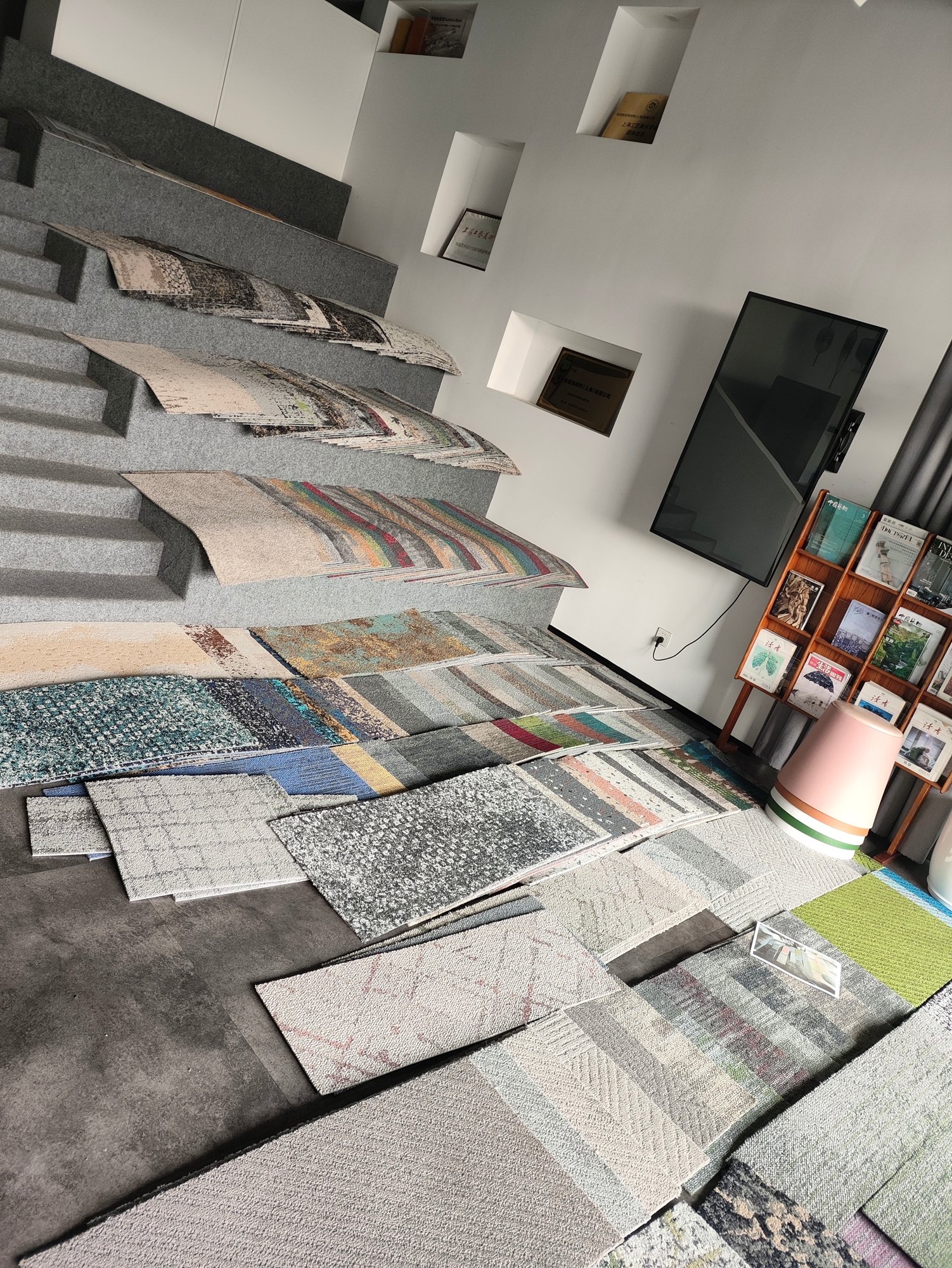
1. Warm Colors Are Replacing Cold Gray Palettes
One of the clearest carpet tile trends 2026 is the movement toward warmer, more natural colors.
For many years, commercial interiors relied heavily on:
- Cool gray
- Charcoal
- Black
- Blue-gray
- Neutral beige
These colors remain widely used, but 2026 design discussions show stronger interest in warmer and more human-centered palettes.
Examples include:
- Warm beige
- Sand
- Taupe
- Terracotta
- Earth brown
- Warm gray
- Muted green
- Deep olive
- Soft blue
Interface, for example, expanded its Open Air Neutrals carpet tile collection in 2026 with additional warm colorways, describing the direction as part of a broader focus on warm tones in commercial interiors.
Why are warm colors becoming popular?
Commercial spaces are increasingly designed to feel less institutional.
Offices, hotels, education facilities, and shared environments are using materials and colors that create a more comfortable atmosphere.
Instead of making the floor the visual focus, designers can use warm neutral carpet tiles as a foundation and introduce stronger colors through furniture, walls, lighting, or selected flooring zones.
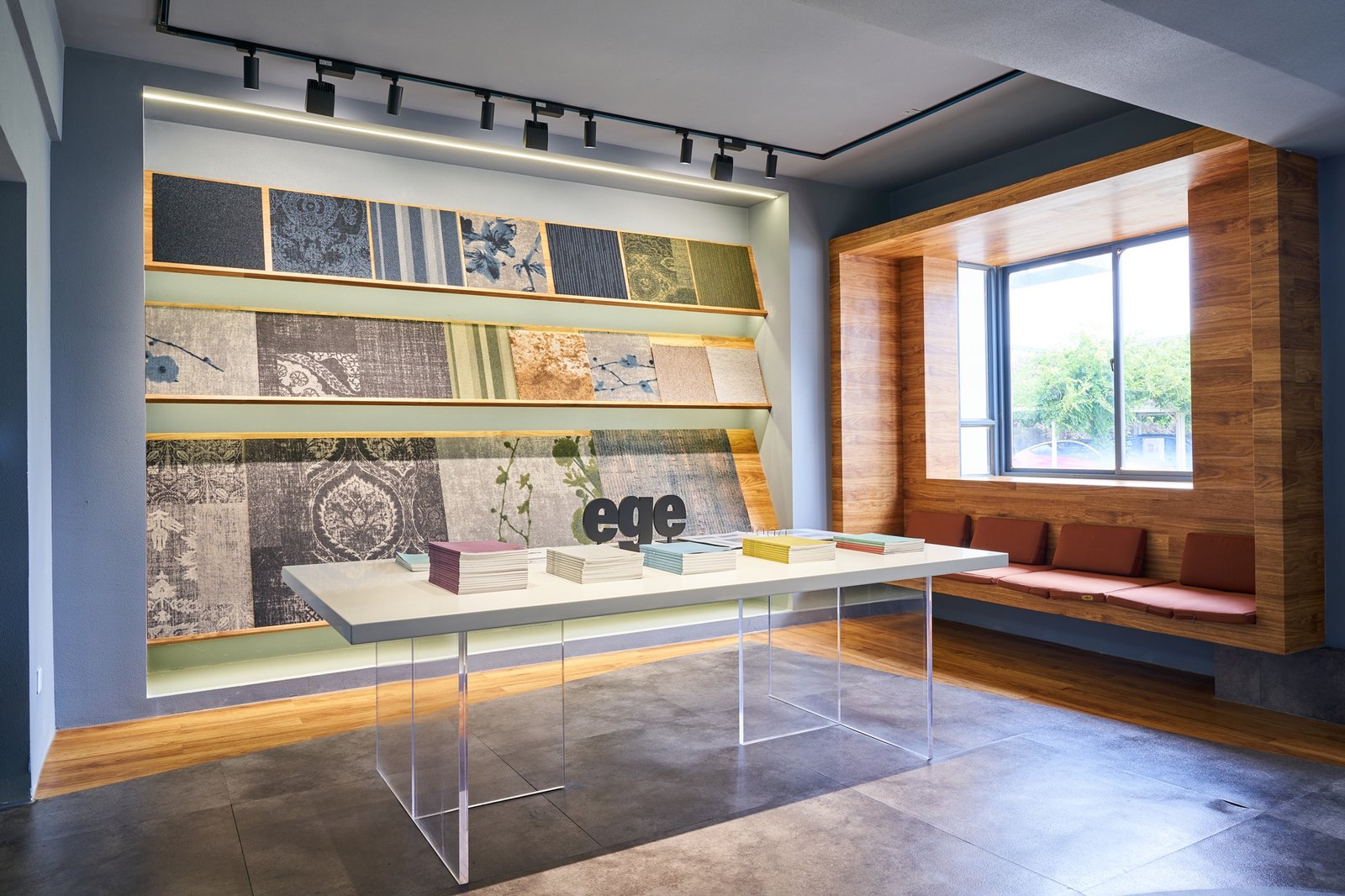
2. Texture Is Becoming More Important
Another important development in carpet tile trends 2026 is the increased use of texture.
Instead of completely flat surfaces, designers are exploring:
- Subtle loops
- Layered patterns
- Tonal variations
- Organic textures
- Linear structures
- Irregular visual movement
Industry coverage from 2026 highlights texture as an important part of the renewed visual interest in commercial carpet tile.
Texture can be useful because it adds visual depth without requiring extremely bright colors.
For example, a commercial office might use:
Warm gray + subtle texture
instead of:
Plain gray + completely uniform surface
The result can feel more sophisticated while remaining relatively easy to coordinate with furniture and architectural finishes.
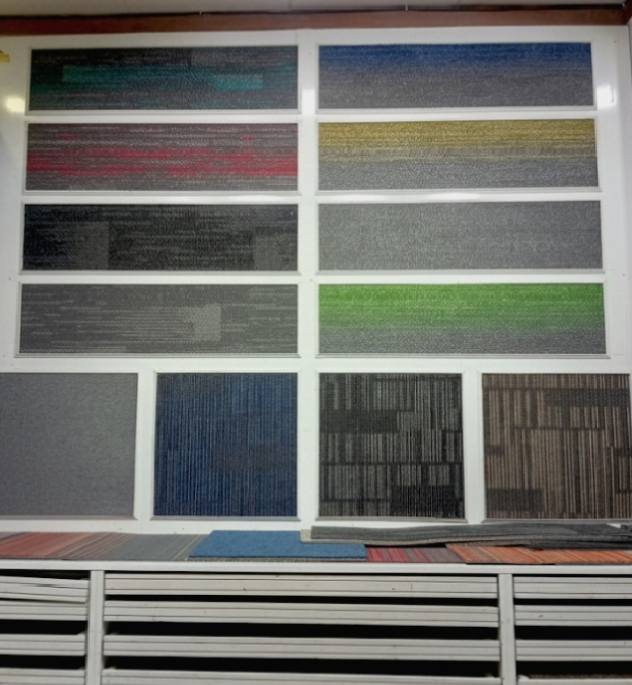
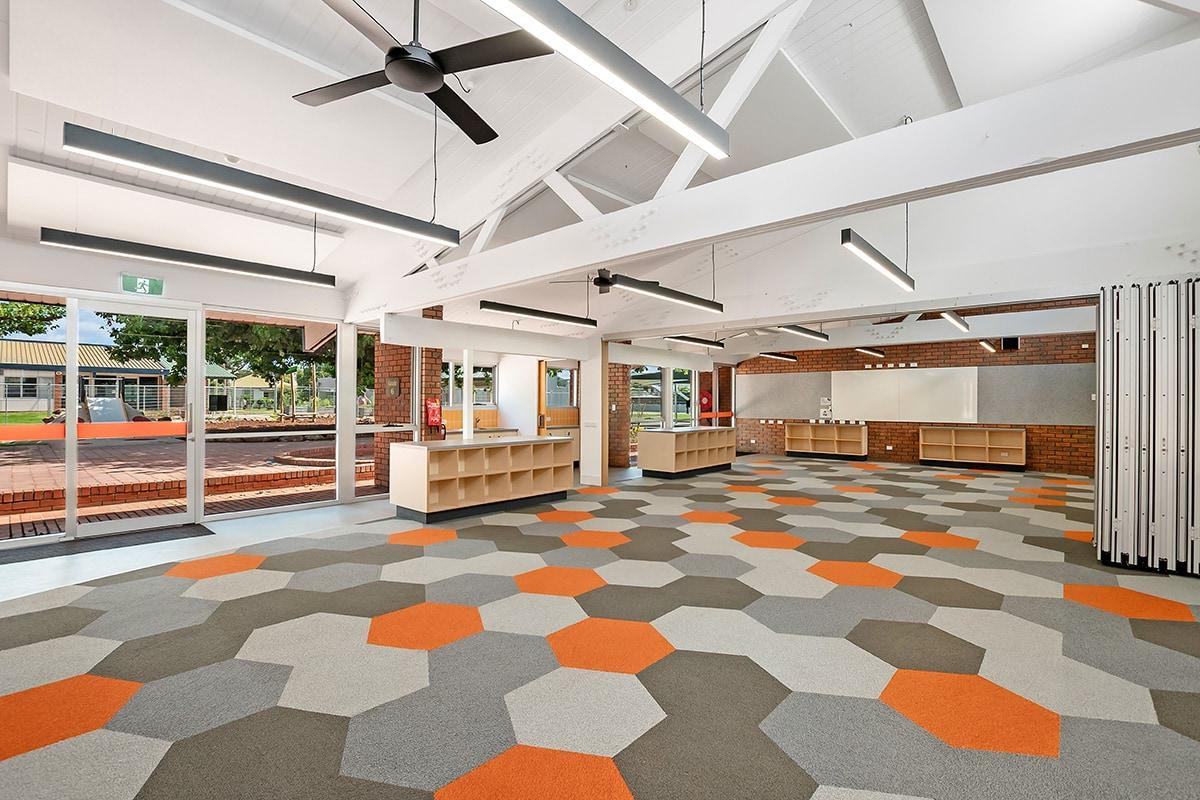
3. Geometric Patterns Are Getting More Sophisticated
Geometric carpet tiles are not new.
What is changing is the type of geometry being used.
In 2026, industry discussions are pointing toward:
- Refined stripes
- Architectural grids
- Broken lines
- Fractured geometry
- Organic geometry
- Layered shapes
- Irregular linear patterns
Floor Covering Weekly reported that current carpet tile design is moving toward refined stripes, architectural grids, and fractured geometric patterns.
This gives designers more options than traditional repetitive squares.
Why does this matter?
Carpet tiles already have a modular physical format.
Designers can use that modularity visually.
For example:
Pattern direction A
can be used in a circulation zone.
Pattern direction B
can define a collaborative area.
A darker color
can identify a transition zone.
The flooring becomes part of the spatial design rather than simply a background surface.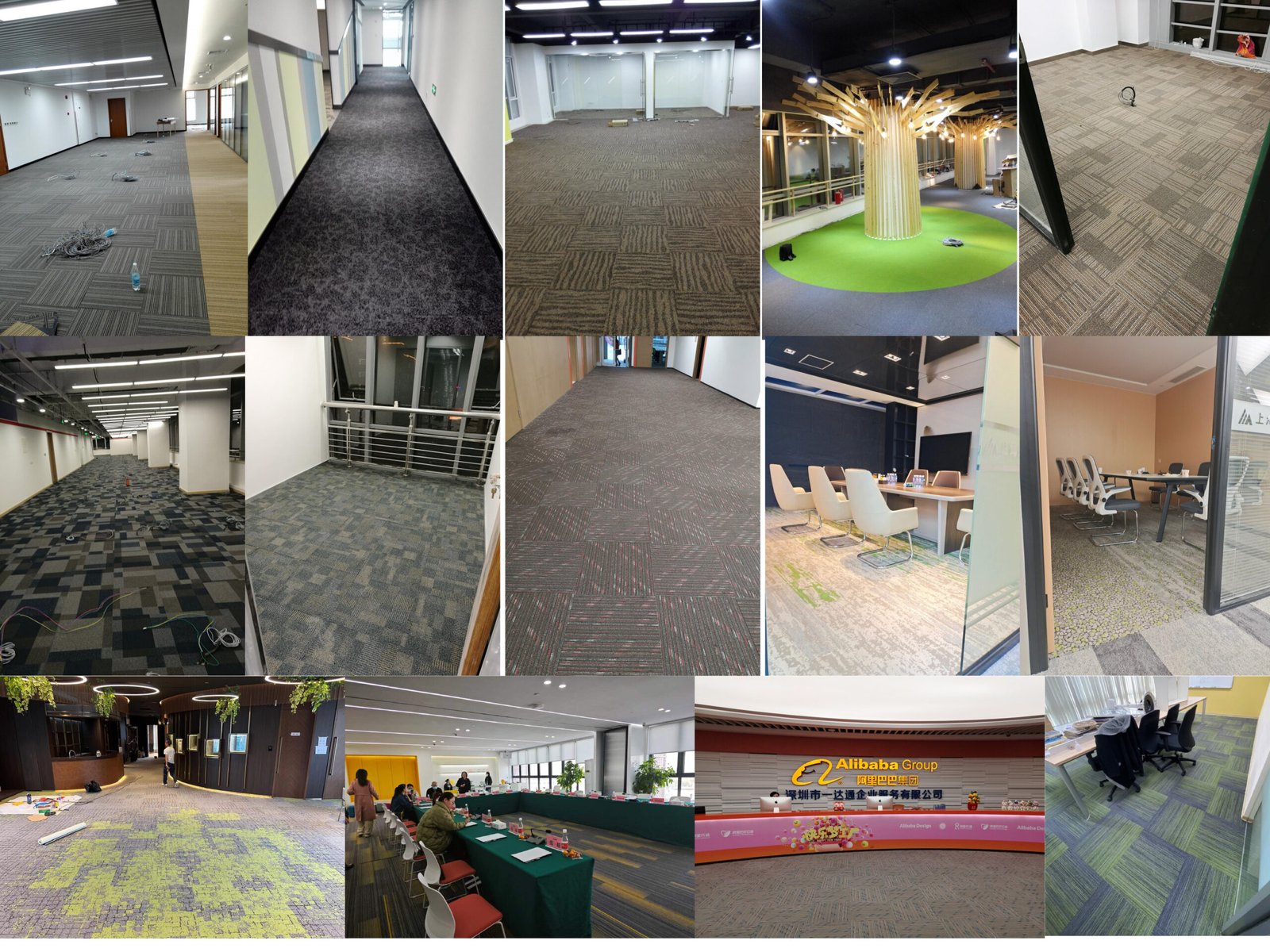
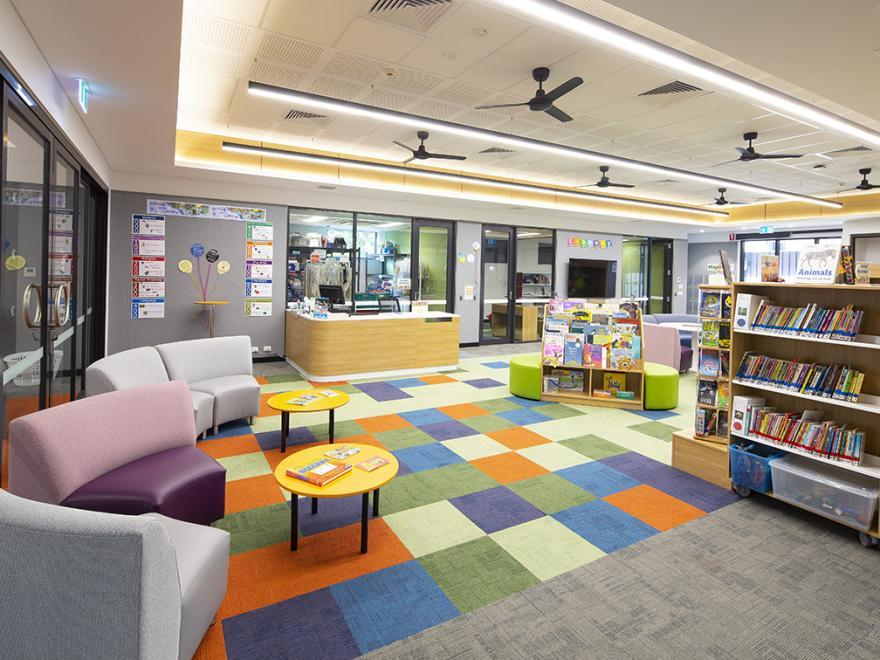
4. Carpet Tiles Are Becoming a Space-Zoning Tool
One of the most useful carpet tile trends 2026 is the use of flooring to organize space.
This is particularly relevant to open-plan offices.
Instead of constructing permanent walls, designers can use differences in:
- Color
- Pattern
- Texture
- Installation direction
- Flooring material
to visually separate areas.
For example:
Focus Zone
Use a quieter color and subtle texture.
Collaboration Zone
Use a stronger pattern or contrasting color.
Circulation Zone
Use a directional layout.
Lounge Zone
Use a warmer, softer visual palette.
Recent commercial flooring coverage describes modular flooring as increasingly important for defining zones and supporting flexible layouts.
This approach is particularly valuable when companies need offices that can be reconfigured without completely redesigning the floor.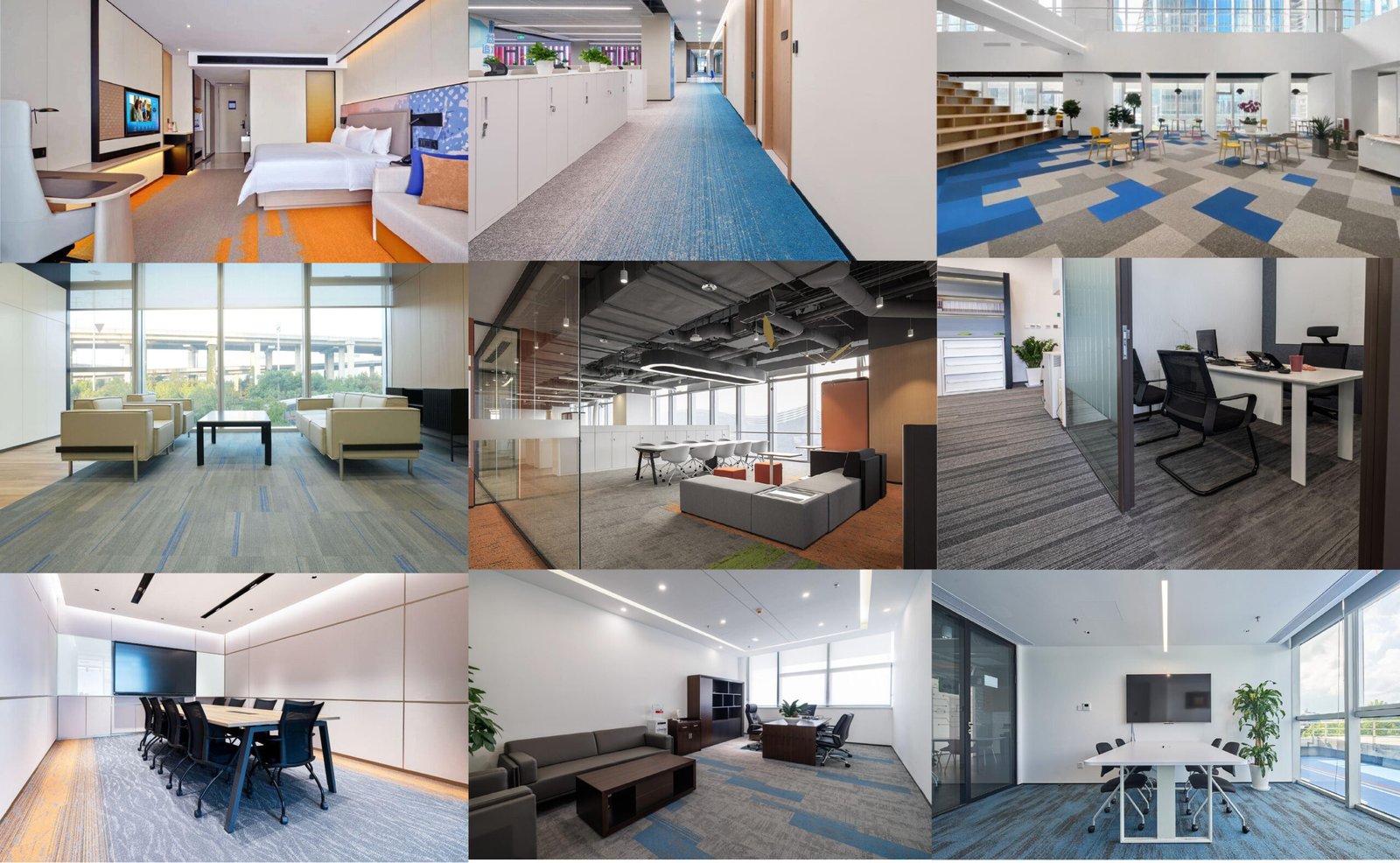
5. Acoustic Comfort Is Becoming a Major Flooring Consideration
Commercial interiors are becoming more sensitive to noise.
This is especially important in:
- Open-plan offices
- Meeting rooms
- Education facilities
- Libraries
- Coworking spaces
- Hotels
- Collaborative workplaces
Hard surfaces can contribute to a more reflective acoustic environment.
Carpet tiles can provide a softer flooring surface and contribute to acoustic comfort.
Industry reporting in 2026 indicates that acoustics remain an important factor in workplace flooring decisions, particularly as offices are redesigned around collaboration and employee experience.
What does this mean for buyers?
Acoustic performance should not simply be treated as a marketing phrase.
For projects where acoustics are important, request:
- Acoustic test data
- Noise reduction information
- Impact sound data where applicable
- Product construction details
- Installation conditions used for testing
The exact performance depends on the complete flooring system and test conditions.
6. Modular Installation Is More Important Than Ever
The modular format remains one of the biggest reasons carpet tiles are used in commercial projects.
Unlike broadloom carpet, carpet tiles can be individually handled.
This provides several practical benefits.
Easier installation
Tiles can be transported and handled more easily than large carpet rolls in many project conditions.
Easier maintenance
A damaged section can potentially be replaced without removing the entire floor.
Easier renovation
Specific areas can be repaired or redesigned without necessarily replacing the whole installation.
Easier inventory management
Additional tiles can be stored for future maintenance.
The modularity of carpet tile continues to be highlighted by industry sources as an important advantage for commercial interiors.
7. Carpet Planks and Mixed Layouts Are Expanding Design Possibilities
The traditional image of carpet tile is a square.
But commercial carpet tiles are increasingly available in different formats and installation approaches.
Common formats include:
- Square tiles
- Rectangular planks
- Mixed formats
- Modular systems with coordinated sizes
Installation patterns can include:
Monolithic
Tiles are installed in the same orientation to create a more consistent visual appearance.
Quarter Turn
Tiles are rotated 90 degrees to create subtle directional variation.
Ashlar
Tiles are offset to create a more linear visual effect.
Random or mixed installation
Different orientations can produce a more dynamic appearance where the product allows it.
The correct installation method should always follow the manufacturer’s instructions.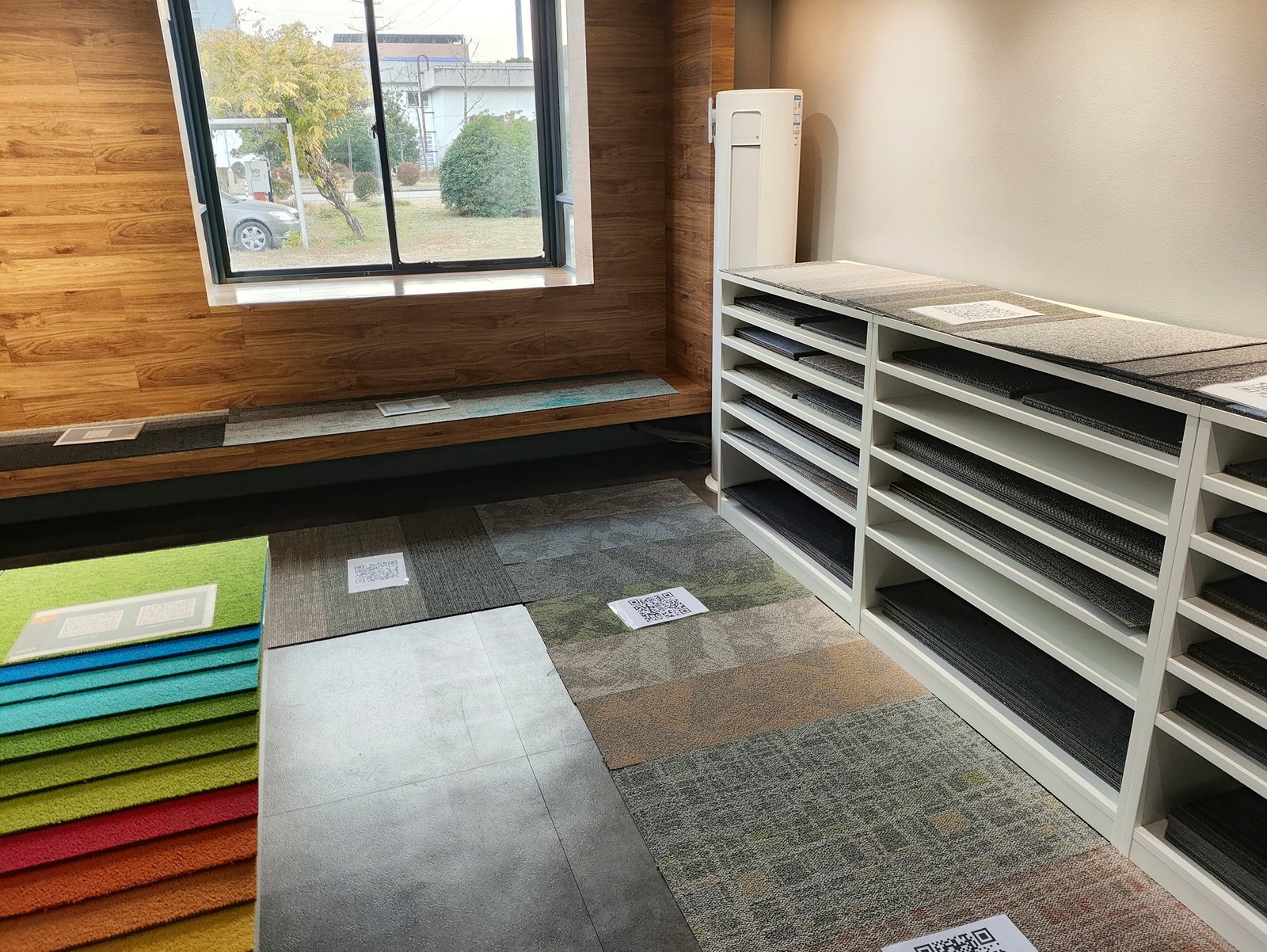
8. Sustainability Is Moving From Marketing to Specification
Sustainability remains an important part of commercial flooring discussions in 2026.
But the conversation is becoming more technical.
Instead of simply asking:
“Is this carpet tile eco-friendly?”
Commercial buyers increasingly need specific information.
This can include:
- Recycled content
- Recyclability
- Manufacturing information
- VOC emissions
- Environmental certifications
- Material composition
- Product declarations
- End-of-life options
Industry reporting indicates that sustainability expectations continue to influence commercial flooring specifications, including recycled content, low-emission materials, and decarbonization strategies.
For B2B buyers, this means environmental claims should be supported by documentation.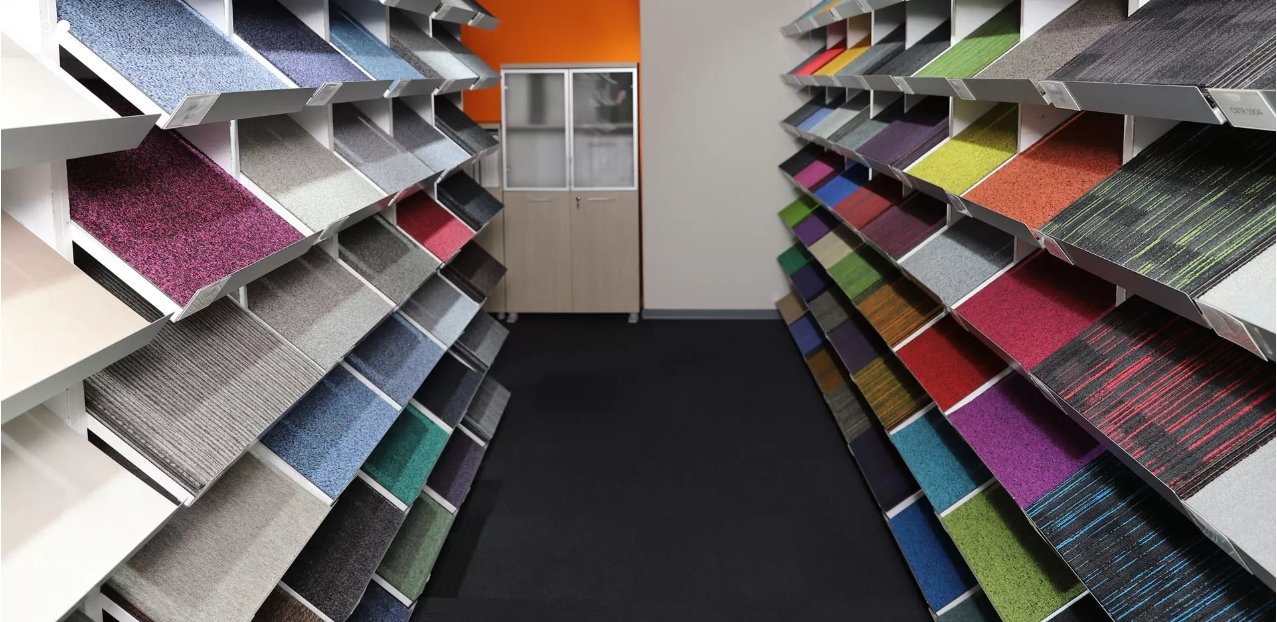
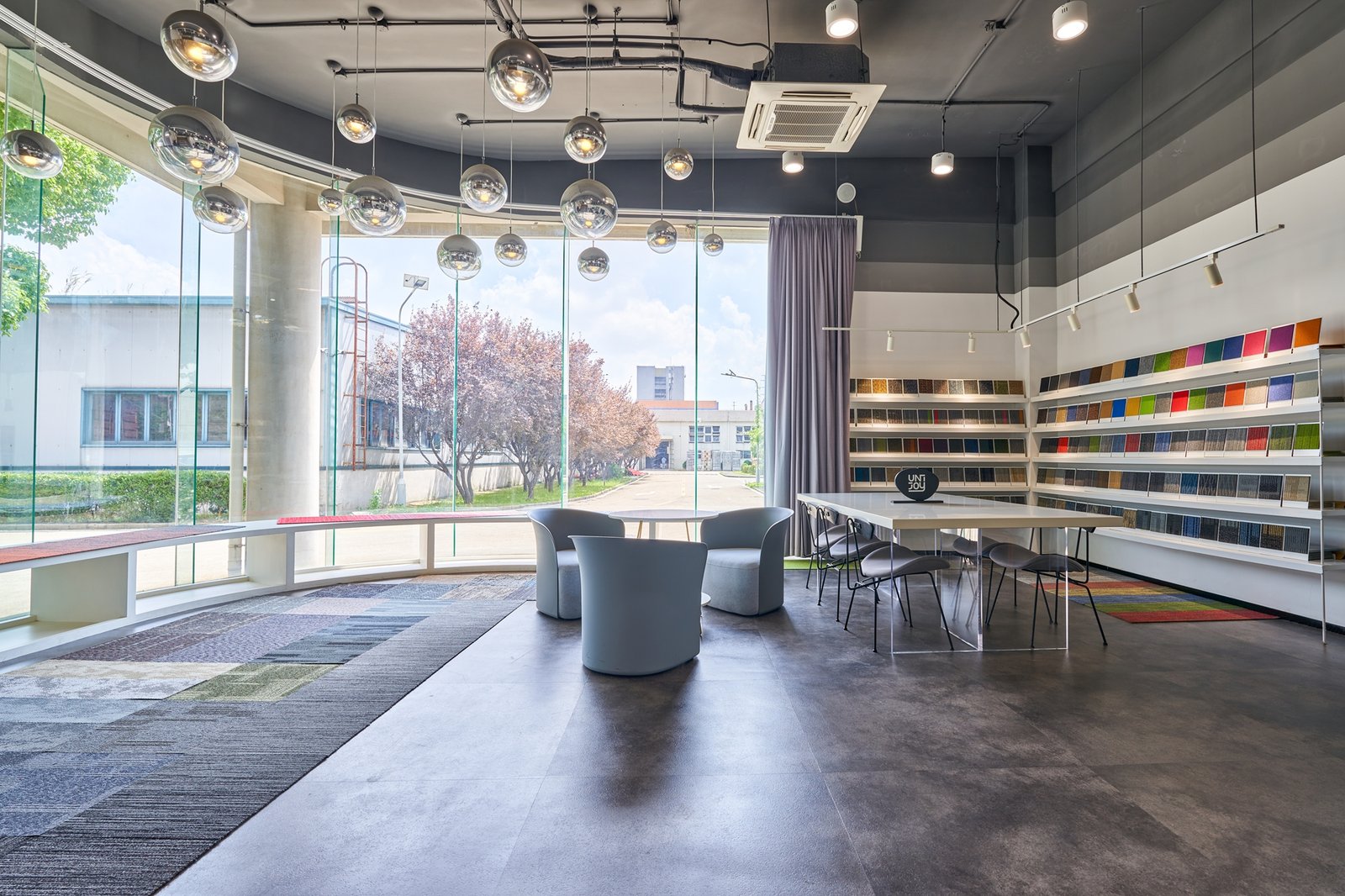
9. The “Biophilic” Look Is Moving Into Carpet Tile Design
Biophilic design is another major direction in commercial interiors.
However, it does not necessarily mean putting a leaf pattern on every floor.
Instead, designers can use:
- Natural colors
- Organic shapes
- Irregular textures
- Stone-inspired tones
- Grass-inspired greens
- Earth colors
- Subtle flowing patterns
NeoCon 2026 coverage highlighted flooring and textile designs inspired by natural landscapes, organic forms, and botanical references.
This creates a more natural visual environment without requiring literal nature graphics.
10. Carpet Tiles Are Becoming More Design-Driven
Historically, commercial carpet tile was often selected primarily for practical reasons:
Durability → Maintenance → Price
In 2026, design has become much more important.
Current industry coverage describes commercial carpet tiles with stronger colors, richer textures, and more distinctive patterns.
This creates an opportunity for designers to use carpet tile as an architectural element.
Instead of asking:
“Which carpet tile is the cheapest?”
The design team may ask:
“How can the floor help define the experience of this space?”
That is a significant change in specification thinking.
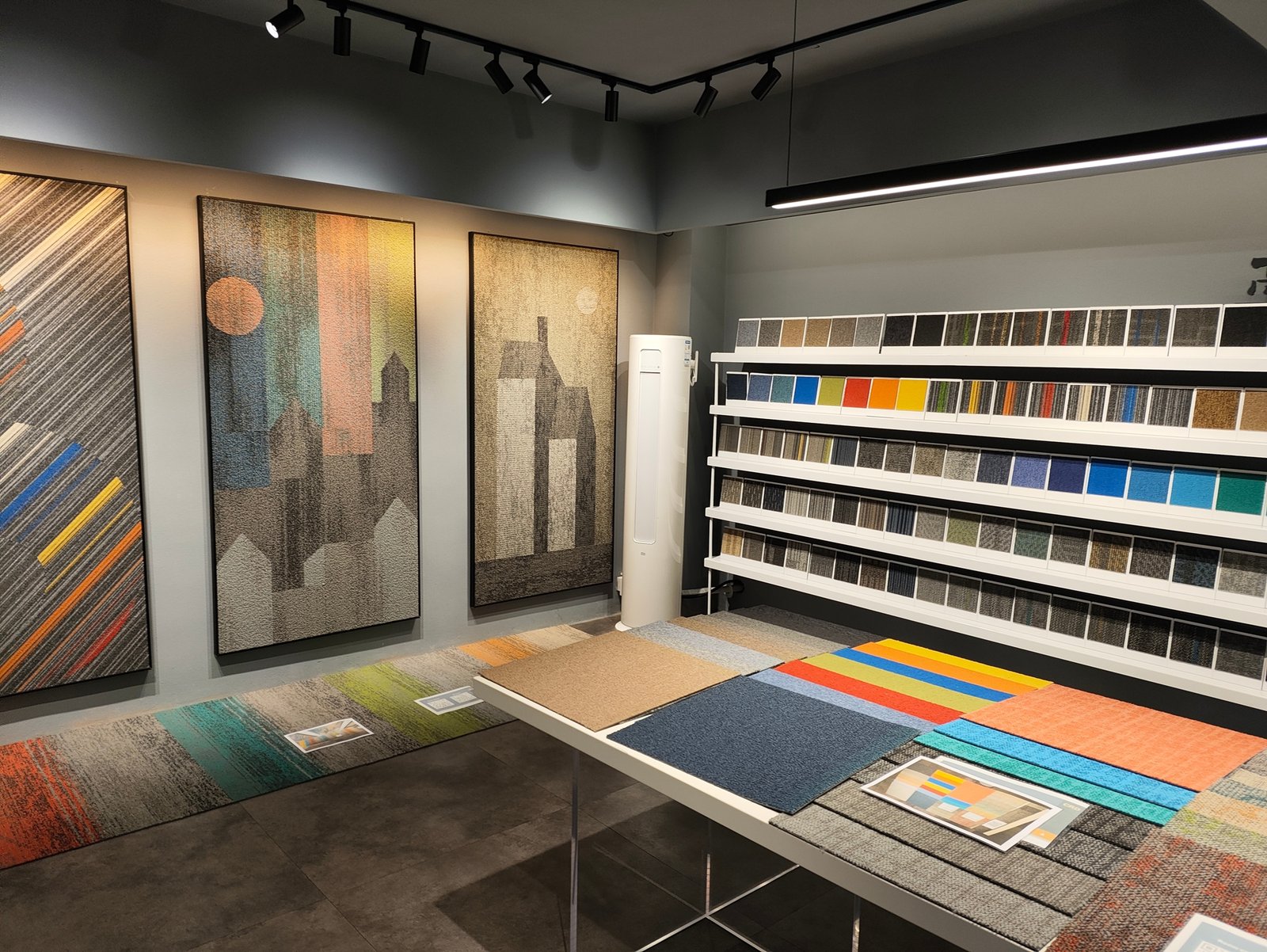
11. Commercial Offices Are a Major Application
The modern office is one of the strongest environments for these trends.
Companies are redesigning workplaces around:
- Collaboration
- Focus
- Flexibility
- Employee comfort
- Informal meetings
- Hybrid work
- Social interaction
This creates multiple zones within a single floor.
Carpet tiles can help differentiate those areas.
For example:
| Office Zone | Possible Carpet Tile Direction |
|---|---|
| Open workspace | Neutral textured tile |
| Collaboration zone | Stronger pattern |
| Meeting room | Acoustic-focused soft surface |
| Lounge | Warm natural tones |
| Circulation | Directional pattern |
| Reception | More distinctive design |
| Private office | Restrained neutral |
The exact specification should depend on traffic, furniture, maintenance, and project requirements.
12. Education Projects Are Also Using More Flexible Carpet Tile Design
Education environments are another important application.
Schools and universities need flooring that can withstand:
- High foot traffic
- Daily furniture movement
- Spills
- Frequent cleaning
- Different learning activities
At the same time, modern education interiors increasingly use flooring to define:
- Classrooms
- Reading zones
- Collaborative areas
- Libraries
- Corridors
- Learning commons
This makes modular carpet particularly useful for projects where design and maintenance must coexist.
13. Hospitality Is Looking for Both Design and Maintenance
Hotels face a different set of flooring requirements.
Guest areas must look attractive while handling continuous use.
Carpet tile can be considered for:
- Hotel corridors
- Meeting areas
- Business centers
- Guest-floor circulation areas
- Conference facilities
One advantage is localized replacement.
If a small section becomes damaged or stained, the maintenance team can potentially replace individual tiles instead of replacing an entire carpet installation.
For hospitality projects, however, appearance consistency and replacement-stock planning are particularly important.
14. Why Lifecycle Cost Matters More in 2026
Initial price is only one part of the flooring budget.
A professional B2B comparison should also consider:
Purchase cost
Installation cost
Maintenance cost
Replacement cost
Downtime
Future availability
=
Lifecycle cost
A carpet tile with a slightly higher initial cost may have a different lifecycle profile if it provides better durability, easier maintenance, or more practical localized replacement.
This does not automatically mean the higher-priced product is economically better.
The important point is that commercial buyers should compare the complete cost structure.
15. Carpet Tile Trends 2026: What Should Buyers Avoid?
Not every trend is suitable for every project.
Avoid choosing a design simply because it is fashionable
A commercial floor may remain in use for many years.
A highly distinctive pattern can become difficult to coordinate with future interior renovations.
Avoid selecting products based only on photographs
Always review physical samples when possible.
Avoid choosing only by fiber
Fiber is important, but construction and backing also matter.
Avoid ignoring maintenance
A beautiful floor that is difficult to maintain can create long-term operational problems.
Avoid making unsupported sustainability claims
Request actual documentation.
Avoid forgetting spare tiles
Future replacement is easier when original stock is available.
16. How Should Architects Select Carpet Tiles in 2026?
A practical specification process can follow six steps.
Step 1: Define the space
Identify whether the area is:
- Office
- Classroom
- Library
- Hotel
- Meeting room
- Corridor
- Reception
- Retail
- Healthcare
- Public space
Step 2: Determine traffic
Estimate daily foot traffic and furniture movement.
Step 3: Establish technical requirements
Define:
- Fiber
- Construction
- Backing
- Dimensions
- Fire requirements
- Acoustic requirements
- Environmental requirements
Step 4: Select design direction
Choose:
- Color
- Pattern
- Texture
- Installation method
- Zoning strategy
Step 5: Test samples
Review actual physical samples.
Step 6: Confirm project logistics
Check:
- Quantity
- Production capacity
- Lead time
- Packaging
- Delivery
- Spare stock
- Future replacement availability
17. How Carpet Tile Manufacturers Need to Respond to These Trends
The 2026 market creates a broader challenge for manufacturers.
It is no longer enough to offer hundreds of colors.
Manufacturers need to provide a complete specification package.
A professional commercial carpet tile supplier should be prepared to provide:
Product information
- Product code
- Dimensions
- Fiber
- Construction
- Backing
- Weight
- Thickness
Performance information
- Wear resistance
- Fire performance
- Colorfastness
- Acoustic data where applicable
- Dimensional stability
Environmental information
- VOC data
- Relevant environmental certifications
- Material information
- Chemical compliance
Project services
- Samples
- Color customization
- Quantity calculation
- Packaging
- Production planning
- Delivery coordination
This is particularly important for international B2B projects.
18. FAMILAI’s Perspective on Carpet Tile Trends 2026
At FAMILAI, we see the 2026 carpet tile market moving toward a more balanced approach.
Commercial flooring is no longer simply about selecting a durable floor.
The product needs to work across several dimensions:
Design
Performance
Maintenance
Acoustics
Modularity
Project logistics
For commercial projects, PVC-backed carpet tiles can provide a modular format that supports different colors, patterns, and project specifications.
FAMILAI works with B2B buyers on carpet tile requirements including:
- Fiber selection
- PVC backing
- Color selection
- Pattern design
- Tile specifications
- Project quantities
- Samples
- OEM/ODM requirements
- Packaging
- Production
- Delivery
The objective is not to follow every trend.
The objective is to help buyers select a carpet tile specification that remains practical after the project is completed.
19. Frequently Asked Questions About Carpet Tile Trends 2026
What are the biggest carpet tile trends in 2026?
Major 2026 directions include warmer color palettes, richer textures, refined geometric patterns, modular zoning, acoustic considerations, flexible installation, sustainability documentation, and lifecycle-focused purchasing.
Are carpet tiles still popular in commercial offices?
Yes. 2026 industry reporting continues to identify carpet tile as an important commercial flooring solution, particularly for collaborative and multi-use office areas.
What carpet tile colors are popular in 2026?
Warm neutrals, earthy tones, muted greens, warm grays, sand, taupe, and other natural colors are receiving significant attention in 2026 commercial interior design.
Are geometric carpet tiles still trending?
Yes. Current 2026 industry coverage highlights refined stripes, architectural grids, fractured geometry, and other structured patterns.
Are carpet tiles good for open-plan offices?
They can be useful for open-plan offices because modular flooring can support visual zoning while also contributing to acoustic comfort and localized maintenance. The exact product should be selected according to traffic, furniture, acoustic requirements, and installation conditions.
Are carpet tiles sustainable?
Sustainability depends on the specific product and manufacturing system. Buyers should review recycled content, emissions information, environmental certifications, material composition, and end-of-life options rather than relying on a general “eco-friendly” claim.
What is the most important factor when buying commercial carpet tiles?
There is no single factor that applies to every project. Buyers should consider the complete combination of performance, design, maintenance, installation, lifecycle cost, documentation, and future replacement requirements.
Conclusion
The most important carpet tile trends 2026 are not simply about fashionable colors.
The category is evolving toward a more integrated approach to commercial flooring.
Designers are using carpet tiles to create visual zones.
Manufacturers are developing richer textures and more sophisticated patterns.
Commercial buyers are paying closer attention to acoustic comfort, sustainability, maintenance, and lifecycle value.
And modularity remains one of the fundamental advantages of carpet tile.
For architects, interior designers, contractors, distributors, and project managers, the key question is therefore not:
“What carpet tile is trending in 2026?”
It is:
“Which 2026 design and performance trends actually make sense for this project?”
That distinction can help commercial buyers avoid short-term design decisions and build flooring specifications around the real requirements of the space.
Looking for Commercial Carpet Tiles?
FAMILAI provides PVC-backed carpet tile solutions for commercial and institutional projects, with options for different fibers, colors, patterns, specifications, and project requirements.
We support B2B customers with:
- Product samples
- Technical specifications
- Color and pattern selection
- Project quantity planning
- OEM/ODM
- Custom packaging
- Production coordination
- International delivery
Website: www.hlyidacarpet.com
For your next office, hotel, education, healthcare, or commercial flooring project, contact FAMILAI to discuss the required carpet tile specification.