Choosing the right flooring for an office is more complicated than selecting a color that matches the interior design. Commercial office carpet tiles must withstand daily foot traffic, support workplace comfort, simplify maintenance, and remain practical throughout the building’s service life.
An office may contain open-plan workstations, private offices, meeting rooms, reception areas, corridors, collaboration zones, and employee break rooms. Each area has different flooring requirements.
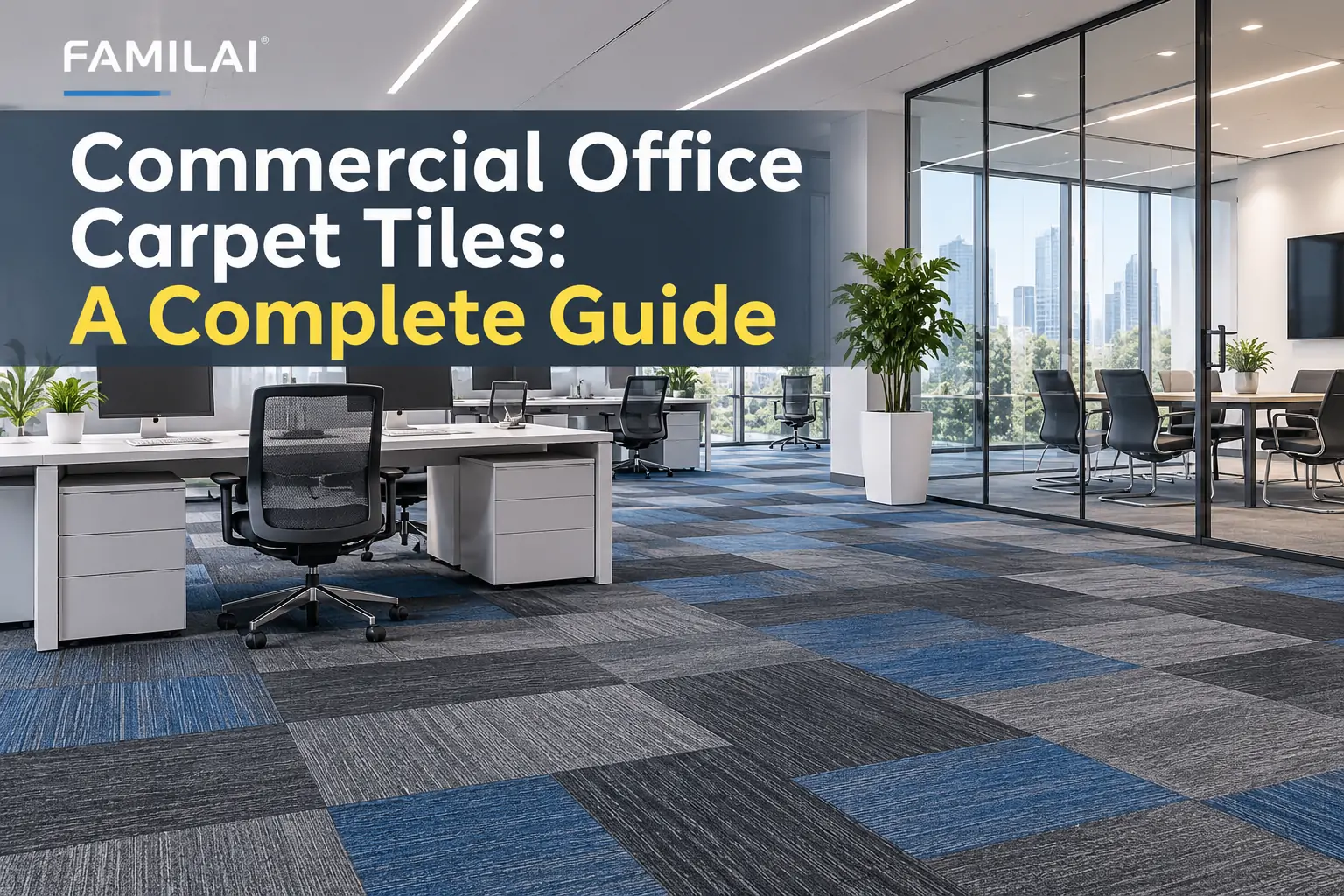
A product that works well in a quiet meeting room may not be the best choice for a busy circulation route. A carpet tile selected for its appearance may also fail to meet the project’s acoustic, maintenance, or durability expectations.
This is why commercial commercial office carpet tiles should be specified according to the function of each space rather than treated as a single flooring category.
In this guide, we explain how to choose office carpet tiles, compare fiber and backing options, evaluate performance requirements, plan installation, and avoid common purchasing mistakes.
Whether you are an architect, interior designer, contractor, project manager, or flooring distributor, this guide will help you make a more informed commercial flooring decision.
1. Why Are Carpet Tiles Popular in Commercial Offices?
Carpet tiles have become a common flooring solution in commercial interiors because they combine modular installation with textile comfort and design flexibility.
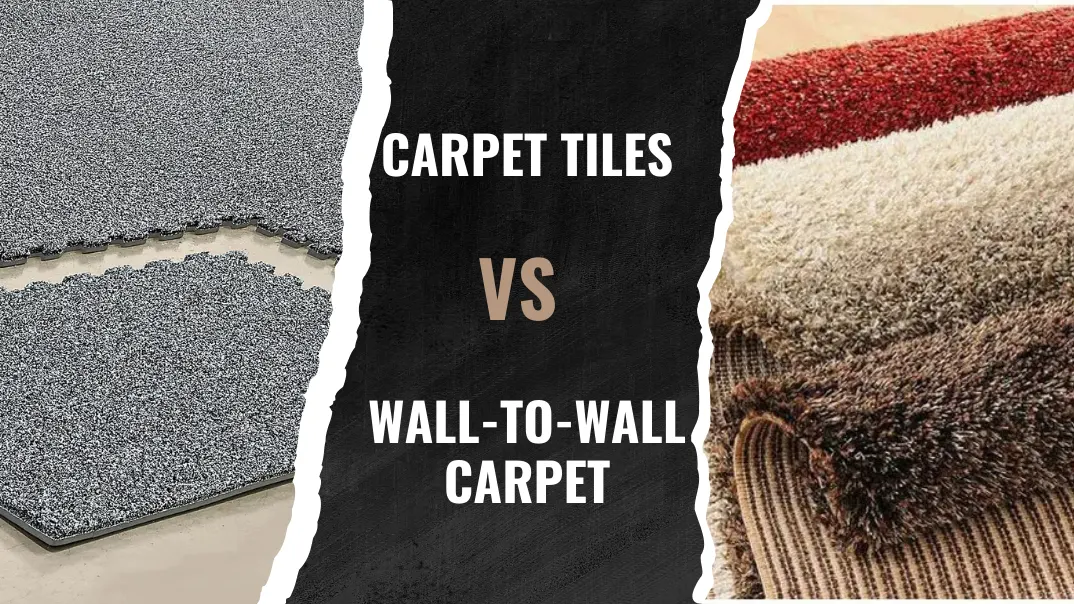
Unlike broadloom carpet, which is supplied in large rolls, Commercial office carpet tiles are manufactured in individual modules. This makes them convenient for handling, installation, and localized replacement.
Modular Installation
Commercial office carpet tiles can be installed one module at a time.
This modular format can simplify material handling and make it easier to plan flooring layouts in offices with multiple rooms or different functional zones.
Common formats include:
-
50 × 50 cm square carpet tiles
-
60 × 60 cm square carpet tiles
-
Rectangular carpet planks
-
Other project-specific formats
The exact format should be selected according to the product range, design requirements, and installation method.
Acoustic Comfort
Office environments often contain conversations, footsteps, chair movement, and other sources of noise.
Carpet tiles provide a textile surface that can absorb some sound and reduce footfall noise compared with many hard flooring surfaces.
This can be valuable in:
-
Open-plan offices
-
Meeting rooms
-
Libraries
-
Quiet work areas
-
Collaborative spaces
Actual acoustic performance depends on the complete flooring construction. If sound control is a formal project requirement, request relevant test data for the specified product.
Flexible Design
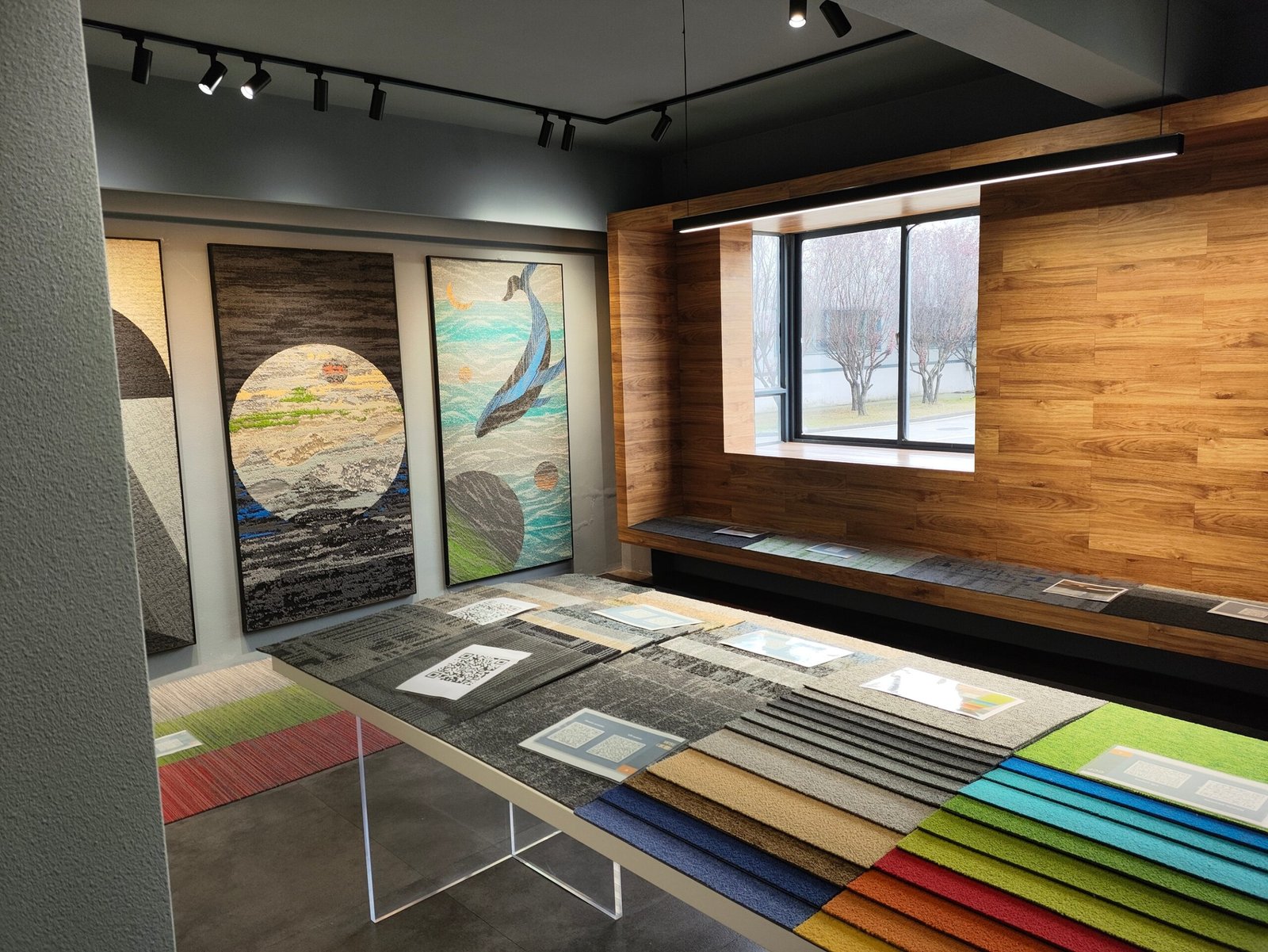
Carpet tiles are available in a wide range of colors, textures, and patterns.
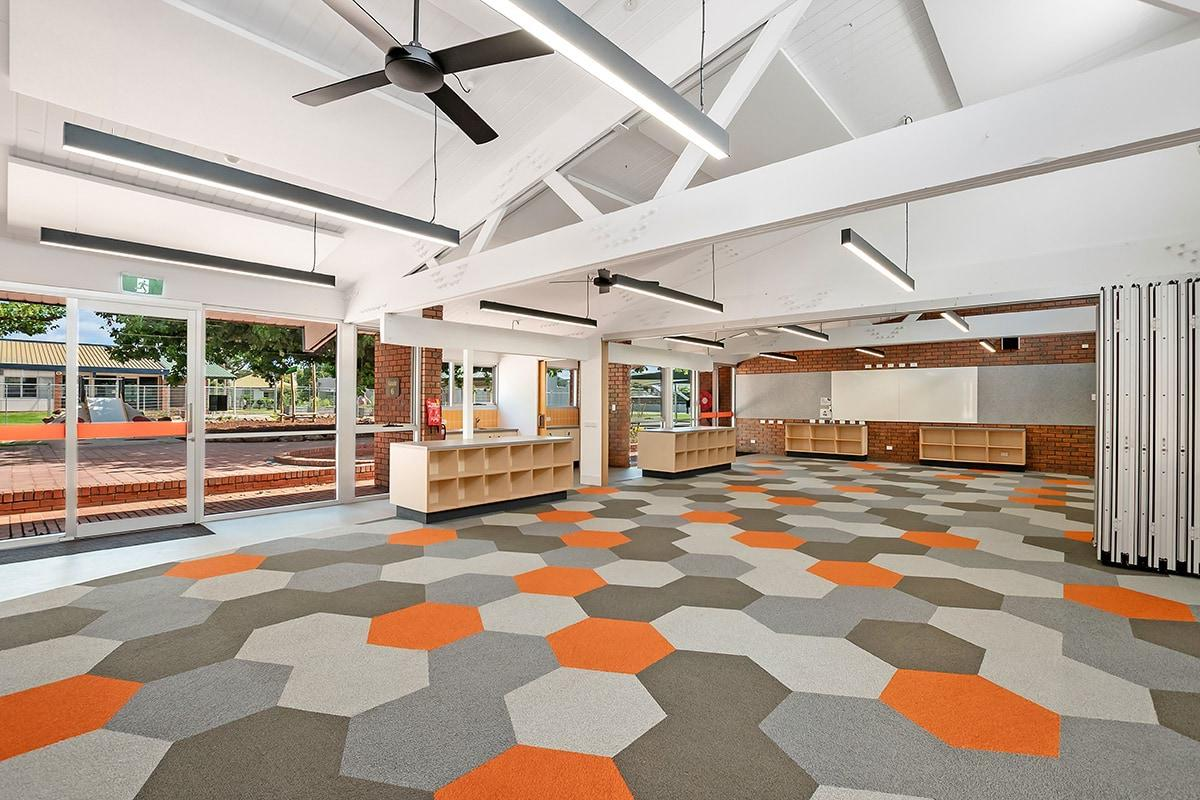
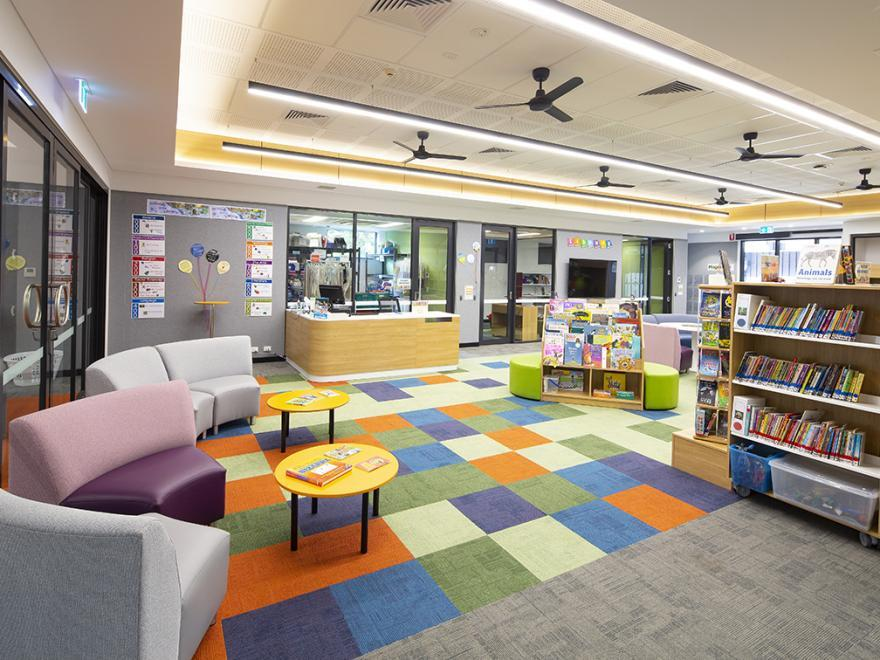
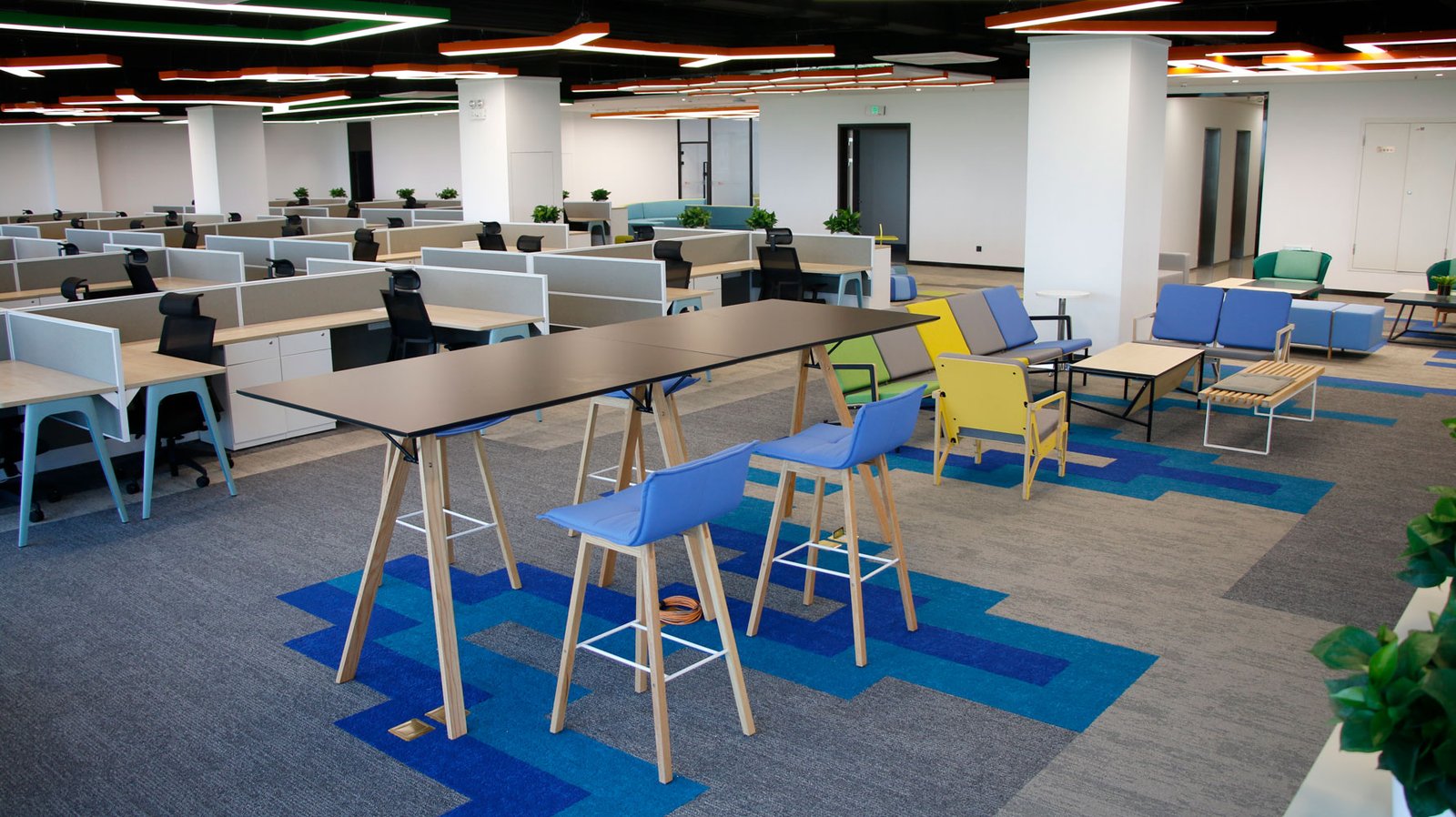
Designers can combine different modules to create visual zoning without installing additional partitions.
For example, a modern office may use neutral carpet tiles in workstation areas, darker tiles along circulation routes, and accent colors in collaboration spaces.
Localized Replacement
One of the practical advantages of modular carpet tiles is that damaged or heavily stained tiles may be replaced individually.
This can reduce the amount of flooring that needs to be removed during maintenance.
However, replacement depends on the installation system, availability of matching material, and condition of the surrounding tiles.
For commercial projects, retaining spare tiles from the original production batch is generally a sensible practice.

2. How to Choose Carpet Tiles for Different Office Areas
The first step in selecting commercial office carpet tiles is to divide the building into functional zones.
Different areas experience different traffic levels, cleaning requirements, and furniture movement.
Open-Plan Workstations
Open-plan workstations are often the largest flooring area in an office.
Important requirements include:
-
Suitable commercial traffic performance
-
Acoustic comfort
-
Resistance to everyday wear
-
Compatibility with office chairs
-
Practical maintenance
-
A design that supports the workplace interior
Carpet tiles are often a strong choice for these spaces because they provide a textile surface and allow flexible design layouts.
When selecting carpet tiles for workstation areas, consider the movement of office chairs and the use of chair mats or other floor protection where necessary.
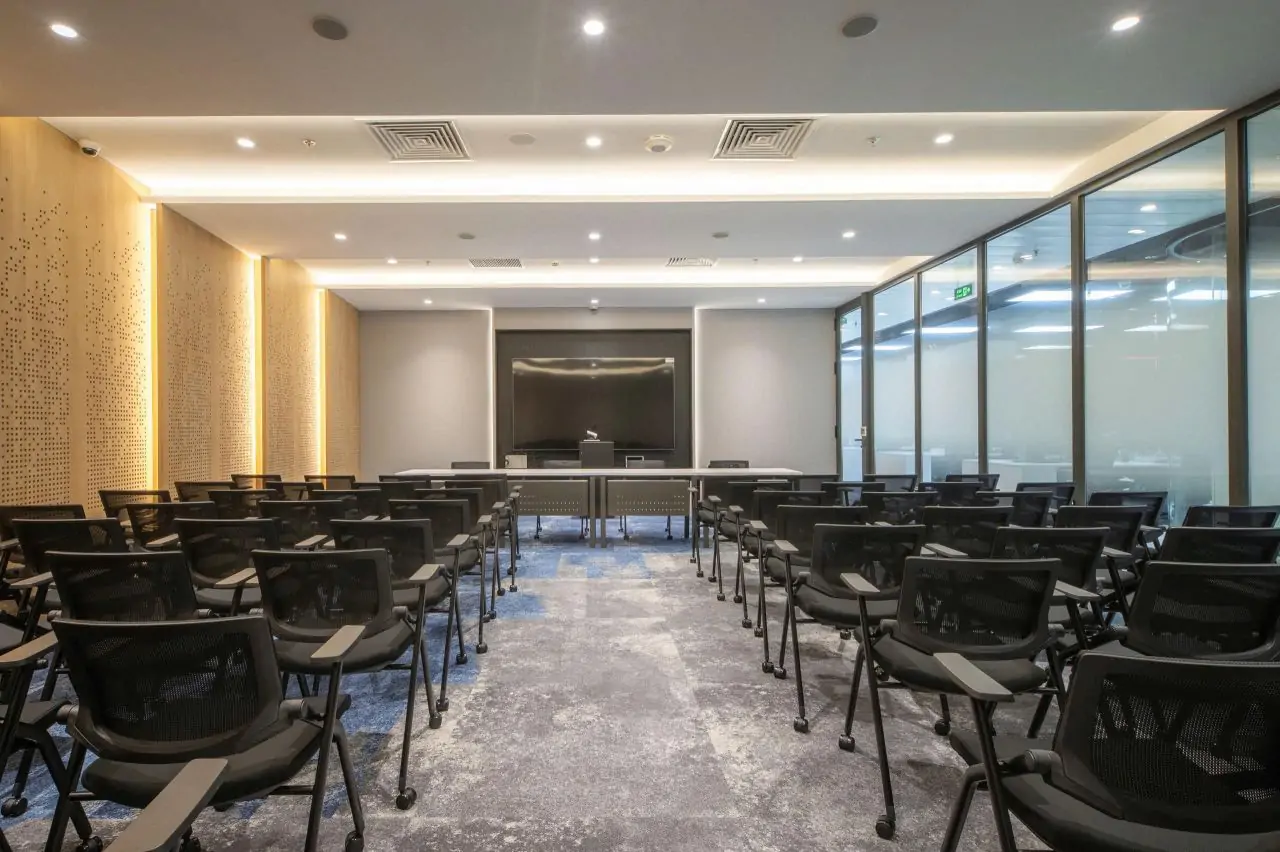
Meeting Rooms
Meeting rooms generally experience less continuous traffic than main corridors, but they may contain heavy tables, chairs, and frequently rearranged furniture.
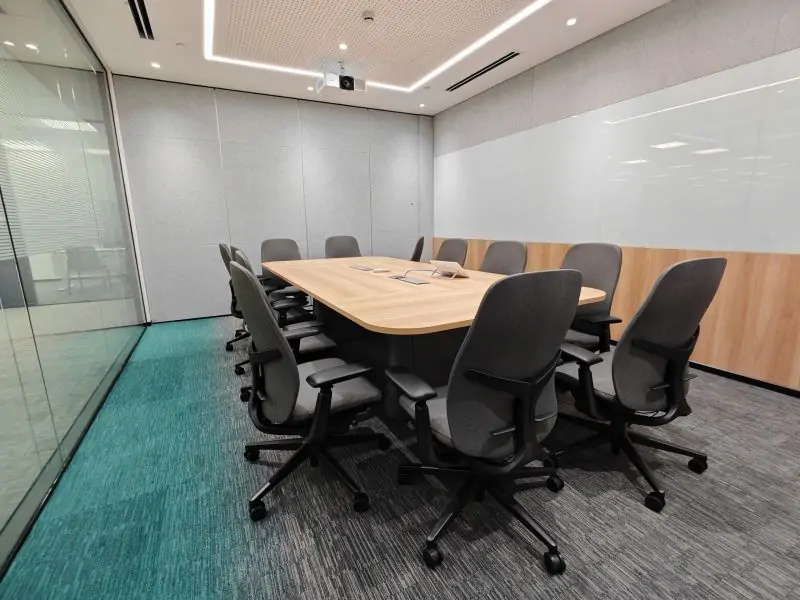
Commercial office carpet tiles can provide a comfortable surface and help create a quieter meeting environment.
Design considerations include:
-
Color coordination with furniture
-
Pattern direction
-
Acoustic requirements
-
Furniture movement
-
Ease of maintenance
For rooms with movable furniture, the product specification should account for the expected use conditions.
Reception Areas
Reception areas are important for the visual identity of a company.
They may also experience frequent foot traffic from employees, visitors, and delivery personnel.
When selecting flooring for reception areas, consider:
-
Appearance and design
-
Traffic conditions
-
Cleaning frequency
-
Entrance dirt management
-
Transition details with adjacent flooring
Some projects use carpet tiles in reception areas, while others use LVT or another hard-surface material near the entrance.
The selection should reflect the design concept and maintenance requirements.
Office Corridors
Corridors are frequently used circulation areas.
They may experience concentrated traffic, rolling equipment, and more dirt than individual offices.
For corridor carpet tiles, evaluate:
-
Traffic performance
-
Construction and backing
-
Maintenance requirements
-
Directional patterns
-
Transition details
Darker colors or patterned designs may help reduce the visual prominence of everyday dirt, although they do not eliminate the need for cleaning.
Collaboration Areas
Collaboration spaces are often designed to encourage communication and informal meetings.
Carpet tiles can help distinguish these areas from workstation zones.
Designers may use different colors, patterns, or tile directions to create visual boundaries.
The product should still be selected according to expected traffic, furniture use, and maintenance conditions.
Office Pantry and Break Rooms
Pantries and break rooms may experience food spills, drinks, and frequent cleaning.
Carpet tiles are not automatically the best option for these areas.
Depending on the project requirements, LVT or another suitable hard-surface flooring product may be more practical.
The key is to avoid specifying textile flooring in locations where frequent liquid exposure creates unnecessary maintenance challenges.

3. Which Fiber Is Best for Commercial Office Carpet Tiles?
The face fiber is one of the most important factors affecting carpet tile performance.
Common commercial carpet tile fibers include nylon, polypropylene, and polyester.
Each has different characteristics, and the best choice depends on the project’s performance requirements and budget.
Nylon Carpet Tiles
Nylon is widely used in commercial carpet applications because of its resilience and recovery characteristics.
Potential advantages include:
-
Good resilience under repeated use
-
Suitable options for demanding commercial applications
-
A wide range of colors and constructions
-
Flexibility in product design
Nylon commercial office carpet tiles may be suitable for busy offices, meeting rooms, and other areas where durability is an important consideration.
However, not all nylon products have the same performance. Fiber type should be evaluated together with pile construction, density, backing, and test results.
Polypropylene Carpet Tiles
Polypropylene is another common carpet fiber.
It can be a practical choice for projects where cost, design, and specific performance requirements need to be balanced.
Potential considerations include:
-
Product price
-
Traffic conditions
-
Appearance retention
-
Stain resistance
-
Maintenance requirements
Polypropylene commercial office carpet tiles products should be evaluated against the actual application rather than assumed to be suitable for every commercial environment.
Polyester Carpet Tiles
Polyester is available in a variety of commercial carpet constructions.
Its suitability depends on the product’s fiber quality, construction, backing, and intended application.
Buyers should review the manufacturer’s technical data and test information before specifying polyester carpet tiles for demanding office areas.
Fiber Comparison
| Fiber | General Characteristics | Common Considerations |
|---|---|---|
| Nylon | Resilience and recovery characteristics | Product construction and price |
| Polypropylene | Practical option for selected applications | Traffic and appearance retention |
| Polyester | Available in different colors and constructions | Confirm suitability for intended use |
Important: Fiber type alone does not determine the performance of a carpet tile. The complete product construction and relevant test data should be reviewed.

4. How to Select the Right Carpet Tile Backing
The backing system supports the carpet tile and contributes to its dimensional stability and installation characteristics.
Commercial office carpet tiles may use PVC, bitumen, polyolefin, or other backing constructions.
PVC-Backed Carpet Tiles
PVC-backed carpet tiles are one option in the commercial flooring market.
Their suitability depends on the complete product construction, manufacturing quality, and intended application.
When evaluating PVC-backed carpet tiles, buyers should review:
-
Product dimensions
-
Total thickness
-
Dimensional stability
-
Weight
-
Installation requirements
-
Relevant test documentation
-
Environmental and emissions information
PVC backing should not be treated as automatically superior to other backing systems. The correct selection depends on project requirements and product performance.
Other Backing Systems
Other carpet tile backing systems may include bitumen-based and polyolefin-based constructions.
Different systems may have different characteristics in terms of weight, flexibility, dimensional stability, installation, and environmental documentation.
A commercial buyer should compare the complete specifications rather than selecting a backing material based on its name alone.
What Should Buyers Ask the Manufacturer?
Before placing an order, request:
-
The technical data sheet for the exact product.
-
The backing material and construction.
-
Installation instructions.
-
Relevant dimensional stability and performance test results.
-
Maintenance recommendations.
-
Environmental and emissions documentation where required.
These documents help buyers assess whether the product is suitable for the intended commercial application.
5. Carpet Tile Construction: What Should You Evaluate?
Two carpet tiles may look similar but perform differently because of their construction.
A complete specification should consider several factors.
Pile Construction
Carpet tiles may use different pile constructions, including loop pile and cut pile.
Loop pile is commonly used in commercial carpet products.
Its suitability depends on the intended traffic, appearance requirements, and maintenance conditions.
Total Product Weight
Total weight can provide useful information about the product construction, but it should not be used as the only quality indicator.
A heavier product is not automatically more durable.
Buyers should consider fiber, pile construction, backing, and test performance together.
Product Thickness
Thickness affects the finished floor height and may influence transitions with adjacent materials.
When carpet tiles are installed next to LVT, ceramic tile, or another flooring product, the project team should confirm finished floor heights before installation.
Dimensional Stability
Dimensional stability is important for modular flooring.
Changes in tile dimensions may affect joints, alignment, and the appearance of the installed floor.
Ask the manufacturer for relevant test data and installation guidance.
6. What Traffic Level Do Commercial Office Carpet Tiles Need to Handle?
Commercial office carpet tiles flooring should be selected according to expected traffic and use conditions.
A private office with a few employees has different requirements from a large open-plan office with hundreds of daily users.
Traffic assessment should consider:
-
Number of occupants
-
Frequency of visitors
-
Main circulation routes
-
Furniture movement
-
Rolling loads
-
Cleaning frequency
-
Expected service conditions
Low-Traffic Areas
Examples may include:
-
Small private offices
-
Limited-use meeting rooms
-
Administrative rooms
The product should still meet the project’s commercial requirements.
Medium-Traffic Areas
Examples may include:
-
General workstation areas
-
Meeting rooms
-
Department offices
-
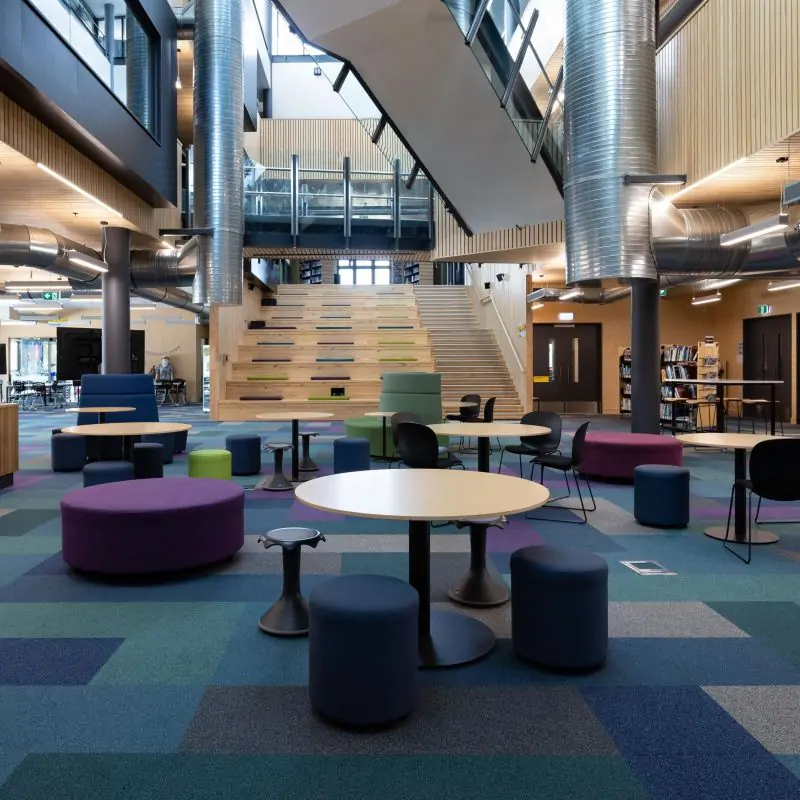
Collaboration spaces
These areas require a balanced combination of durability, appearance, comfort, and maintenance.
High-Traffic Areas
Examples may include:
-
Main office corridors
-
Shared circulation areas
-
Reception zones
-
Frequently used meeting facilities
For these locations, review the product’s performance data and maintenance requirements carefully.
Do not rely solely on labels such as “commercial grade” or “heavy duty.” Ask for the technical information that supports the product’s intended application.
7. Carpet Tiles for Open-Plan Offices: Acoustic Considerations
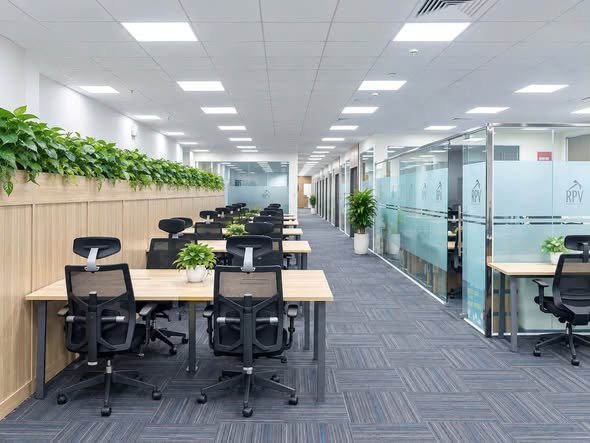
Open-plan offices can create acoustic challenges because employees work in shared environments.
Conversations, phone calls, footsteps, and furniture movement can affect the workplace experience.
Carpet tiles can contribute to acoustic comfort by absorbing some sound at the floor surface.
Why Flooring Matters
A hard floor can reflect sound into the room.
A textile floor covering can absorb some of that sound, depending on the construction and complete floor assembly.
This may help reduce the perception of footfall noise and improve the acoustic experience.
However, commercial office carpet tiles are not a complete acoustic solution.
The performance of an office also depends on:
-
Ceiling systems
-
Wall finishes
-
Furniture
-
Room geometry
-
Acoustic partitions
-
Workplace layout
What Acoustic Data Should You Request?
If acoustic performance is important, ask for test results related to the intended requirement.
Different acoustic measurements describe different performance characteristics. For example, impact sound reduction and sound absorption are not interchangeable.
The project specification should identify which acoustic property is required.

8. Office Carpet Tile Colors and Design Strategies
Color selection affects the appearance of an office and can support workplace zoning.
Commercial carpet tiles are available in neutral colors, textured patterns, geometric designs, and accent colors.
Neutral Colors
Neutral colors are often used in corporate interiors because they can coordinate with different furniture and wall finishes.
Common choices include:
-
Gray
-
Beige
-
Taupe
-
Charcoal
-
Warm neutral tones
Neutral colors can provide a flexible background for future office changes.
Accent Colors
Accent colors can help identify collaboration areas, meeting spaces, or circulation routes.
For example, a designer may use a neutral base color throughout the office and introduce accent colors in selected zones.
Patterned Carpet Tiles
Patterns can add visual interest and help reduce the appearance of minor everyday dirt.
However, patterns should be reviewed under the actual lighting conditions.
The designer should also confirm the installation direction and tile layout before ordering.
Color Consistency
For large projects, color consistency is important.
Buyers should request physical samples and confirm the approved color reference.
For production orders, discuss batch consistency and whether spare material will be available for future replacement.

9. Carpet Tile Installation in Commercial Offices
Installation quality has a direct effect on the appearance and performance of commercial carpet tiles.
A well-selected product can still experience problems if the subfloor is not properly prepared or the installation instructions are not followed.
Step 1: Inspect the Subfloor
Before installation, inspect the subfloor for:
-
Unevenness
-
Cracks
-
Contamination
-
Moisture
-
Surface defects
-
Existing adhesive residue
The subfloor must meet the manufacturer’s requirements.
Step 2: Confirm Moisture Conditions
Moisture conditions can affect flooring installation.
The project team should use the testing method and limits specified by the flooring and adhesive manufacturers.
Do not assume that a concrete subfloor is ready for installation simply because it looks dry.
Step 3: Establish the Layout
The installation team should establish the starting point and layout before installing the tiles.
This helps reduce narrow perimeter cuts and supports a consistent appearance.
Step 4: Select the Installation Pattern
Common carpet tile patterns include:
-
Monolithic
-
Quarter-turn
-
Ashlar
-
Brick
The selected pattern should be confirmed with the product instructions and design requirements.
Step 5: Install According to the Product Instructions
Follow the specified adhesive or installation system.
The installer should confirm tile alignment, joint consistency, transitions, and perimeter details.
Step 6: Inspect the Finished Floor
After installation, inspect:
-
Tile alignment
-
Joint appearance
-
Pattern consistency
-
Edges and transitions
-
Surface condition
-
Any visible defects
For larger projects, a documented installation inspection can help reduce disputes.
10. Maintenance: How to Keep Office Carpet Tiles in Good Condition
A commercial carpet tile maintenance plan should be established before the flooring is installed.
Maintenance requirements depend on the product construction, traffic, soil conditions, and cleaning procedures.
Routine Maintenance
Routine maintenance may include:
-
Vacuuming
-
Removing loose dirt
-
Spot cleaning
-
Inspecting high-traffic areas
-
Cleaning entrance zones
Entrance areas often require more frequent attention because dirt and debris are brought into the building from outside.
Periodic Deep Cleaning
Periodic cleaning should follow the manufacturer’s recommendations.
The method may depend on the fiber, backing, and cleaning system.
Before using a cleaning chemical, confirm that it is compatible with the specified carpet tile.
Localized Replacement
If an individual tile becomes damaged or heavily stained, it may be possible to replace it.
The replacement process should consider:
-
Tile identification
-
Installation method
-
Adhesive requirements
-
Pattern direction
-
Color and batch consistency
Retaining spare material can help simplify future repairs.
11. Common Mistakes When Buying Commercial Office Carpet Tiles
Mistake 1: Selecting Only by Price
The lowest quotation may not provide the best value.
Compare products with equivalent specifications and consider installation, maintenance, and replacement costs.
Mistake 2: Ignoring the Office Layout
A product selected for a private office may not be suitable for a busy corridor.
Create a flooring schedule that identifies the requirements of each area.
Mistake 3: Not Reviewing Physical Samples
Digital images cannot fully represent texture, color, or surface appearance.
Request physical samples before confirming a large order.
Mistake 4: Ignoring the Backing System
The backing affects the product construction and installation requirements.
Ask for technical information rather than assuming all backing types perform the same way.
Mistake 5: Forgetting Spare Tiles
Future replacement can be difficult if the original product or color is no longer available.
Discuss spare quantities and storage arrangements before placing the order.
Mistake 6: Overlooking Installation Requirements
Subfloor preparation, moisture conditions, adhesive compatibility, and finished floor height can affect installation results.
Resolve these details before the project begins.
Mistake 7: Treating Every Office Area the Same
An office includes different functional zones.
The flooring specification should reflect the use of each space rather than applying one product without considering its performance requirements.

12. Commercial Office Carpet Tile Specification Checklist
Use this checklist when preparing a commercial flooring specification or comparing supplier quotations.
Product Information
Product name and reference
Tile dimensions
Face fiber
Pile construction
Total product weight
Total thickness
Backing material
Color and pattern
Installation pattern
Performance Requirements
Intended traffic level
Relevant wear performance
Dimensional stability
Acoustic requirements
Cleaning and maintenance
Fire performance requirements
Indoor air quality requirements
Environmental documentation where applicable
Project Requirements
Project location
Total floor area
Room-by-room flooring schedule
Subfloor conditions
Installation method
Transition details
Sample approval
Spare material quantity
Delivery schedule
Inspection requirements
This checklist can help architects, contractors, and buyers reduce specification gaps before ordering.

13. How to Compare Commercial Carpet Tile Suppliers
Selecting a supplier requires more than comparing product prices.
For B2B projects, buyers should evaluate manufacturing capability, product documentation, communication, and delivery arrangements.

Manufacturing Capability
Ask about the supplier’s manufacturing experience and production capacity.
For larger orders, confirm whether the supplier can meet the required quantity and production schedule.
Technical Documentation
Request the technical data sheet and relevant test reports for the exact product being quoted.
Make sure the documentation corresponds to the product specification.
Sample Availability
Samples allow buyers and designers to evaluate color, texture, construction, and appearance.
For projects involving multiple colors, clearly identify each approved sample.
Customization
Some commercial projects require specific colors, patterns, dimensions, or packaging.
Confirm whether the supplier can support the required customization and what minimum order quantities apply.
Quality Control
Discuss inspection arrangements before production.
For larger projects, buyers may consider pre-shipment inspection or inspection by an independent third party.
Delivery Planning
International B2B orders require clear coordination.
Confirm:
-
Production lead time
-
Packaging
-
Shipping method
-
Delivery terms
-
Inspection schedule
-
Spare material
-
Required documentation
A clear purchasing process helps reduce uncertainty during project execution.
14. FAMILAI Commercial Office Carpet Tile Solutions
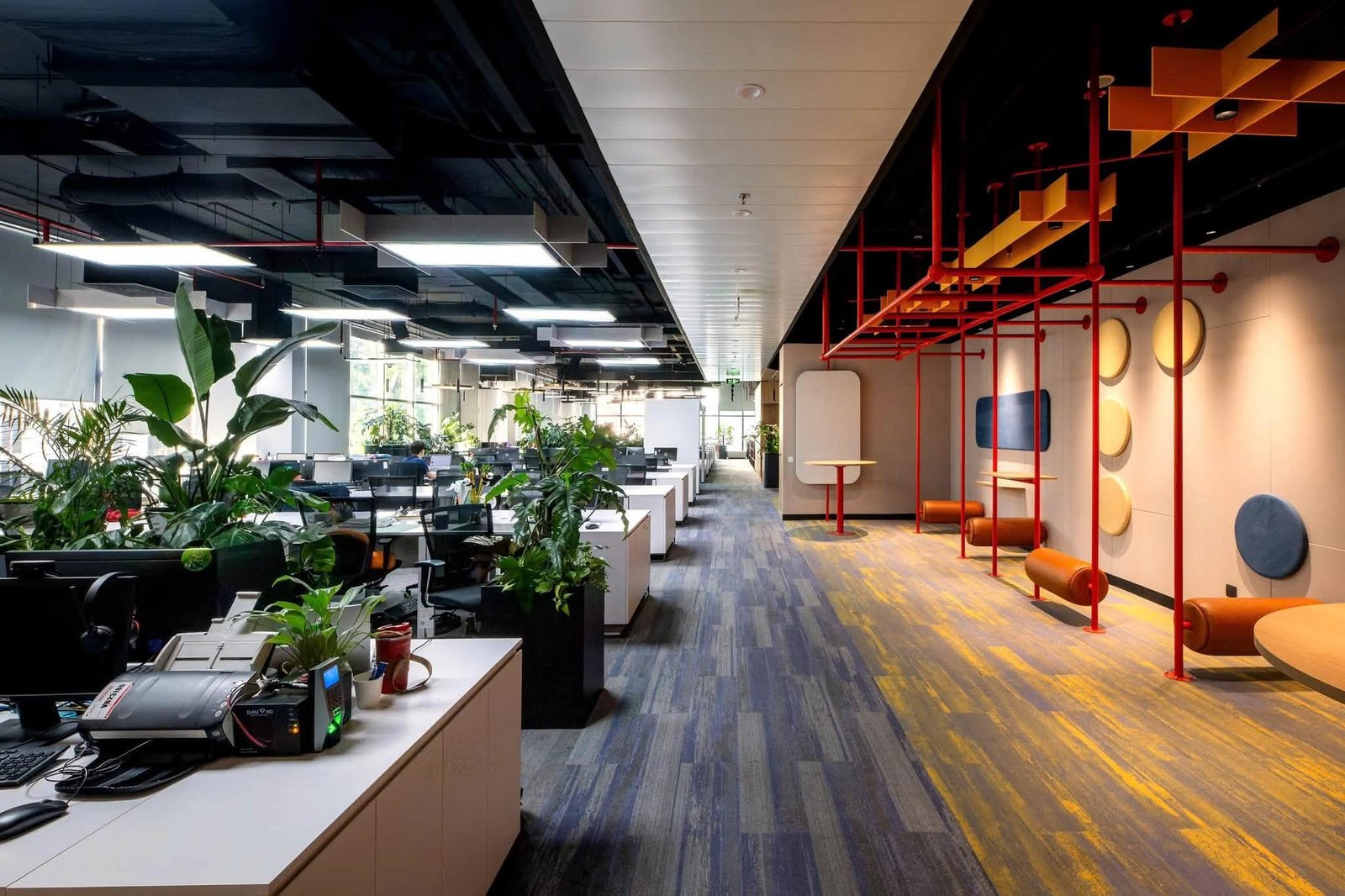
For commercial buyers sourcing carpet tiles for office projects, product selection should begin with the requirements of the space.
FAMILAI focuses on commercial carpet tile solutions for offices, hotels, educational facilities, and other business environments.
Its product options include PVC-backed carpet tiles with different fiber, color, pattern, and specification configurations.
Product Selection for Different Office Areas
FAMILAI supports B2B buyers evaluating carpet tiles for:
-
Open-plan workstations
-
Meeting rooms
-
Private offices
-
Collaboration areas
-
Commercial office renovations
-
Office flooring distribution
The final product selection should be based on the project’s traffic, design, maintenance, installation, and technical requirements.
Support for Commercial Buyers
FAMILAI works with:
-
Flooring distributors
-
Carpet tile wholesalers
-
Importers
-
Interior designers
-
Architects
-
Commercial contractors
-
Project managers
Buyers can discuss product samples, specifications, project quantities, customization, packaging, and production arrangements.
Request Carpet Tile Information
If you are planning an office flooring project or sourcing commercial carpet tiles for distribution, FAMILAI can help you evaluate suitable product options.
Visit www.hlyidacarpet.com to explore commercial carpet tile solutions and discuss your project requirements.

15. Frequently Asked Questions About Commercial Office Carpet Tiles
What are commercial office carpet tiles?
Commercial office carpet tiles are modular textile flooring products designed for office and business environments. They are available in different fibers, constructions, backing systems, colors, and formats.
Are carpet tiles suitable for open-plan offices?
Yes. Carpet tiles are often used in open-plan offices because they provide a textile surface, design flexibility, and potential acoustic benefits. The exact product should be selected according to traffic and performance requirements.
What is the best carpet tile fiber for offices?
Nylon is commonly considered for demanding commercial applications because of its resilience and recovery characteristics. Polypropylene and polyester may also be suitable for selected projects. The complete product construction should be reviewed.
Are PVC-backed carpet tiles suitable for commercial offices?
PVC-backed carpet tiles are one available commercial flooring option. Their suitability depends on the complete product construction, installation requirements, performance data, and project specifications.
How long do commercial office carpet tiles last?
Service life depends on product quality, traffic, maintenance, installation, and operating conditions. Buyers should review the manufacturer’s performance information and maintenance recommendations for the specified product.
Can carpet tiles be replaced individually?
In many installations, individual damaged tiles can be replaced. The process depends on the installation method, adhesive, surrounding tiles, and availability of matching replacement material.
Are carpet tiles easy to maintain?
Carpet tiles require regular vacuuming and periodic cleaning. Maintenance requirements vary according to fiber, backing, traffic, and the manufacturer’s instructions.
Can carpet tiles be installed over existing flooring?
This depends on the existing floor, its condition, moisture, surface preparation, and the carpet tile installation system. The manufacturer’s instructions and project requirements should be checked before installation.
Should office carpet tiles be installed in one direction?
Not always. The correct direction depends on the product and selected installation pattern. Common patterns include monolithic, quarter-turn, ashlar, and brick installation. Follow the product instructions and approved design.

How many spare carpet tiles should a commercial project order?
The required spare quantity depends on the project size, layout, product availability, and expected maintenance needs. Discuss spare material with the supplier before ordering and retain the original product identification information.
Conclusion: Choose Commercial Office Carpet Tiles by Application
Commercial office carpet tiles can provide a practical flooring solution for modern workplaces, but the right product must be selected according to the requirements of each area.
Open-plan workstations may prioritize acoustic comfort and durability. Meeting rooms may require a comfortable surface and coordinated design. Corridors may need stronger traffic performance and more frequent maintenance.
A successful flooring specification considers fiber, backing, construction, installation, maintenance, and lifecycle cost together.
For B2B buyers, the best purchasing decision is based on clear technical information, approved samples, and a flooring plan that matches the function of each space.
FAMILAI provides commercial carpet tile options for offices and other business environments.
Explore product solutions and discuss your commercial flooring requirements at www.hlyidacarpet.com.